
What Are the Smartest Financial Decisions for Long-Term Wealth?
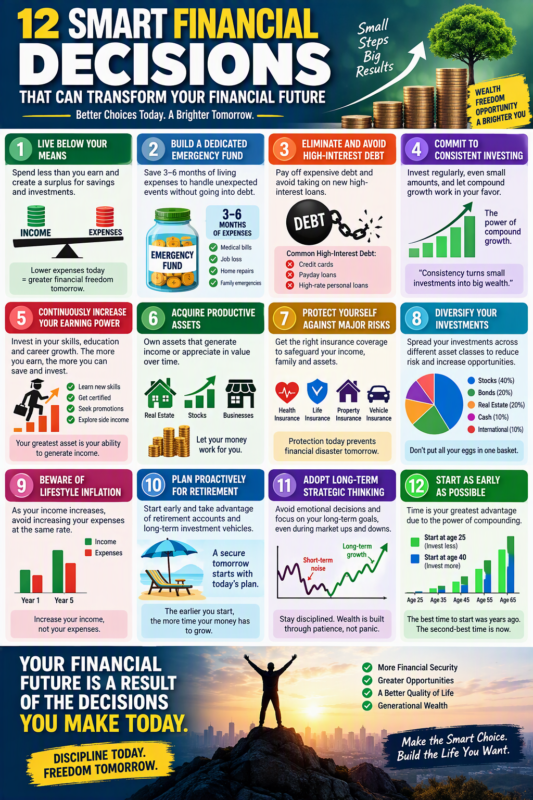
The smartest financial decisions include living below your means, building an emergency fund, avoiding high-interest debt, investing consistently, increasing your earning power, acquiring productive assets, diversifying investments, planning for retirement, and starting early. These habits help build long-term wealth, financial security, and financial independence over time.
12 Smart Financial Decisions That Can Transform Your Financial Future
Everyone dreams of financial freedom, but very few people achieve it by chance. Behind every financially successful person is a series of smart decisions made consistently over time. Wealth is not built overnight, and it is rarely the result of luck. Instead, it comes from deliberate choices that protect your income, grow your assets, and prepare you for the future.
“Transforming your finances starts with mastering your daily cash flow, no matter how small your starting income is. For instance, learning how to manage a ₦100k monthly salary in Nigeria proves that strict budgeting and deliberate saving are possible even on a modest income.”
Many people assume they need a high-paying job, a winning lottery ticket, or a massive inheritance to become wealthy. The truth is far simpler. Your financial future is largely shaped by the small decisions you make every day. The way you spend, save, invest, and manage risk can either accelerate your journey toward financial independence or hold you back for years.
If you want to build lasting wealth, reduce financial stress, and create opportunities for future generations, these twelve smart financial decisions can completely transform your financial future.
1. Live Below Your Means
One of the most powerful financial principles is surprisingly simple: spend less than you earn. Yet this fundamental rule is often ignored. As income rises, many people immediately upgrade their lifestyle. They move into more expensive apartments, buy luxury cars, purchase premium gadgets, and increase discretionary spending. The result is that they earn more but never actually build wealth.
Living below your means creates a financial surplus. That surplus becomes the fuel for emergency savings, investments, retirement planning, and future opportunities.
Think of it this way:
If you earn ₦500,000 monthly and spend ₦450,000, you only have ₦50,000 available for wealth creation.
However, if you spend ₦350,000, you now have ₦150,000 available to invest and grow.
Over time, that difference can have a life-changing impact on your finances.
2. Build a Dedicated Emergency Fund
Unexpected financial emergencies happen to everyone. A medical emergency, sudden job loss, urgent home repair, business setback, or family crisis can quickly derail your finances if you are unprepared. This is why financial experts consistently recommend maintaining an emergency fund.
Ideally, your emergency savings should cover three to six months of essential expenses.
Why Is an Emergency Fund Important?
Without an emergency fund:
- You may rely on high-interest debt.
- Your investments may be forced into liquidation.
- Financial stress increases significantly.
With an emergency fund, you gain both financial protection and peace of mind.
People Also Ask: How Much Should You Have in an Emergency Fund?
Most experts recommend saving enough to cover three to six months of necessary living expenses. Individuals with unstable income may benefit from a larger emergency reserve.
3. Eliminate and Avoid High-Interest Debt
High-interest debt is one of the biggest obstacles to financial freedom. Credit cards, payday loans, and expensive personal loans can consume a significant portion of your income through interest payments.
Many people focus on investing while carrying expensive debt. However, paying off debt with a 25% interest rate often provides a better return than many investments.
Eliminating high-interest debt allows you to:
- Increase monthly cash flow
- Reduce financial stress
- Improve your net worth
- Grow your savings faster
The less money you lose to interest, the more money remains available for building wealth.
4. Commit to Consistent Investing
One of the biggest myths about investing is that you need a large amount of money before you can start. In reality, consistency matters far more than the starting amount. Successful investors understand that long-term investing is not about getting rich quickly. It is about allowing compound growth to work in your favor. Even small monthly investments can become substantial over time when invested consistently.
What Is Compound Growth?
Compound growth occurs when your investment earnings begin generating their own earnings. Over long periods, compounding creates exponential growth that can dramatically increase your wealth.
People Also Ask: How Much Should I Invest Every Month?
The best amount is one you can consistently afford. Even small regular investments are often more beneficial than waiting years to invest larger amounts.
5. Continuously Increase Your Earning Power
While saving money is essential, earning more money can accelerate your financial progress significantly. There is only so much you can cut from your budget.
However, there is virtually no limit to how much you can increase your income. Investing in yourself may generate the highest return of any financial decision.
Consider:
- Professional certifications
- Industry training
- University education
- Digital skills
- Business development
- Leadership programs
The more valuable your skills become, the more opportunities you create for higher earnings and greater financial stability.
6. Acquire Productive Assets
Financially successful people focus on owning assets that generate income and grow in value. Instead of buying liabilities that constantly consume money, they acquire productive assets.
Examples include:
- Stocks
- Index funds
- Dividend-paying investments
- Real estate
- Businesses
- Rental properties
A productive asset continues working even when you are not actively working. This shift from earning money to owning income-producing assets is one of the most important wealth-building principles.
People Also Ask: What Assets Make the Most Money?
Income-producing assets such as dividend stocks, rental properties, business ownership, and diversified investment funds are commonly used for long-term wealth creation.
7. Protect Yourself Against Major Financial Risks
Building wealth is important. Protecting wealth is equally important. A single unexpected event can erase years of financial progress.
Examples include:
- Serious illness
- Disability
- Property loss
- Legal issues
- Death of a primary income earner
Appropriate insurance coverage can help prevent financial disaster. Important forms of protection may include:
- Health insurance
- Life insurance
- Property insurance
- Vehicle insurance
- Disability protection
Protection is not an expense. It is an investment in financial stability.
8. Diversify Your Investments
Diversification is one of the most effective ways to reduce risk. Many investors make the mistake of placing all their money into one company, one industry, or one investment type. When that investment struggles, their entire portfolio suffers.
Diversification spreads risk across multiple investments, helping protect your wealth during uncertain market conditions.
A diversified portfolio may include:
- Stocks
- Bonds
- Real estate
- Cash reserves
- International investments
Diversification cannot eliminate risk completely, but it can significantly reduce the impact of market volatility.
People Also Ask: Why Is Diversification Important?
Diversification reduces the risk of major losses by spreading investments across different assets, industries, and regions.
9. Beware of Lifestyle Inflation
One of the biggest threats to wealth creation is lifestyle inflation. Lifestyle inflation occurs when spending rises every time income increases. A salary increase should improve your financial position.
Unfortunately, many people immediately increase expenses instead. New income often leads to:
- Bigger homes
- Luxury vehicles
- Designer products
- Expensive vacations
While enjoying success is important, directing part of every income increase into savings and investments can dramatically accelerate wealth creation.
10. Plan Proactively for Retirement
Retirement planning should begin much earlier than most people think. Many people assume they can start planning in their 50s. By then, valuable years of compounding have already been lost. Starting early allows your investments more time to grow.
Retirement planning should include:
- Setting retirement goals
- Estimating future expenses
- Creating investment strategies
- Reviewing progress annually
People Also Ask: When Should I Start Saving for Retirement?
The best time to start saving for retirement is as early as possible. The earlier you begin, the more time compounding has to grow your investments.
11. Adopt a Long-Term Investment Mindset
Financial markets move in cycles. There will always be periods of uncertainty, market declines, inflation, and economic challenges. Successful investors understand that emotional decisions often lead to poor outcomes.
Instead of reacting to every market headline, they maintain a long-term perspective. Long-term thinking helps investors:
- Stay disciplined
- Avoid panic selling
- Maintain investment consistency
- Capture long-term growth
Wealth is usually built through patience rather than prediction.
12. Start as Early as Possible
I have learnt a lot from investors during the discharge of my duties as a bank staff. This lesson is repeated by virtually every successful investor, which is this:
“Starting early.” Time gives your money the opportunity to compound and grow. A person who begins investing at age 25 often has a substantial advantage over someone who starts at age 40, even if the second person contributes more money later.
The earlier you start:
- Saving
- Investing
- Budgeting
- Managing debt
The easier it becomes to achieve financial independence.
People Also Ask: Is It Ever Too Late to Start Investing?
No. While starting early provides advantages, beginning today is always better than waiting longer.
Frequently Asked Questions (FAQs)
What is the most important financial decision a person can make?
Living below your means is often considered the most important financial decision because it creates the surplus required for saving, investing, and wealth building.
How can I improve my financial future?
You can improve your financial future by controlling expenses, building an emergency fund, paying off debt, investing consistently, and increasing your income over time.
How much should I save each month?
A common recommendation is to save at least 20% of your income, although the ideal amount depends on your goals and financial situation.
Why is investing important for wealth creation?
Investing allows your money to grow through compound returns, helping you build wealth faster than saving alone.
What is the biggest mistake people make with money?
Lifestyle inflation, excessive debt, lack of financial planning, and delaying investing are among the most common financial mistakes.
How long does it take to achieve financial freedom?
The timeline varies depending on income, savings rate, investments, and lifestyle choices. Consistent financial discipline can significantly accelerate the process.
My Conclusion
Transforming your financial future does not require extraordinary luck, a massive salary, or a secret investment strategy. It requires making smart financial decisions consistently over time.
By living below your means, building an emergency fund, eliminating high-interest debt, investing regularly, increasing your earning power, acquiring productive assets, protecting against financial risks, diversifying investments, avoiding lifestyle inflation, planning for retirement, thinking long term, and starting early, you create a powerful foundation for lasting wealth.
The journey to financial freedom begins with a single decision. Choose one of these twelve strategies today, put it into action, and continue building from there. Years from now, your future self will thank you for the financial choices you made today.

Leave a Reply