
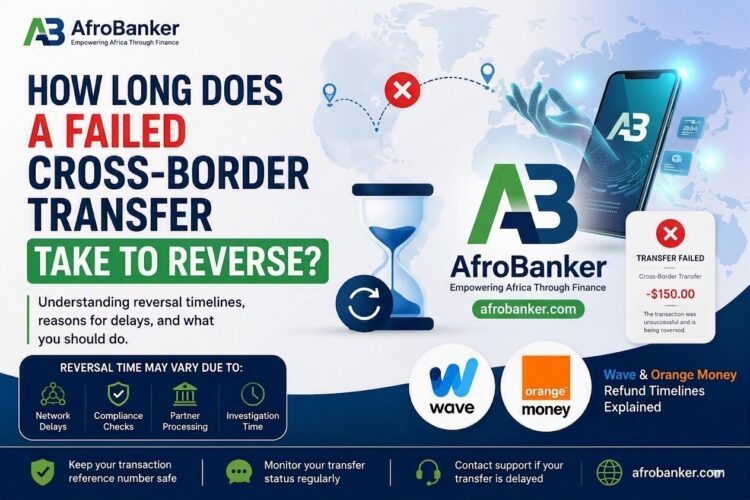
How Long Does a Failed Cross-Border Transfer Take to Reverse?
Cross-border mobile money services have transformed how people send money across Africa. Platforms such as Wave and Orange Money allow users to transfer funds to family members, friends, business partners, and merchants in different countries without visiting a traditional bank.
While these services are generally reliable, failed transfers occasionally occur. One of the most frustrating situations for customers is seeing their account debited while the recipient receives nothing. At that moment, the first question that comes to mind is simple: “Where is my money?” The second question is usually: “How long will it take to get it back?”
This guide explains failed cross-border transfer reversal timelines, common reasons transfers fail, expected refund periods, and steps you can take to recover your funds.
What Is a Failed Cross-Border Transfer?
A failed cross-border transfer occurs when money leaves the sender’s account but the transaction cannot be completed successfully at some stage of processing.
The transfer may fail because of:
- Network interruptions
- System downtime
- Incorrect recipient details
- Compliance or fraud screening
- Receiving network outages
- Transaction limit restrictions
- Currency conversion problems
- Connectivity issues between partner providers
When this happens, the provider typically initiates a reversal process to return the money to the sender.
Why Was Money Deducted but the Recipient Did Not Receive It?
This is one of the most searched questions about international mobile money transfers. A deduction from your account does not always mean the transaction has been fully completed. Most transfers pass through several processing stages:
- Transfer initiation
- Validation checks
- Compliance screening
- Partner network processing
- Recipient account crediting
If the transaction fails at any of these stages, the sender’s account may already have been debited while the receiving side remains uncredited.
Common causes include:
Temporary Network Failure
A communication problem between payment systems may interrupt processing.
Recipient Account Issues
The recipient’s wallet may be inactive, restricted, or unable to accept incoming transfers.
Compliance Verification
Certain international transfers trigger review procedures to meet anti-money laundering requirements.
Technical Maintenance
Routine maintenance can temporarily delay or stop transaction processing.
In many cases, the money is not lost. It is simply waiting for either completion or reversal.
How Long Does Wave Take to Reverse a Failed Transfer?
One of the most common concerns among Wave users is the waiting period for refunds.
The exact reversal timeframe depends on:
- The country involved
- Recipient network
- Payment partner
- Nature of the transaction failure
- Compliance reviews
In straightforward cases, reversals may happen quickly after the failed transaction is detected.
However, if the transfer involves multiple payment partners or regulatory checks, customers may have to wait longer before funds return to their account. The safest approach is to monitor your transaction status through the app and contact customer support if the transaction remains unresolved for an unusually long period. Keep your transaction reference number available when seeking assistance.
Why Is My Wave Transfer Still Pending?
A pending status does not always indicate failure. Many transfers remain pending because they are still undergoing processing. Possible reasons include:
Receiving Network Delays
The recipient’s mobile money network may be experiencing congestion.
Security Verification
Additional verification checks may temporarily delay processing.
High Transaction Volumes
Peak transaction periods can create longer processing queues.
Partner Processing Delays
International transfers often involve multiple financial service providers. Delays at any stage can cause a pending status. If the transaction remains pending well beyond the expected processing period, contacting support is recommended.
What Happens If an Orange Money Transfer Fails?
When an Orange Money transfer fails, the transaction typically enters an investigation or reversal process.
The provider may:
- Automatically reverse the transaction
- Verify transaction records
- Check receiving network status
- Investigate partner processing issues
- Notify customers regarding outcomes
In most circumstances, the customer will either receive the transfer successfully or have the funds returned. The key point is that a failed transfer does not automatically mean the money has disappeared. Transaction logs make it possible for providers to trace and resolve most cases.
How Long Does Orange Money Take to Process Refunds?
Refund timelines vary according to the transaction type and underlying cause of failure. Several factors affect processing time:
Automatic Reversals
These are usually completed faster because the system detects the failure immediately.
Manual Investigations
Cases requiring human review naturally take longer.
International Payment Partners
Cross-border transfers often involve partner institutions, adding extra processing stages.
Compliance Checks
Refunds associated with regulatory reviews can experience additional delays. Customers should keep all transaction records until the issue is fully resolved.
Does Wave Refund Failed International Transfers Automatically?
In many situations, failed transfers are handled through automated reversal systems. When the platform identifies that a transfer cannot be completed, an automatic refund process may begin without requiring customer intervention.
However, not every failed transfer follows the same path. Some situations require:
- Additional verification
- Technical investigations
- Customer support review
- Partner network confirmation
If a refund has not appeared after a reasonable period, it is advisable to contact customer support with transaction details.
Can I Get a Refund for a Failed International Money Transfer?
Yes. A legitimate failed transfer is generally eligible for investigation and possible refund. To improve the chances of a quick resolution:
Save Transaction Evidence
Keep:
- Transaction ID
- Screenshots
- Confirmation messages
- Account statements
Report Promptly
Contact support as soon as you notice the issue.
Provide Accurate Information
Incorrect transaction details can delay investigations.
Follow Up
If the case remains unresolved, continue monitoring and requesting updates.
How Do I Track a Cross-Border Transfer?
Tracking a transfer becomes much easier when you have the transaction reference number. You can usually monitor progress through:
Mobile App
Many providers display transaction statuses directly within the application.
SMS Notifications
Status updates may be sent by text message.
Customer Support
Support teams can review transaction logs using the reference number.
Email Notifications
Some services provide updates through email alerts.
Always save your reference number immediately after initiating a transfer.
Can Cross-Border Mobile Money Transfers Be Cancelled?
The answer depends on the stage of processing. A cancellation may be possible if:
- The transaction is still pending
- The recipient has not been credited
- Processing has not been finalized
However, once the recipient successfully receives the money, cancellation is often no longer possible. This is why it is important to verify recipient details carefully before confirming any transaction.
What Should I Do If My Transfer Is Not Reversed?
If your transfer remains unresolved, follow these steps:
1. Check the Transaction Status
Review the latest status in the app or platform.
2. Gather Evidence
Collect:
- Transaction ID
- Transfer date
- Amount sent
- Recipient details
- Screenshots
3. Contact Customer Support
Report the issue through official support channels.
4. Record Communication
Keep records of all conversations and case numbers.
5. Follow Up Regularly
Polite follow-up often helps keep your case active.
6. Escalate When Necessary
If the issue remains unresolved for an extended period, request escalation through the provider’s complaint resolution procedures.
Tips to Avoid Failed Cross-Border Transfers
Although not every failure is preventable, you can reduce the risk by:
- Double-checking recipient numbers
- Confirming country codes
- Staying within transaction limits
- Sending during stable network periods
- Updating your mobile money application regularly
- Ensuring sufficient account balance
- Verifying recipient account status before sending
These simple precautions can significantly lower the chances of encountering transfer problems.
Frequently Asked Questions
How long is the failed cross-border transfer reversal time on Wave?
The timeframe varies depending on the cause of failure, receiving network, payment partner, and compliance review requirements. Some reversals occur quickly, while others may take longer to complete.
Why is my Wave transfer still pending?
A transfer may remain pending due to network congestion, partner delays, compliance checks, technical maintenance, or high transaction volumes.
What happens if an Orange Money transfer fails?
The transaction typically enters a reversal or investigation process. The provider will seek to complete the transfer or return the funds to the sender.
Can I get a refund for a failed international money transfer?
Yes. Most genuine failed transactions can be investigated and may qualify for a refund after verification.
How do I track a cross-border transfer?
Use your transaction reference number through the provider’s app, SMS notifications, email updates, or customer support channels.
Why was money deducted but the recipient did not receive it?
The transaction may have failed after your account was debited due to network issues, compliance reviews, or recipient-side problems.
How long does Orange Money take to process refunds?
Refund timelines vary based on the reason for failure, whether the reversal is automatic or manual, and the involvement of external payment partners.
What should I do if my transfer is not reversed?
Contact customer support immediately, provide transaction evidence, obtain a case reference, and follow up until the issue is resolved.
Can cross-border mobile money transfers be cancelled?
Some transactions can be cancelled before final processing, but completed transfers are usually irreversible.
Does Wave refund failed international transfers automatically?
Many failed transfers are refunded automatically, although certain cases may require additional investigation before reimbursement.
What affects failed cross-border transfer reversal time?
The Number of Payment Partners Involved, Manual Investigations vs. Automatic Reversals, Compliance and Fraud Screening, etc.
Conclusion
Failed cross-border transfers can be stressful, especially when money leaves your account but never reaches the intended recipient. Fortunately, most issues are traceable and can be resolved through completion of the transfer or reversal of the funds.
Whether you use Wave, Orange Money, or another mobile money platform, the most important steps are keeping transaction records, monitoring transfer status, and reporting problems promptly. If you are experiencing local bank transaction failures rather than international ones, read our complete breakdown on the Kuda Bank Failed Transfer Auto Reversal Time
Understanding how reversal processes work can help you respond confidently and increase the likelihood of a successful resolution.

Leave a Reply