
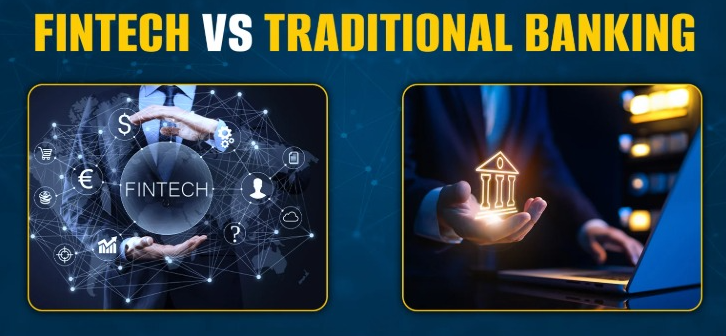
A Silent Shift in Financial Power
The financial industry is undergoing one of the most profound transformations in its history. For decades, traditional banks dominated how people saved, transferred, and accessed money. Today, that dominance is being challenged, and it’s rapidly and aggressively by financial technology companies, widely known as “Fintechs”.
From instant transfers to seamless mobile apps, fintech platforms are rewriting the rules of banking. Customers are no longer willing to tolerate slow services, excessive charges, and rigid processes. Instead, they are migrating toward platforms that prioritize speed, convenience, and accessibility.
This shift is not just accidental but it is driven by deep structural differences between fintech companies and traditional banks.
So why exactly is fintech gaining ground?
How Is Fintech Disrupting Traditional Banking?
Fintech is not just competing with banks, but it is redefining how financial services are delivered. At its core, fintech disrupts traditional banking by removing friction. Processes that once required physical presence, documentation, and long waiting periods can now be completed within minutes on a smartphone.
Opening an account, for example, used to take hours or even days. Today, fintech platforms enable users to sign up in minutes using digital verification. Similarly, transfers that previously required multiple confirmations are now completed instantly.
More importantly, fintech introduces a different mindset. Traditional banks are built around institutional control, while fintech are built around customer experience.
This difference in philosophy is what makes fintech disruptive. It challenges the very foundation on which traditional banking operates.
You may also like: How Banks Balances Risk Control and Customer Service
Why Proper Device Shutdown and Power Safety Is Critical in Banking Operations
Why Is Fintech Better Than Banks?
The idea that fintech is “better” than banks depends on what customers value most. In many areas, fintech clearly has the upper hand. These areas include the following:
Speed and Efficiency
Fintech platforms are designed for instant execution. Transactions, approvals, and updates happen in real time, reducing the need for delays.
Traditional banks, however, often depend on legacy infrastructure and layered approvals, which slows down processes.
User Experience
Fintech companies invest heavily in creating intuitive and user-friendly applications. Every feature is designed to simplify the customer journey.
In contrast, banking apps can sometimes feel complex, outdated, and less responsive.
Lower Fees
Because fintech operates with fewer physical branches and lower operational costs, it can offer services at reduced fees, or even completely free. This is exactly why people especially youths, troop in numbers to sign up with them.
Traditional banks incur higher costs due to infrastructure, staffing, and regulatory overhead, which often translates into charges for customers.
Accessibility
Fintech platforms are accessible to anyone with a smartphone. This has significantly expanded financial inclusion, especially in regions where traditional banking access is limited.
Banks, on the other hand, may require stricter documentation, physical visits, or account minimums that exclude many potential users.
How Does Fintech Affect Traditional Banking in Nigeria?
In Nigeria and Africa as a whole, the impact of fintech is particularly strong, and highly visible. Nigeria and Africa’s banking landscape has historically been shaped by issues such as long queues, delayed transactions, and limited access in rural areas. Fintech companies have stepped into these gaps with digital-first solutions.
Today, mobile payment apps, digital wallets, and instant transfer platforms have become everyday tools for millions of Nigerians. These platforms allow users to send money, pay bills, and manage finances without visiting a bank. For traditional banks, this shift has created significant pressure. Customers now compare bank services directly with fintech alternatives. If a bank transaction takes hours while a fintech app completes it instantly, the difference becomes obvious.
Fintech has also driven competition in areas such as:
- Faster transaction processing
- Improved mobile banking experiences
- Reduced transfer charges
As a result, many Nigerian banks are now investing heavily in digital transformation to remain competitive. At the same time, regulators such as the Central Bank are tightening oversight to ensure stability, which creates a more balanced but competitive environment.
How Does Fintech Affect Traditional Banking Profitability?
One of the biggest impacts of fintech on traditional banking is financial. Banks make money through:
- Transaction fees
- Lending margins
- Account maintenance charges
Now there is a disruption by Fintechs in that model in several ways. Here are my sketch as an experienced Bank staff.
Reduction in Fees
Fintech platforms often offer low-cost or zero-fee services, forcing banks to reduce their charges to remain competitive. This directly affects bank revenue to a minimum level
Loss of Customer Base
Younger customers, especially, are shifting toward fintech platforms. Over time, this reduces the customer base that banks rely on for deposits and transactions. Over time, banks waits for a customer/child to turn 18 before onboarding them. Now the norms has changed. Fintechs now enrolls youths who especially has their Government issued ID’s like NIN (Peculiar in Nigeria)
Pressure on Loan Products
Fintech lenders are entering the credit space with faster approval systems and flexible terms. This creates competition for one of the most profitable areas of banking which is “lending”.
Increased Technology Costs
To keep up, traditional banks must invest heavily in upgrading their systems, improving cybersecurity, and modernizing operations. These investments increase operational expenses.
Now in simple terms, fintech is forcing banks to:
- Earn less per transaction
- Spend more on technology
- Compete harder for customers
The Core Reasons Why Fintech Is Winning
1. Digital-First Advantage
Fintech companies are built entirely on modern digital infrastructure. They do not struggle with outdated systems or complex internal structures. This allows them to move faster, scale quickly, and innovate without limitations.
2. Customer-Centric Design
Every fintech product is built around the user. From onboarding to transaction confirmation, the entire experience is designed to be smooth, fast, and simple. This contrasts with traditional systems that often prioritize internal processes over customer convenience.
3. Agility and Innovation
Fintech companies adapt quickly to market changes. They release updates, introduce features, and solve problems faster than banks. Traditional banks, due to regulations and internal structures, tend to move more slowly.
4. Lower Operational Costs
Fintech operates without the heavy burden of physical branches, large administrative systems and complex hierarchies. This makes it easier for them to offer competitive pricing and scalable services.
5. Focused Specialization
Most fintech platforms focus on specific services like payments, lending, or investment. This allows them to deliver highly efficient solutions in their chosen areas, while banks struggle to optimize across multiple service lines.
Are Banks Losing Completely?
Despite fintech’s rise, traditional banks still hold strong advantages. Yes, they do! Traditional Banks remain dominant in areas such as:
- Large-scale lending
- Corporate banking
- Regulatory trust
- Deposit security
Banks also have long-established reputations, which many customers still rely on for stability. What is happening is not a complete takeover but a shift in balance.
While Fintech is winning in:
- Speed
- Convenience
- User experience
Banks are holding ground in:
- Trust
- Structure
- Financial depth
The Future: Collaboration, Not Competition
The future of banking is not a battle where one side eliminates the other, instead, it is increasingly becoming a collaborative ecosystem. Many banks are partnering with fintech companies to:
- improve digital services
- enhance customer experience
- introduce innovative products. This is possible because banks accepts an utility bills (like the Electricity bills) receipt from fintech to upgrade or open account for customers.
At the same time, fintech platforms often rely on banks for infrastructure such as:
- settlement systems
- regulatory coverage
- liquidity
This evolving relationship shows that the future is not “fintech vs banks” but rather fintech and banks working together.
My Insight As a Bank Staff
From my practical perspective, fintech is not winning because banks are weak. It is winning because it understands what modern customers wants, especially youths and delivers it faster. However, fintech still faces challenges in areas such as regulation, fraud control, and long-term stability. Now the real winners in the coming years will be institutions that can combine: both:
- fintech speed
- banking security
- strong customer trust. Yes, this will be the future of banking.
Final Thoughts
Fintech is undeniably reshaping the financial industry. Its rise highlights a critical truth: customers are no longer satisfied with slow, rigid systems, but expect faster services, lower costs, and seamless digital experiences. Traditional banks are now at a crossroads. They must either evolve or risk losing relevance in a rapidly changing landscape. The institutions that will thrive are those that:
- embrace innovation
- prioritize customer experience
- maintain strong risk control
In the end, fintech is not just beating banks, it is forcing them to become better.
Leave a Reply