
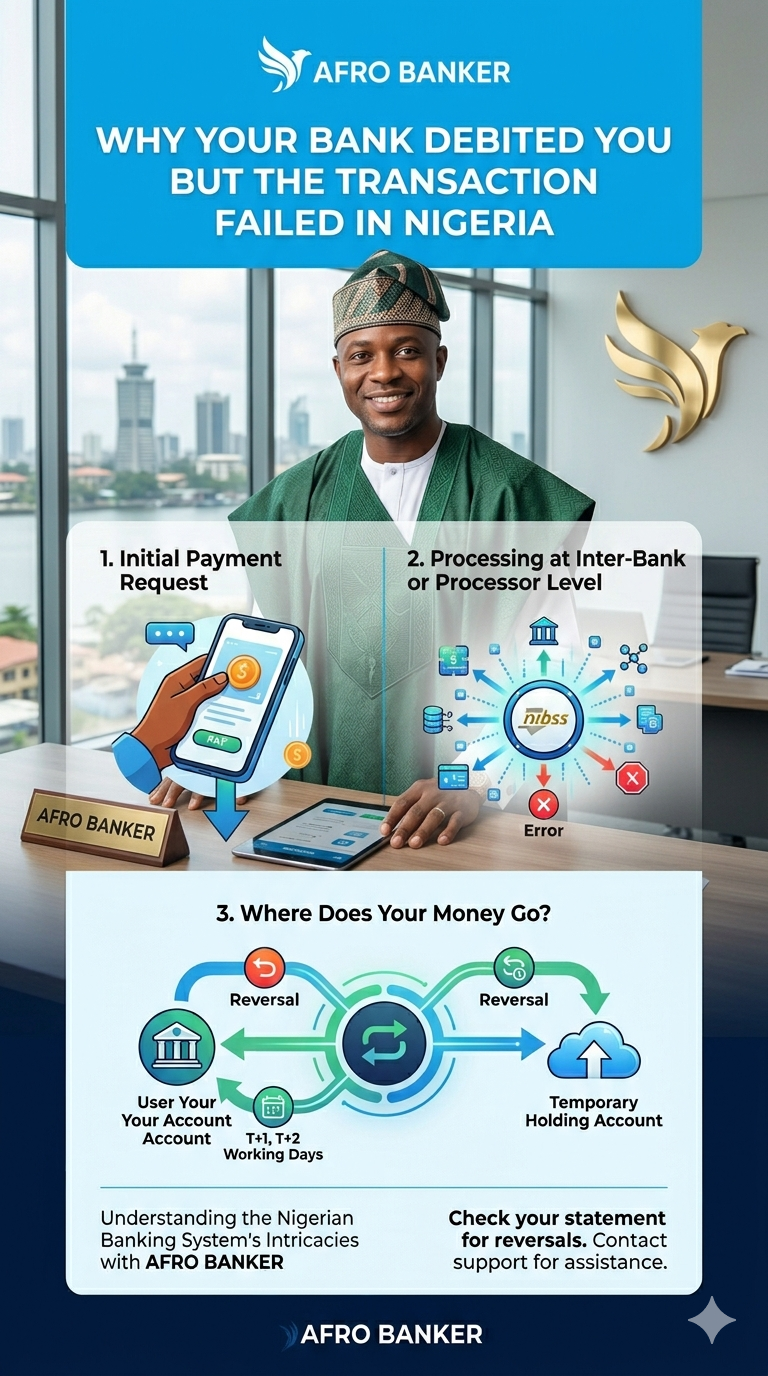
One of the most frustrating experiences for any bank customer in Nigeria is receiving a debit alert for a transaction that never went through. You try to withdraw cash from an ATM, make a payment through POS or send money via mobile transfer and suddenly your account is debited but the transaction fails. This situation creates panic, confusion, and sometimes anger, especially when the money does not return immediately.
In this comprehensive guide, you will understand why this issue happens in banking, what is happening behind the scenes, how long reversals really takes, what you must do to recover your money and finally how to avoid future failed transactions. This is not theory, this is based on real banking system processes and operations.
What It Really Means When You Are Debited But The Transaction Fails
When a bank debits your account even though the transaction fails, it does not automatically mean your money is lost. What it actually means is that your transaction started successfully and your your account was charged during the process. But something interrupted completion. In simple terms, your money is in what bankers call, which is called “a temporary processing state”.
This means that the system has recognized and removed the money but the final delivery (cash or transfer) did not happen. So, the issue is usually a processing failure, not a disappearance of funds.
Common Scenarios Where This Happens
1. ATM Withdrawal Failure
This is one of the most frequent causes of this issue in African banking system, especially Nigeria. The issue starts when you request for cash withdrawal through the ATM. You insert your card, request cash and immediately you receive a debit alert without the ATM dispensing cash.
Why did this happen? The ATM may run out of cash mid-transaction, meaning the system already debited you but cannot dispense money, or there may be a network disruption between the ATM and your bank during processing or the ATM machine itself may develop a hardware fault, stopping it from completing the transaction. This means that the system has already recorded your request and processed the debit, but the machine could not fulfill the physical cash part of the transaction.
2. POS Payment Failure
This often happens in shops, agents, supermarkets, or fuel stations. The POS machine displays “Transaction Failed” after the customer must have inserted their cards to consummate the transaction, but their account is debited.
What happens at this process? There may be a delay in communication between your bank and the merchant’s bank or the POS terminal may experience network instability or the transaction may partially process before a system timeout occurs. This means that your bank has recognized and processed your payment request, but the merchant’s system did not receive confirmation, resulting in failure.
3. Mobile Transfer Failure (Mobile App & USSD)
A lot of bank customers faces this issue. This happens during bank app or USSD transfers when you try to send money meant for business purposes or your relation, but the transaction fails or remains pending, but your account is debited during this process. All these happens because interbank transfers depend on multiple systems and not just your bank, there may be delays from payment switch network or probably your banking app may experience processing errors.
What this means is that the debit occurred at your bank level, but the receiving bank did not confirm the transaction successfully.
Why Banks Debits You Even When the Transaction Doesn’t Go Through

This is the most misunderstood part of this entire issue. Here I will discuss why banks debits you, even though the transaction fails. Here are why:
1. Transactions Happen in Stages -Banking transactions are not a single instant action. They occur in phases:
- Authorization — Your bank verifies you have enough money
- Processing — The system begins transferring the funds
- Confirmation — The receiving system confirms success
Why does this matter to you as a bank customer? If the transaction fails after authorization or during processing, your account may already be debited but confirmation is never completed.
2. Network Dependencies in Africa or The Nigerian Banking System – Banking systems rely on multiple interconnected platforms which are your bank, the receiving bank, the payment switching systems and the digital networks. If any one of these systems delays, disconnects or fails to respond, it can interrupt the transaction midway.
3. System Timeouts – Every transaction has a time limit to complete. If a system does not receive confirmation within a set time, it automatically cancels the transaction. But in many cases, the debit had already happened before the timeout occurred. This results in “failed transaction or Debit alert.
4. Interbank Communication Delays – When money moves between different banks, your bank sends the instruction instantly and the receiving bank must confirm receipt. The reason why delays happen is because:
- Receiving bank systems may be slow
- Network congestion may affect communication
- Settlement processes may not be immediate.
During this period, debit happens, but confirmation is delayed or fails. Now, will you get your money back? Yes. In most cases, your money will be reversed immediately but the issue is not recovery but how long it takes.
How Long Does The Reversal Process Takes?
If the issue happened within the same bank, reversal can happen within minutes or hours. Why would this happen faster? This is because both the sender and the receiver are within one system, therefore, no external verification is required.
Also, if the transaction is interbank transfers, that is for transfers between different banks, it may take 24 to 72 hours. This will be slower because banks must
- Check records across systems
- Confirm failed delivery
- Balance accounts between institutions
Finally, for failed transactions that occurred within ATM and POS, it may take 3 to 5 working days. This is because:
- ATM transactions require machine logs to be checked
- POS transactions involve merchant banks
- Disputes may require manual verification
What You Should Do Immediately
1. Stay calm and avoid panic. Although it feels alarming, this is usually a recoverable system issue, not permanent loss. Panicking can lead to making repeated transfers and this can worsen the situation.
2. Always check your transaction status before committing another one. Please verify your bank app transaction history and SMS alerts. This is important because most times, the transaction may later go through or reversal may already have started.
3. Always allow time for auto-reversal. Many banking systems are automated, this means that failed transactions are often flagged and systems automatically trigger refunds. So wait a few minutes or hours and monitor your account.
4. Report to your bank immediately if delay persists or if money is not reversed. You can do this through customer care phone lines, bank mobile apps or try visiting a branch. Reporting your failed transaction will trigger or escalate your case into manual review and faster resolution.
5. Provide complete transaction details when reporting your failed transaction. You should try as much as you can to capture exactly amount debited, transaction date and time and transaction type (ATM, POS, transfer). Providing clear details helps bank staff to trace your transaction faster and avoids delays in investigation.
6. Try to keep evidence of the transaction. Always try to save Screenshots, transaction reference numbers and debit alerts. These are proofs that strengthens your claim and speeds up your resolution.
When Should You Take It Seriously?
Although, most failed transaction cases are resolved, still escalate if there is no refund after several working days or if the bank’s response is unclear or the transaction cannot be traced. What should you do? Push for escalation within the bank system until resolved.
How to Prevent Failed Transactions in the Future
There are various factors that cause failed transaction, and as a bank customer, you need to very sensitive to these variables to stay away from incessant debits. Below are some of the things to note.
1. Avoid Peak Transaction Periods
High traffic periods like salary days or month ends overload banking systems, and this results in slower systems and higher failure rates.
2. Use Stable and Reliable Channels
Not all channels perform equally, therefore use the banks mobile apps over instead of USSD. Some people prefer using the app than USSD channel due to issues associated with the USSD failures. It is also good to avoid poorly maintained POS terminals. This will save you some stress about transaction reversal.
3. Ensure Strong Network Connectivity
Weak internet increases transaction failures. This is because transactions rely on real-time communication. Therefore ensure you have a strong network connectivity before making any online transaction.
4. Avoid Repeated Transactions
Retrying failed transactions multiple times can multiply debits and create confusion in reversals.
5. Maintain Proper Records
Always keep transaction records because records helps to resolve issues faster if problems occur.
Insider Insight (Real Banking Experience/Perspective)
From my experience over the years as a bank staff and through banking operations had so far, delays are rarely intentional. They typically happen because systems reconcile transactions in batches (as they were reported on the system), interbank disputes require verification and fraud checks may temporarily hold transactions. So what customers experience as “delay” is often system-driven processing, not manipulation. This is true because banks protects their customer’s funds.
Conclusion
Being debited for a failed transaction is frustrating, but it is a very common issue in Africa/Nigeria’s banking environment. The key things to remember is that your money is usually not lost, the issue is system-related and finally, reversals are almost always processed.
What separates a calm customer from a frustrated one is that a calm customer understands the process, knows what action to take and knows when to escalate. With this knowledge, you are now in control.
Frequently Asked Questions (FAQ)
Why did my bank debit me without completing the transaction?
Because the debit occurred during processing, but the transaction failed before completion.
How long will it take to get my money back?
It can take from a few hours to 3–5 working days, depending on the transaction type.
Can my money be lost permanently?
Very unlikely. Most failed transactions are reversed.
Should I contact my bank immediately?
Wait briefly for auto-reversal, then report if it delays.
Who is responsible for the issue?
Usually your bank handles resolution, even if another bank is involved.

Leave a Reply