
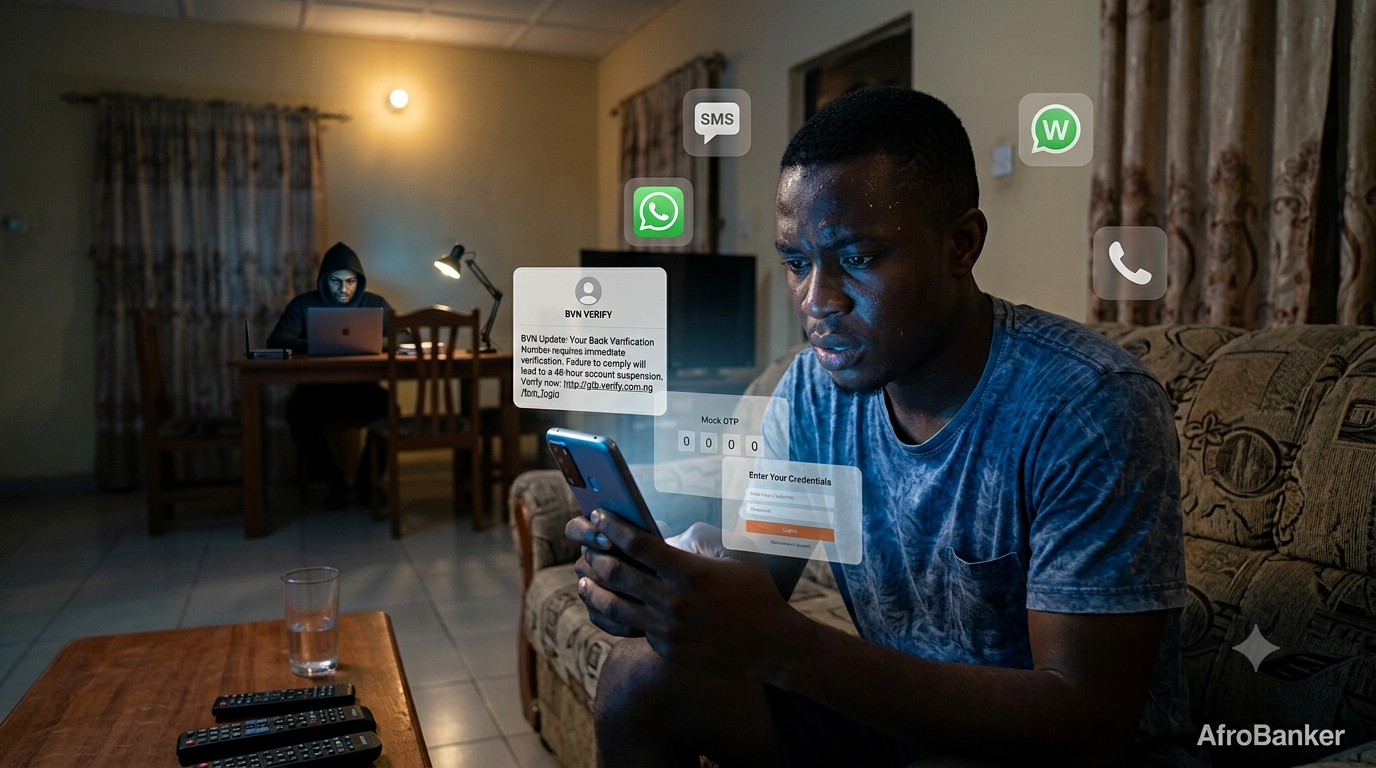
In today’s digital banking environment, convenience has come with a dangerous trade-off, which is an increased exposure to fraud. Across Nigeria & Africa, thousands of bank customers fall victim to scams every year, often without even realizing how their personal banking details were compromised.
The truth is, scammers are no longer relying on crude tricks. They now use psychology, technology, and insider-level deception to gain access to sensitive information such as account numbers, ATM card details, PINs, and even one-time passwords (OTPs).
Understanding how these fraudsters operate is your first line of defense. In this guide, we will break down exactly how scammers get your bank details in Nigeria, the common methods they use, and most importantly, how you can protect yourself.
How Do Scammers Get Your Bank Details?
1. Social Engineering (Manipulation and Deception)
One of the most powerful tools scammers use is human psychology. Instead of hacking systems, they trick people into voluntarily giving away their details. This often involves impersonating bank officials, telecom agents, or even government representatives.
Some common tactics include:
- Calling customers and claiming their account has been compromised
- Sending urgent messages that require “verification”
- Pretending to help resolve failed transactions
Because the conversation sounds convincing and urgent, victims often panic and reveal sensitive details like ATM PIN, OTP codes & Internet banking passwords. In many cases, the scammer already knows basic details such as your name or phone number, making the interaction feel legitimate.
2. Phishing Messages and Fake Links
Phishing remains one of the most widespread fraud methods in Nigeria and across Africa. This involves sending fake SMS messages, emails, or WhatsApp links that appear to come from a bank. These messages usually include:
- A warning about account suspension
- A fake bonus or refund claim
- A request to “update your account details”
Once you click the link, you are taken to a fake banking website that looks almost identical to the real one. Any information you enter on that page goes directly to the scammers. Read our complete guide on how to avoid Phishing attack.
3. Fake Customer Care Numbers
Fraudsters now exploit search engines and social media by posting fake bank customer care numbers.
Here’s how it works:
- You search online for your bank’s contact number
- You unknowingly call a scammer
- They ask for your account details under the guise of assisting you
Because you initiated the call, you naturally trust the interaction. This makes the scam even more effective.
4. SIM Swap Fraud
SIM swap fraud is one of the most dangerous methods currently used. In this scheme, scammers:
- Gain access to your phone number (sometimes with insider help)
- Transfer your number to a new SIM card
- Take control of your calls and SMS
Once they control your phone line, they can:
- Receive your OTPs
- Reset your banking passwords
- Authorize transactions
This type of fraud is particularly devastating because it bypasses standard security layers. Click here to read more on SIM swap fraud
5. Malware and Spy Apps
Sometimes, scammers don’t need to trick you directly, they rely on malicious software. This can happen when you download apps from untrusted sources, click suspicious links and install modified banking apps. The malware can:
- Track your keystrokes
- Capture login credentials
- Monitor SMS alerts
In some cases, your banking session is compromised without your knowledge.
6. ATM and POS Skimming
Physical fraud still exists, especially around ATMs and POS terminals. Devices known as “skimmers” can be used to:
- Capture your ATM card details
- Record your PIN using hidden cameras
Once this information is collected, fraudsters clone your card and withdraw funds.
7. Insider Leaks and Data Exposure
Unfortunately, not all threats come from outside, some data is being leaked or exposed by some bank staff. Therefore, some scams originate from:
- Leaked customer databases
- Dishonest agents
- Unsecured business transactions
If your personal details are exposed through any channel, scammers can piece together enough information to target you effectively.
How to Avoid Bank Scams in Nigeria
1. Never Share Sensitive Information
Your bank will never ask for:
- PIN
- OTP
- Password
No matter how urgent the situation sounds, never share these details.
2. Always Verify Before Acting
If you receive a suspicious call or message:
- Contact your bank using the official number
- Visit a branch if necessary
Do not rely on information from random websites or forwarded messages.
3. Avoid Clicking Unknown Links
Never click links from:
- Unknown numbers
- Suspicious SMS alerts
- Unverified emails
Always type your bank’s website URL directly into your browser.
4. Secure Your SIM Card
- Register your SIM properly
- Activate SIM lock (PIN protection)
- Report network issues immediately
If you suddenly lose signal, act fast—it could be a SIM swap attempt.
5. Use Official Banking Apps Only
- Download apps from Google Play Store or Apple App Store
- Avoid “modded” or unofficial apps
- Keep your apps updated
6. Monitor Your Account Regularly
Check your account frequently for:
- Unauthorized debits
- Strange login alerts
- Unknown transactions
Early detection can prevent bigger losses.
7. Report Suspicious Activity Immediately
Time is critical when dealing with fraud.
- Contact your bank instantly
- Block your account if necessary
- Report to CBN or relevant authorities
How do scammers get your bank account number?
Scammers obtain bank account numbers through various means such as leaked databases, phishing attacks, fake forms, or even careless sharing of receipts and documents. In some cases, they combine publicly available information with stolen data to build a complete profile of their victims.
What are the top 3 contact methods used by scammers?
The most common contact methods used by scammers in Nigeria are:
- Phone calls (impersonation of bank staff)
- SMS messages (phishing links)
- Social media platforms like WhatsApp and Facebook
These methods are effective because they create urgency and appear familiar to the victim.
How do fraudsters get access to your bank account?
Fraudsters access bank accounts by obtaining critical authentication details such as PINs, passwords, and OTPs. They may also use SIM swap fraud, malware, or fake banking platforms to bypass security measures and gain control of accounts.
How do scammers find out what bank you use?
Scammers identify your bank through:
- Debit alerts or SMS notifications seen on your phone
- Information shared during transactions
- Data leaks from businesses or platforms
- Social engineering (asking indirect questions)
Once they know your bank, they tailor their scam approach accordingly.
How did scammers get my bank details?
Your details may have been obtained through phishing, malware, insider leaks, or even past transactions where your information was exposed. In many cases, victims unknowingly provide these details during fake verification processes.
Which banks do scammers use?
Scammers do not rely on a specific bank. They often use:
- Accounts opened with fake identities
- Dormant or compromised accounts
- Digital wallets and fintech platforms
Their goal is to move funds quickly before detection, not to stay tied to a particular bank.
My Final Thoughts (As a Bank Staff)
Your biggest advantage is not technology, it’s awareness. Most scams succeed not because systems are weak, but because customers are unprepared. Stay informed, stay cautious, and always question urgency. Banking fraud is evolving rapidly, but so is awareness. The difference between becoming a victim and staying safe often comes down to knowledge and vigilance.
As a bank customer, you must understand this simple rule: “If anyone is asking for sensitive banking details, it is most likely a scam.” By staying alert, verifying every request, and protecting your personal information, you can avoid falling into the traps set by fraudsters.
Leave a Reply