
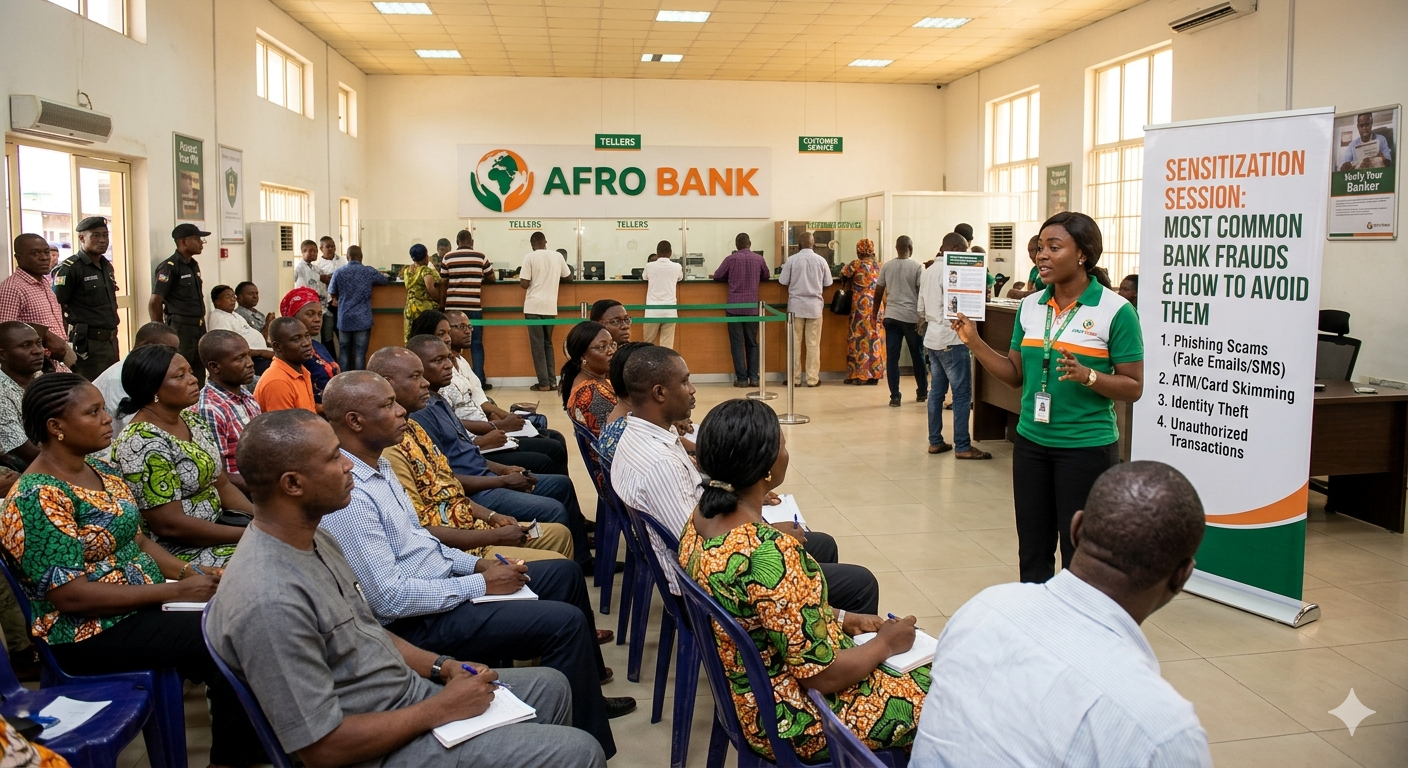
Bank fraud has become one of the most pressing challenges facing Nigeria’s financial system today. With the rapid growth of digital banking, mobile transactions, and internet-based financial services, fraudsters have become increasingly sophisticated in their methods. Many individuals and businesses have lost significant amounts of money simply because they were unaware of how these scams operate or how to protect themselves.
Understanding the most common types of bank fraud in Nigeria and knowing how to avoid them is essential for safeguarding your finances. This article provides a comprehensive and practical guide to help you stay one step ahead of fraudsters.
ATM Card Fraud (Card Skimming and Theft)
ATM fraud is one of the oldest and most prevalent forms of banking fraud in Nigeria. Fraudsters use devices known as skimmers to capture card details when customers insert their cards into compromised ATM machines. In some cases, criminals physically steal ATM cards or trick individuals into revealing their PINs.
Another variation is “shoulder surfing,” where a fraudster stands close by and observes a customer entering their PIN. Once they obtain the card or clone it, they withdraw funds without the cardholder’s consent. Also, fraudsters swap the cards of unsuspecting individuals at the ATM point while trying to withdraw cash. They offer to give assistance and swap the card without the individual noticing. This has been a reoccurring scenario which I have personally witnessed that happens in our bank.
How to Avoid ATM Card Fraud
- Always shield the keypad when entering your PIN at ATMs.
- Avoid using ATMs in isolated or poorly lit areas.
- Inspect the ATM slot; if it looks tampered with, do not use it.
- Never accept help from strangers at an ATM except the bank’s official corporate guards.
- Report compromised, lost or stolen cards immediately to your bank.
Phishing and Fake Bank Alerts
Phishing scams involve fraudulent messages designed to trick customers into revealing sensitive information such as account numbers, passwords, or PINs. These messages often appear to come from legitimate banks and may claim that your account has been compromised or that you need to verify your details urgently.
Fraudsters may also send fake debit alerts to convince sellers that payment has been made when it has not. Click here to read our full guide on identifying phishing emails
How to Avoid Phishing & Fake Alerts
- Do not click on suspicious links in emails or SMS messages.
- Banks will never ask for your PIN, OTP or password via email or text.
- Always verify transactions using your official bank app or by contacting your bank directly.
- Be cautious of urgency, scammers often create panic to make you act quickly.
SIM Swap Fraud
How does SIM swap fraud occur? SIM swap fraud occurs when a fraudster gains control of your mobile number by convincing your telecom provider to issue a replacement SIM. Once they control your number, they receive your bank alerts and One-Time Passwords (OTPs), enabling them to access your bank account. Most of the time, these SIMs are swapped physically when the owner steps out or isn’t aware.
Often, this fraud is carried out using stolen personal information obtained through social engineering or data leaks.
How To Avoid Sim Swap Fraud
- Enable transaction alerts and email notifications in addition to SMS.
- Secure your phone number with a PIN or password at your telecom provider.
- If your phone suddenly loses network signal, act immediately and contact your network provider.
- Alert your bank quickly if you suspect a SIM swap.
Online Banking and Mobile App Fraud
Cybercriminals target online banking platforms and mobile apps through malware, fake apps, and unsecured networks. Unsuspecting users may download fraudulent apps or access their bank accounts on compromised Wi-Fi networks, exposing their credentials. Keyloggers and viruses can also capture login details, giving fraudsters full access to accounts.
How to Avoid Online Banking and Mobile App Fraud
- Download banking apps only from official app stores.
- Avoid using public Wi-Fi for financial transactions.
- Install and regularly update antivirus software on your devices.
- Always log out of banking apps after use.
- Use strong, unique passwords and enable two-factor authentication.
POS (Point of Sale) Fraud
POS fraud is common in Nigeria due to the widespread use of POS terminals for cash withdrawals and payments. Fraudsters posing as agents may manipulate transactions or use devices to capture card information. This has been a worrisome issue in Africa & Nigeria as well.
In some cases, agents deliberately charge customers multiple times or claim a failed transaction while still debiting the account.
Tips on How to Avoid POS Fraud
- Only patronize trusted and established POS agents.
- Always collect and review receipts after transactions.
- Monitor your bank alerts in real-time.
- Avoid handing over your card unnecessarily; insist on handling it yourself.
Advance Fee Fraud (“419 Scam”)
This type of fraud involves promises of large sums of money, business opportunities, or inheritances in exchange for an upfront payment. Victims are often asked to pay fees for documentation, taxes, or processing charges.
Despite widespread awareness, many still fall victim due to the attractive promises involved.
How To Avoid Advance Fee Fraud (“419 Scam”)
- Be skeptical of offers that seem too good to be true.
- Do not send money to unknown individuals or organizations.
- Verify any business opportunity thoroughly before committing funds.
- Remember that legitimate transactions do not require suspicious upfront payments.
Loan and Investment Scams
Fraudsters advertise fake loan offers with extremely low interest rates or investment schemes promising high returns. Victims are asked to pay processing or registration fees but never receive the promised service. Ponzi schemes also fall under this category, where returns are paid using funds from new investors rather than actual profits. Most Ponzi schemes occur when individuals are promised a high Return on Investment (ROI), only to be defrauded of their hard-earned money in the long run.
How to Avoid It
- Avoid unverified financial platforms or apps.
- Research companies thoroughly before investing.
- Check for registration with regulatory bodies such as the Central Bank of Nigeria (CBN) or SEC.
- Be wary of guaranteed returns, all investments carry some level of risk.
Insider Fraud
Insider fraud occurs when bank employees or agents misuse their access to customer information for personal gain. They may leak confidential data, manipulate accounts, or collaborate with external fraudsters just to defraud customers. In some instances, corrupt bank employees have even leaked customer ATM PINs to external fraudsters. This is one of the worst scenarios I have witnessed firsthand as a bank staff member.
Although banks have strong internal controls, these risks still exist.
How to Avoid It
- Regularly monitor your bank statements and transactions.
- Report any suspicious or unauthorized activity immediately.
- Limit how much personal financial information you share, even within banking premises.
- Use secure banking channels and avoid relying on third parties unnecessarily.
Fake Customer Care Representatives
Fraudsters pose as bank officials or customer care agents, often contacting victims via phone or social media. They claim to assist with account issues and request sensitive details, such as OTPs, PINs, or passwords. Most times, they call suspecting victims on mobile phones telling them that their ATM cards and accounts have been compromised.
In many cases, victims unknowingly grant full access to their accounts out of fear.
How To Avoid Fake Customer Care Fraud
- Never share confidential banking details with anyone.
- Contact your bank using official customer service numbers only or visit your bank when in doubt.
- Be cautious of unsolicited calls claiming to be from your bank.
- Banks do not request sensitive details over the phone.
Social Media and Marketplace Fraud
Fraudsters exploit platforms like Instagram, Facebook, and online marketplaces to deceive buyers and sellers. They may impersonate legitimate businesses or create fake pages.
Fake payment confirmations, account hacking, and impersonation are common tactics.
Here’s How to Avoid Social Media and Marketplace Fraud
- Verify sellers or buyers before conducting transactions.
- Avoid making payments without confirming receipt of goods or services.
- Use secure payment options instead of direct transfers when possible.
- Be cautious of newly created or suspicious-looking accounts.
General Tips to Avoid Bank Fraud
Beyond specific fraud types, here are universal measures that greatly reduce your risk:
- Keep your banking information private at all times.
- Regularly update passwords and avoid using easily guessed credentials.
- Activate transaction limits on your accounts.
- Review your account activity frequently.
- Set up alerts for all transactions.
- Educate yourself continuously about emerging fraud trends.
Conclusion
Bank fraud in Nigeria and Africa continues to evolve, with criminals constantly developing new techniques to exploit unsuspecting individuals. While financial institutions are working hard to strengthen security systems, customers also play a crucial role in protecting their own finances. They owe the bank what we call “a duty of care” which is to protect their bank information and data secret.
Awareness is your first line of defense. By understanding how these frauds operate and adopting preventive measures, you significantly reduce your chances of becoming a victim.
In today’s digital age, vigilance is not optional, it is essential. Always question suspicious activities, verify before trusting, and act quickly if something feels wrong. Protecting your money starts with staying informed and alert.

Leave a Reply