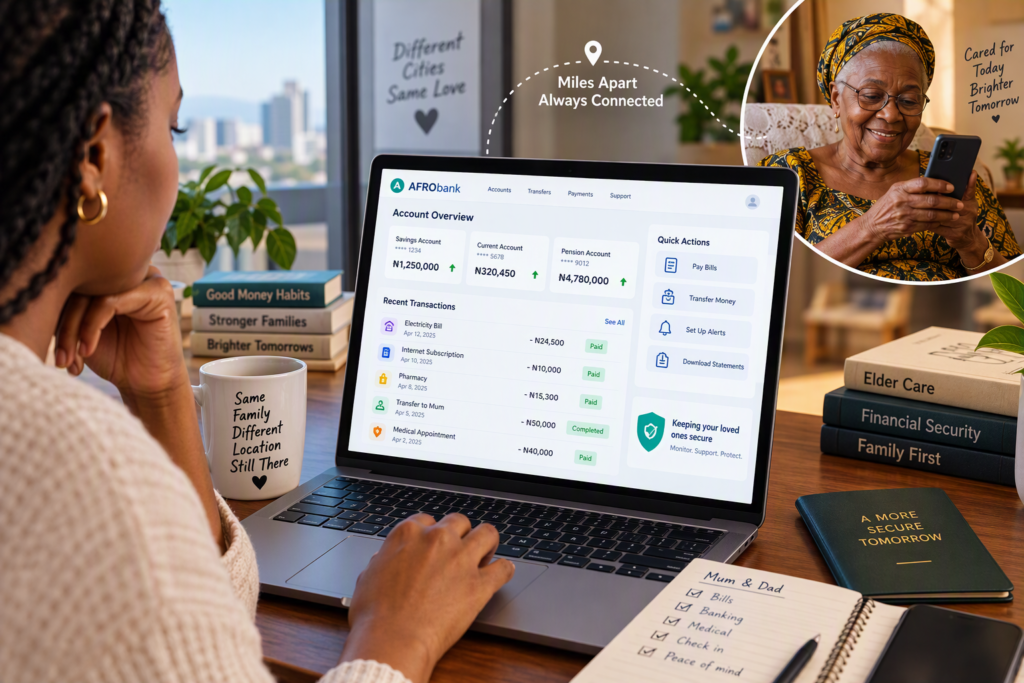
You can manage an aging parent’s finances from far away by creating a complete financial inventory, using digital banking tools, automating bill payments, setting up account alerts, monitoring transactions, protecting them from scams, and obtaining the appropriate legal authority to assist with financial decisions when necessary.
Managing your aging parent’s finances from a distance is a balancing act of security, legality, and empathy. When you aren’t there to look over their shoulder, setting up a digital and legal safety net is the best way to prevent fraud while ensuring their bills are paid on time.
Here is a strategic blueprint to securely manage an aging parent’s finances from miles away.
How to Securely Manage an Aging Parent’s Finances From Miles Away
Millions of adults find themselves in a difficult position: living far away from an aging parent who increasingly needs help managing money.
Perhaps your mother still lives in your hometown while you work in Lagos, London, Toronto, or Houston. Maybe your father insists he’s handling everything fine, yet utility bills are being missed, suspicious transactions are appearing on his account, or he keeps falling for phone scams.
Distance doesn’t eliminate responsibility. In many cases, it makes financial caregiving more complicated.
Managing an aging parent’s finances from miles away is no longer just about sending money. It involves protecting them from fraud, monitoring important accounts, ensuring bills are paid on time, organizing critical documents, and helping them maintain financial independence for as long as possible.
The challenge is balancing support without creating conflict. Most parents don’t want to feel controlled. Most adult children don’t want to become full-time financial managers.
The good news is that modern banking technology, financial planning tools, and proper systems make it possible to help aging parents safely and effectively, even when you live hundreds or thousands of miles away.
In this guide, you’ll learn how to build a secure financial caregiving system that protects your loved one while preserving their dignity and independence.
Why Aging Parents Often Need Financial Assistance
Growing older doesn’t automatically mean someone loses financial capability. However, aging can introduce challenges that increase the likelihood of mistakes. Many seniors struggle with:
- Memory issues
- Vision problems
- Reduced mobility
- Difficulty adapting to technology
- Increased vulnerability to scams
- Complex banking procedures
Tasks that once took a few minutes can become overwhelming. A banking app update may create confusion, a fraudulent email may look legitimate, a forgotten bill may result in service interruptions or penalties. These issues often develop gradually, which makes them difficult for family members to recognize early.
The Strategic Blueprint to Securely Manage an Aging Parent’s Finances From Miles Away.
1. Establish Legal Authority First
Before touching any accounts, you must secure the legal right to act on your parent’s behalf. Doing this while your parent has the cognitive capacity to consent is critical.
- Durable Power of Attorney (POA): This is the most crucial document. A durable POA allows you to manage financial affairs even if your parent becomes mentally incapacitated.
- Healthcare Proxy / Medical POA: While separate from finances, you will need this to manage medical bills and talk to health insurance providers.
- Revocable Living Trust: If your parents have complex assets, placing them in a trust with you named as a co-trustee or successor trustee allows for seamless management without going through probate court.
2. Centralize and Digitally Secure Accounts
Once the legal framework is in place, shift your parent’s financial footprint into a manageable, transparent digital ecosystem.
- Set Up Online Access: Gather usernames and passwords for every bank account, utility, credit card, and mortgage.
- Use a Secure Password Manager: Never write passwords on a sticky note by their computer. Use a family-sharing plan on a secure manager like 1Password or Bitwarden. You can log in from anywhere, and your parent doesn’t have to memorize complex codes.
- Implement Two-Factor Authentication (2FA): Route 2FA text codes or authenticator apps to your phone or a shared email address so your parent isn’t locked out, and you can verify every login attempt.
3. Automate the Essentials
Human error and forgetfulness are the biggest risks to an aging parent’s credit score and utility services. Eliminate the paperwork entirely.
- Switch to Paperless Billing: Direct all financial statements to a dedicated email address that you control. This prevents sensitive financial mail from sitting in an unlocked mailbox or getting lost in the house.
- Auto-Pay Fixed Bills: Set up auto-pay for recurring expenses like rent, mortgages, utilities, and supplemental health insurance.
- Consolidate Accounts: If your parent has three checking accounts at three different banks, work to consolidate them into one primary institution to minimize tracking fatigue.
4. Build a Fraud Defense System
Elder financial abuse is a multi-billion-dollar epidemic. Remote caregivers must act as a digital shield against scammers.
- Set Up Real-Time Bank Alerts: Configure bank and credit card accounts to send text or email alerts to your phone for any transaction over a certain threshold (e.g., $100) or for any international charge.
- Freeze Their Credit: If your parent isn’t planning to buy a new home or open new credit cards, freeze their credit bureau files at Equifax, Experian, and TransUnion. This stops identity thieves from opening accounts in their name.
- Consider Guardian Software: Specialized services like Carefull or True Link Financial offer monitoring tools tailored for seniors. They look for specific red flags like erratic spending, duplicate payments, or subscription scams without completely blocking your parent’s independence.
5. Preserve Their Autonomy (With Guardrails)
Taking away all financial control can feel incredibly infantilizing. Maintain your parent’s dignity by giving them safe ways to spend.
- Controlled Prepaid Debit Cards: Give them a card (like True Link or Greenlight) funded with a specific weekly “allowance” for groceries or haircuts. You can cap spending limits and block high-risk categories (like telemarketers or casinos) via an app.
- Low-Limit Credit Cards: Keep one credit card open with a very low limit (e.g., $500) for daily use, ensuring any potential loss from a lost wallet or scam is strictly capped.
Managing finances remotely is an ongoing conversation rather than a one-time setup. Keeping communication open, transparent, and respectful will make the transition feel like a collaborative partnership rather than a takeover.
Signs Your Parent May Need Financial Help
Many adult children wait until a financial crisis occurs before helping. Unfortunately, by then, the damage may already be significant.
Watch for these warning signs.
Unpaid Bills
Finding unopened utility bills or receiving notices of overdue payments may indicate organizational difficulties. One missed payment isn’t necessarily alarming. Repeated occurrences deserve attention.
Duplicate Payments
Some seniors accidentally pay the same bill multiple times because they forget they already completed the transaction. This can create unnecessary financial strain.
Increasing Confusion About Money
A parent who once managed their finances confidently may suddenly struggle to remember:
- Account balances
- Payment dates
- Banking passwords
- Recent transactions
These changes shouldn’t be ignored.
Unusual Withdrawals
Unexpected cash withdrawals or unexplained transfers may signal fraud, scams, or financial exploitation.
Difficulty Using Technology
Many financial services are now digital-first. Parents who struggle with mobile banking, online statements, or financial apps may need additional support.
Start With a Complete Financial Inventory
Before helping someone manage money, you must understand their entire financial picture. Think of this as creating a financial map.
Gather information on:
Bank Accounts
Document:
- Account names
- Bank names
- Account types
- Branch locations
- Contact information
Income Sources
Identify every source of income, including:
- Pension payments
- Retirement benefits
- Rental income
- Investment income
- Government benefits
Monthly Expenses
List all recurring expenses such as:
- Electricity
- Water
- Internet
- Rent
- Insurance
- Healthcare costs
Debts and Obligations
Include:
- Loans
- Mortgages
- Credit facilities
- Installment plans
Investments
Record details about:
- Mutual funds
- Stocks
- Fixed deposits
- Treasury instruments
Without a complete inventory, important accounts can easily be forgotten.
How to Have the Financial Conversation Without Conflict
Money can be an emotional topic. Many parents view financial independence as part of their identity. Approaching the conversation incorrectly may create resistance.
Avoid: “You’re no longer capable of handling your finances.” Instead say: “I’d like to help make things easier and protect you from fraud and financial mistakes.”
Focus on partnership rather than control. The goal isn’t to take over immediately. The goal is to build trust and establish systems before emergencies arise.
Can You Help Without Taking Control?
Absolutely. Many families assume the only solution is complete control over finances. In reality, support can exist on different levels, You might:
- Monitor transactions
- Receive account alerts
- Help with budgeting
- Organize financial records
- Pay selected bills
Your parent still maintains decision-making authority. This collaborative approach often works well in the early stages of financial caregiving.
What is the best way to manage elderly parents’ finances?
The best approach balances legal protection, digital tracking, and open communication.
-
- Secure legal authority: Establish a Durable Power of Attorney (POA) while your parents are still cognitively sharp.
- Organize documentation: Centralize all account numbers, debts, income streams, insurance policies, and estate documents in a secure, shared location.
- Automate and monitor: Set up direct deposits for income and auto-pay for recurring bills, and use view-only bank access to monitor transactions without taking away their independence.
When to take over elderly parents’ finances?
You should step in when managing money becomes a safety or cognitive risk. Look for these key triggers:
- Unopened mail: Stacks of unpaid bills, collection notices, or utility shut-off warnings.
- Vulnerability to scams: Frequent uncharacteristic purchases, large donations to unknown charities, or falling for phone/email fraud.
- Physical or mental mistakes: Forgetting to pay bills, bouncing checks, hiding money, or repeating financial questions constantly.
What are some effective ways to manage aging parents from a distance?
- Build a local network: Connect with your parents’ neighbors, close friends, or local faith communities who can provide on-the-ground updates.
- Hire professionals: Utilize a Geriatric Care Manager (Aging Life Care Professional) to conduct assessments, coordinate local medical care, and manage crises.
- Leverage technology: Install smart-home sensors, medical alert systems, and video-calling devices to check in visually without invading privacy.
How to care for elderly parents from long distance?
- Maximize visits: When you visit in person, focus on assessing their living conditions, checking food freshness, and looking for clutter rather than just socializing.
- Centralize communication: Create a shared digital calendar or care coordination app for family members to track appointments and medical updates.
- Organize local services: Set up grocery deliveries, pharmacy shipments, and automated local transportation options like rideshare services or senior shuttles.
How can I effectively handle a demanding elderly parent?
- Validate the underlying emotion: Demanding behavior often stems from fear of losing control, loneliness, or physical pain. Acknowledge their feelings before offering solutions.
- Offer choices: Instead of telling them what to do, present two acceptable options so they still feel a sense of autonomy.
- Set predictable schedules: Establish specific times for calls or visits so they know exactly when to expect your attention.
How to deal with selfish elderly parents? / What are the signs that aging parents are becoming self-absorbed?
Cognitive decline, chronic pain, and a shrinking social world can naturally cause seniors to become hyper-focused on themselves.
-
- Signs of self-absorption: Constant talking about their own ailments, an inability to ask about your life, or lack of empathy for your schedule.
- How to deal with it: Do not take it personally; view it as a symptom of aging or neurological changes. Keep conversations structured, gently steer topics outward, and firmly protect your personal time.
What can I do if my elderly mother expects too much from me?
- Be transparent about your limits: Clearly state what you can and cannot do (e.g., “I can help you with groceries on Saturdays, but I cannot drive you to appointments during the workweek”).
- Outsource tasks: Outsource home maintenance, cleaning, or meal prep to professionals so your relationship can focus on companionship rather than chores.
-
- Avoid the guilt trap: Remind yourself that sacrificing your own health and career to meet unrealistic demands will ultimately break down your ability to care for her at all.
What are some good boundaries to set with aging parents? / How to deal with parents with no boundaries?
- Define call windows: Limit non-emergency phone calls to specific hours of the day.
- Separate care from personal time: Protect your weekends or evenings for your immediate family and self-care.
- Address intrusive behaviors directly: If a parent shows up unannounced or demands immediate attention for non-emergencies, calmly state: “I cannot handle this right now, but I will look into it at our agreed-upon time.”
- Enforce consequences: If a boundary is crossed, restate the rule and politely end the interaction if necessary.
How to manage elderly parents
Managing aging parents requires shifting from a child-parent dynamic to a partnership dynamic. Avoid treating them like children; instead, act as an administrative partner who helps them navigate health, housing, and legal logistics while preserving their dignity and independence for as long as safely possible.
What is the 40/70 rule for aging and caregiving?
The 40/70 rule suggests that by the time you reach age 40 (and your parents are around age 70), you should begin having explicit conversations about their future care, living preferences, finances, and end-of-life wishes. The goal is to talk early, before a health crisis forces sudden, stressful decisions.
When to walk away from caring for elderly parents?
You may need to step back, transition care to professionals, or severely limit contact when:
- Your health fails: Caregiving causes severe depression, physical illness, or extreme burnout.
- Abuse occurs: The parent is physically or verbally abusive, and safety is compromised.
- Expertise is required: Their medical, psychological, or memory needs exceed what a non-professional can safely provide at home.
What are 10 signs that my elderly parent needs help? / How do you know when your elderly parent is declining?
- Poor personal hygiene: Neglecting bathing, wearing dirty clothes, or unkempt hair.
- Neglected home environment: Extreme clutter, unwashed dishes, or a lack of fresh food in the kitchen.
- Unexplained bruising: Signs of frequent falls or mobility struggles that they may try to hide.
- Weight loss: Forgetting to eat, struggling to cook, or losing interest in food.
- Missed medications: Forgetting pills or taking incorrect doses.
- Dents on the car: Scrapes or accidents indicating diminished driving skills or slow reflexes.
- Social withdrawal: Dropping hobbies, avoiding friends, or refusing to leave the house.
- Missed appointments: Forgetting doctor visits, social events, or routine commitments.
- Changes in mood or personality: Increased confusion, paranoia, anxiety, or uncharacteristic anger.
- Poor judgment: Giving money to strangers, dressing inappropriately for the weather, or ignoring clear safety hazards.
What are important questions to ask aging parents? / What are 35 important questions to ask my aging parents?
To gather essential legal, medical, and practical information, organize your conversations into these core areas:
| Category | Crucial Questions to Ask |
| Legal & Estate | • Where do you keep your original will, trust documents, and power of attorney? • Who do you want making financial decisions for you if you cannot? • Who do you want making medical decisions for you? • Do you have a living will or advance directive? • Where are your birth certificates, marriage certificates, and military discharge papers kept? |
| Financial & Accounts | • What banks hold your checking, savings, and investment accounts? • Where do you keep account login credentials and passwords? • What are your monthly income sources (Social Security, pensions, annuities)? • Do you have any outstanding debts, mortgages, or loans? • Where are your latest tax returns filed? • Do you have long-term care insurance? |
| Medical & Health | • Who are your primary care doctors and specialists? • What medications do you take, what are the doses, and what pharmacy do you use? • What medical conditions or allergies do you have? • Where do you keep your health insurance, Medicare, or supplemental insurance cards? • Have you had any recent falls, dizziness, or memory lapses? |
| Daily Living & Home | • Do you feel safe driving, or would you like help planning alternative transportation? • Is your current home easy to navigate, or are stairs becoming difficult? • Would you prefer to stay in this home with hired help, or move to a senior community later? • What local friends, neighbors, or relatives do you trust most to help in an emergency? • Do you need assistance with home maintenance, yard work, or cleaning? |
| End of Life Preferences | • Do you wish to be resuscitated (DNR order) if your heart stops? • Do you want to receive life support or feeding tubes if your condition is terminal? • Do you prefer to spend your final days at home or in a hospice facility? • Have you pre-arranged or pre-paid for any funeral or burial services? • Do you prefer burial or cremation, and where do you want your final resting place to be? |
Use Banking Technology to Stay Connected
Technology has transformed remote financial caregiving. Modern banking tools make it easier than ever to support a parent from another city or country.
Set Up Account Alerts
Most banks allow customers to receive notifications for:
- Large withdrawals
- Unusual transactions
- Low balances
- Failed payments
- Debit card activity
Alerts help identify problems quickly.
Use Mobile Banking
Mobile banking apps allow real-time visibility into financial activity.
You can often help parents:
- Check balances
- Review transactions
- Confirm payments
- Detect suspicious activity
Enable Electronic Statements
Paper statements can be misplaced or ignored.
Digital statements provide organized records that are easier to monitor.
Create Shared Calendars
A shared calendar can track:
- Bill due dates
- Pension payment dates
- Insurance renewal deadlines
- Medical expenses
This reduces the risk of missed payments.
How to Protect Aging Parents from Financial Scams
Fraudsters frequently target older adults because they often possess savings, property, and retirement funds. Unfortunately, scammers have become increasingly sophisticated.
Impersonation Scams
Fraudsters may pretend to be:
- Bank officials
- Government agencies
- Utility companies
- Law enforcement officers
Teach your parents never to share:
- OTPs
- PINs
- Passwords
- Card details
Over the phone.
The Consumer Financial Protection Bureau (CFPB) provides resources that help families recognize common financial scams targeting older adults and protect vulnerable consumers from fraud.
Romance Scams
Scammers build emotional relationships online and eventually request money. These scams can continue for months before victims realize they’ve been deceived.
Fake Investment Opportunities
Promises of guaranteed returns should always raise concerns. If an opportunity sounds perfect, it usually isn’t.
Emergency Family Scams
Fraudsters pretend that a child or grandchild is in trouble and urgently needs money. Seniors often react emotionally without verifying the story. Encourage a family verification system before any emergency transfer is made.
The Growing Threat of Elder Financial Abuse
Not every financial threat comes from strangers. Sometimes the risk comes from people the senior already knows. Financial abuse may involve:
- Unauthorized withdrawals
- Pressuring someone to transfer assets
- Forging signatures
- Misusing joint accounts
- Manipulating financial decisions
Warning signs may include:
- Sudden changes in spending patterns
- Unexpected account activity
- Missing funds
- Confusion regarding transactions
Families should remain vigilant while respecting personal autonomy.
Should You Have Access to Your Parent’s Bank Account?
There is no universal answer. The appropriate level of access depends on:
- Health
- Cognitive ability
- Personal preferences
- Family circumstances
Some families use:
Viewing-Only Access
You can monitor transactions without moving money.
This provides oversight while preserving independence.
Authorized Access
Your parent allows you to help manage selected activities.
Joint Accounts
These can simplify bill payments but require significant trust and planning.
Carefully consider the benefits and risks before choosing this route.
How to Set Up a Remote Bill-Payment System
One of the simplest ways to reduce financial stress is automation. Automating recurring expenses lowers the chance of missed payments.
Consider automating:
- Electricity bills
- Internet bills
- Insurance premiums
- Mortgage payments
- Property-related costs
Automation creates consistency. However, automated payments should still be reviewed regularly to detect errors or fraud.
Build an Emergency Financial Plan
Many families prepare for daily expenses but ignore emergencies. Ask yourself:
What happens if your parent:
- Is hospitalized?
- Loses their debit card?
- Falls victim to fraud?
- Needs emergency home repairs?
The answers should already exist before a crisis occurs. An emergency plan should include:
Emergency Contacts
Create a list containing:
- Family members
- Doctors
- Lawyers
- Financial advisers
- Banking contacts
Accessible Emergency Funds
Maintain a dedicated emergency reserve.
Backup Banking Methods
Ensure alternative payment options are available if one account becomes inaccessible.
Preparation prevents panic.
Create a Secure Financial Document Vault
Many families lose valuable time during emergencies because important records are scattered.
Store copies of:
- Identification documents
- Bank information
- Insurance policies
- Property records
- Pension documents
- Investment statements
A secure cloud-storage system can improve accessibility while maintaining security. The goal is organization, not exposure. Sensitive data should always remain protected.
How Nigerian Families Face Unique Financial Caregiving Challenges
For many Nigerians living abroad, financial caregiving extends beyond emotional support. It often includes:
- Sending monthly support
- Paying school fees
- Managing medical expenses
- Handling utility payments
- Monitoring household finances
Distance can create unique challenges. Many elderly parents still prefer cash transactions. Others may be unfamiliar with digital banking systems. As a result, family members frequently become informal financial coordinators. The key is balancing convenience with accountability. Maintain records of support and encourage digital payment channels where appropriate.
Managing Money Across Countries
Many caregivers support parents from outside their home country. This creates additional considerations. Questions to address include:
- How will transfers be made?
- Which exchange rates are most reasonable?
- How quickly can money arrive during emergencies?
- Who can assist locally when problems arise?
Building a reliable support network on the ground is essential. Trusted relatives, friends, neighbours, or professional advisers can provide local assistance when immediate action is required.
Why Financial Organization Matters More Than Wealth
Many people assume financial caregiving is only necessary for wealthy families. That isn’t true. A parent with modest resources can face the same risks as someone with substantial assets. The real issue isn’t wealth, It’s organization.
Even a small number of accounts, bills, and income sources can become difficult to manage without a system. Good organization helps families:
- Prevent missed payments
- Reduce fraud risk
- Improve emergency readiness
- Protect financial independence
The 10-Step Remote Caregiver Financial Checklist
Use this checklist to evaluate your current preparedness.
- Create a complete financial inventory
- List all income sources
- Document recurring expenses
- Set up account alerts
- Enable digital banking access
- Automate important bills
- Organize key financial records
- Create an emergency fund
- Discuss financial wishes openly
- Review financial activity regularly
Completing these steps significantly reduces risk for both caregiver and parent.
Don’t Forget the Human Side
Financial caregiving isn’t only about numbers. It’s about relationships. Many aging parents fear losing independence more than they fear financial mistakes. Approach discussions with patience and respect. Listen before making recommendations. Include them in decisions whenever possible.
The most successful caregiving arrangements are collaborative rather than controlling. Your role is to build confidence, not remove autonomy.
The Connection Between Financial Behavior and Emotional Spending
Financial decisions are often influenced by emotions. Loneliness, anxiety, stress, and uncertainty can all affect spending behavior, especially among older adults. Similarly, adult children may overspend while trying to support family members.
Understanding the emotional side of money is critical. If you’re interested in how emotions shape financial decisions, read our guide on Doom Spending vs Revenge Saving. It explains how psychological factors can influence spending habits and long-term financial wellbeing.
Frequently Asked Questions
How can I manage my elderly parent’s finances from another country?
Use digital banking tools, account alerts, automated bill payments, secure document storage, and a trusted local support network to monitor and assist with financial activities remotely.
When should I start helping my parents with money management?
The best time is before significant problems arise. Early planning allows systems to be created gradually and respectfully.
What is the biggest financial risk facing elderly parents?
Financial scams, fraud, cognitive decline, missed payments, and financial exploitation are among the most common risks.
Should I have a joint bank account with my parent?
A joint account can simplify financial management, but it may not be suitable for every family. Consider trust levels, legal implications, and alternative access arrangements before proceeding.
How can I protect my aging parent from scams?
Educate them about common scams, enable transaction alerts, verify suspicious requests independently, and encourage them to consult a trusted family member before sending money or sharing sensitive information.
Conclusion
Managing an aging parent’s finances from miles away is one of the most important responsibilities many adults will ever face. The challenge extends beyond paying bills or transferring money. It involves protecting a loved one’s financial security, preserving their independence, preventing fraud, organizing critical information, and preparing for future needs. The best time to build a financial caregiving system isn’t after a problem occurs. It’s before one occurs.
Start with a conversation. Create a financial inventory. Implement technology that improves visibility. Establish safeguards against scams. And build systems that allow your parent to maintain dignity while receiving the support they deserve.
Distance may separate you physically, but with the right plan, it doesn’t have to separate you from their financial wellbeing.