How to Recover Failed Bank Transaction
You can recover money from a failed bank transaction by following the structured resolution steps outlined in the Naija Money Guide Failed Transfer Checklist.
- Do not repeat the transaction immediately: Avoid sending the money again right away to prevent double-debiting while the network catches up.
- Wait for automatic reversal: Most failed bank transfers, POS, or ATM transactions auto-reverse within 24 to 72 hours.
- Collect your transaction details: Gather key evidence before contacting your bank:
- Transaction reference number or session ID
- Exact amount debited
- Date and time of the transaction
- Recipient’s bank name and account number
- Screenshot of the debit alert, error message, or electronic receipt
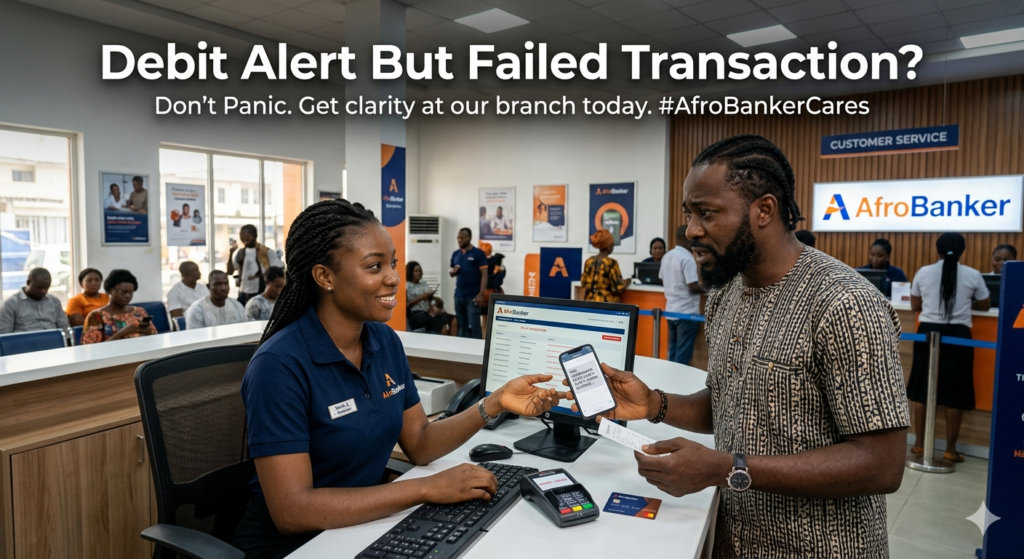
Failed bank transactions are one of the most frustrating experiences for customers anywhere in the world. You see a debit alert, but the transaction does not go through. The POS declines, the ATM fails to dispense cash, or the transfer simply doesn’t reach the beneficiary. At that moment, panic sets in. But here’s the truth many people don’t know: Most failed transactions are reversible if you follow the right process. Most failed transactions are reversed within 1 to 10 working days, depending on the transaction type.
What Is a Failed Bank Transaction?
A failed transaction occurs when your account is debited successfully but the service paid for is not delivered. This mismatch is what triggers a dispute or reversal process, and failed transactions can leave you confused and frustrated, especially when your account is debited but the service fails. Whether it’s an ATM error, POS decline, or transfer issue, one question comes to mind: “Will I get my money back?” and the correct answer is yes! if you follow the correct process.
Common scenarios include:
- ATM debits without cash being dispensed
- POS payments marked as “failed” but money deducted
- Mobile or online transfers not received by the beneficiary
- Airtime/data purchases that fail after payment
These issues happen due to network errors, system delays, or switching failures between financial institutions.
How to Recover Failed Bank Transaction Money
To recover money from a failed bank transaction:
- Wait 24–72 hours for automatic reversal
- Check your transaction reference number
- Report the issue to your bank (app, email, or branch)
- Request a complaint or ticket ID
- Follow up until the refund is processed
In this guide, i will teach you exactly how to recover failed bank transaction money and it is structured around the exact questions people search, using practical banking insights (including real-world operational practices inside banks). This is not theory, this is how resolution actually happens behind the scenes.
Why Failed Transactions Happen (A Real Banking Insight)
To recover your money quickly, you must first understand why transactions fail. As a bank staff, i have noticed that below issues are the reasons why transactions fails, and they include:
1. Network Instability Between Institutions
Banks don’t operate in isolation. Every transaction passes through a switching network connecting multiple parties which are your bank, the receiving bank, and payment processors. If the network times out mid-process your bank may complete the debit but confirmation fails before reaching the receiving end. That’s how your money gets “stuck.”
2. Delayed Response from Receiving Bank
Sometimes, the receiving bank is slow to acknowledge the transaction and in such cases, the system may temporarily assume failure but later reconcile automatically. This explains why some failed transactions reverse without your intervention.
3. ATM or POS Machine Errors
Hardware issues can cause:
- ATM to debit without dispensing cash
- POS to disconnect mid-transaction
From my banking experience, these are logged as “dispense error” or “incomplete POS transactions.” If your issue involves ATM errors, read our complete guide on Why Your Bank Debited You But The Transaction Failed.
4. Technical Glitches or System Downtime
Banks periodically experience core banking system delays, upgrade-related failures and overloaded transaction servers. These issues can disrupt normal processing and create temporary anomalies.
Will I Get My Money Back After a Failed Transaction?
- Banks are required to account for every debit recorded in your account
- Any transaction that fails is flagged during system reconciliation
- The funds are usually not lost, they are temporarily held within the payment network.
How Do I Get My Money Back If a Transaction Failed?(Step-by-Step Guide)
Recovering your money depends on how fast and correctly you act. Now let me guide you into the exact process that works.
Step 1: Stay Calm and Wait (The Auto-Reversal Window)
Before rushing to report to the bank, kindly stay calm and:
- Allow 24 hours (for POS/transfer issues)
- Allow up to 48–72 hours (for ATM transactions)
Why did this matter? Most banking systems have automatic reconciliation processes. Transactions that fail mid-way are flagged and reversed during system settlement cycles. In many cases, your money will return without any complaint.
Step 2: Check or Gather Your Transaction Details Properly
If reversal doesn’t happen within the expected time, prepare or gather key details such as:
- Transaction date and time
- Amount debited
- Transaction type or channel used (ATM, POS, transfer, USSD, etc.)
- Reference number (very important)
Why is these information above important? This is because banks don’t investigate complaints based on gainsaying, the reference number is what allows them to trace the issue within seconds and resolve them quickly.
Step 3: Contact or Report To Your Bank Immediately
Immediately your encounter any failed transaction, kindly reach out to our bank through their official channels:
- Customer care helpline
- Mobile banking app support
- Email support
- Physical branch visit
When you visits the branch, clearly state to them that your account was debited, but the transaction failed and that you want to log a reversal request. Please provide all transaction details required.
Step 4: Request a Formal Complaint Ticket/Reference Number
When you visits the bank to report an issue, do not just report verbally and never leave without a “ticket ID or complaint number.” Insist on getting your
- Complaint reference number
- Case/ticket ID
This is critical because banks works internally and they escalate issues using ticket ID/reference number and without it, your issue might not enter the bank’s formal dispute system, which means slower or no resolution.
Step 5: Follow Up Consistently (But Smartly)
After reporting to your bank, don’t go silent after reporting instead:
- Follow up every 48 hours
- Reference your complaint ID
- Request status updates politely
This works faster because persistent follow-ups ensure your case doesn’t get buried in queue. In banking operations, visible cases get resolved faster.
Step 6: Escalate If Necessary
If your issue exceeds expected timelines try as much as you can to escalate through:
- Bank’s complaint escalation unit
- Regulatory body (e.g., central bank complaints desk in your country)
- Consumer protection agencies
Banks take escalated complaints much more seriously because it tends to affect compliance ratings and regulatory reporting.
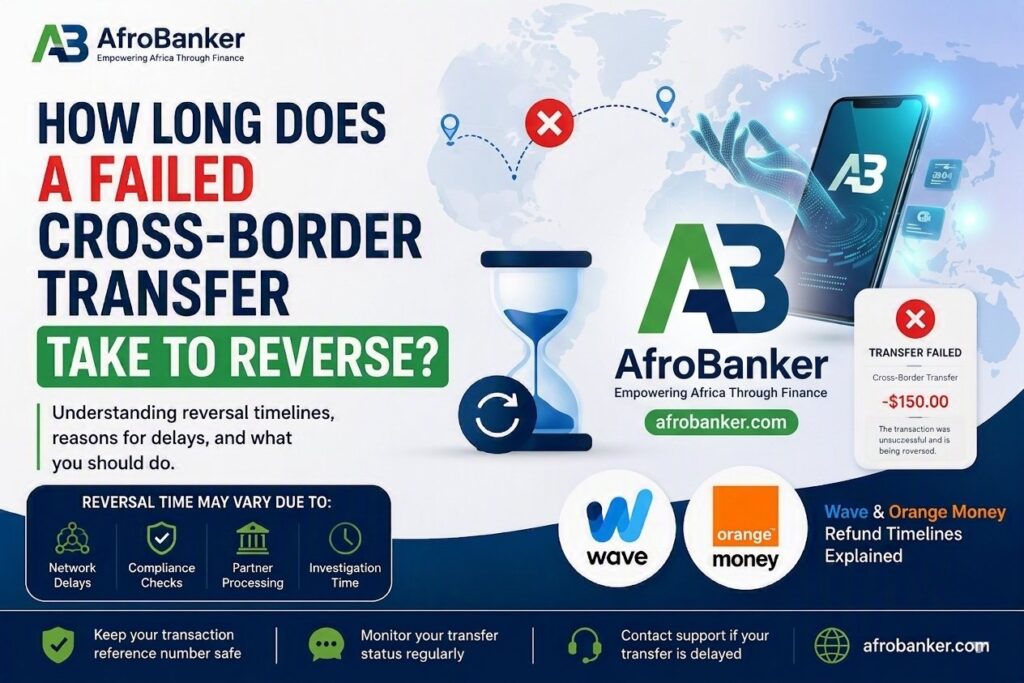
How Long Does It Take a Bank to Reverse a Failed Transaction?
Your bank is sometimes not the only party involved. If another bank or payment processor is part of the transaction, resolution depends on interbank settlement processes. Always check logged transaction status every 48 hours with your reference/complaint ID in place. Try and stay firm but professional this is because different transaction types have different timelines like:
- Same-bank transfers: Often resolved within 24 hours
- Interbank transfers: Takes up to 1–3 working days
- ATM disputes: Up to 3–10 working days
- International transactions: Takes up to 15 working days
In banking operations, cases that receive follow-ups are resolved faster because they stay visible in the system.
Common Failed Transaction Scenarios and How to Handle Them
Understanding your exact situation helps you respond correctly.
1. ATM Debit Without Dispensing Cash
- Report immediately
- Provide ATM location and time
2. Failed POS Transfer but Beneficiary Claims No Receipt of Funds
- The transfer is stuck in the network or
- The receiving bank hasn’t posted it yet
To resolve this issue, both your bank and the merchant must reconcile the transaction before refund is processed. Always ask your bank to perform a “trace” or “transaction investigation.”
Common Mistakes That Delay Your Refund
There are many factors that may delay the refund of your failed transaction. To recoup or recover your money, you need to avoid these habits as they slow everything down.
1. Waiting Too Long to Report & Not Following Up
Delays reduce traceability. The longer you wait, the harder it is to trace transactions quickly. Try to report your issue within 24–48 hours if no reversal occurs and also follow up immediately after reporting because silence can delay resolution significantly.
2. Ignoring Transaction Reference
Providing incomplete information especially the transaction reference number might delay the refund of your money. Without this, your complaint becomes difficult to track because missing details leads to delayed investigation.
3. Being Aggressive with Bank Staff
While frustration is understandable, escalation works better when handled professionally. Therefore, avoid causing chaos and being aggressive to the bank staff. This is laughable because as a bank staff, i have witnessed a scenario where a customer gets agitated and gets angry with a staff who in turn decides to delay or never log his failed transaction.
4. Assuming Instant Reversal Is Always Possible
Some transactions require multi-party verification.
5. Making Multiple Attempts
How Banks Actually Processes Your Refund
The process of your refund can take time because it involves multiple independent systems and approvals. To understand delays, here’s what happens internally (my experience as a bank staff)
- Complaint are logged into dispute system
- Transactions are traced using reference number
- The switch or processor contacted (if external)
- The receiving bank confirms status and finally
- Reversal initiated if failure confirmed.
Therefore, this process is structured and controlled as your money is always traceable within the system.
Tips on How to Prevent Failed Transactions in Future
While recovery is possible, prevention is always better. Therefore, kindly heed to these below information to avert further issues.
1. Use Reliable Networks
Avoid making transactions during network or system downtime and at peak network periods. Also. avoid late-night system maintenance periods.
2. Avoid Repeating Failed Payments
Always wait before trying again to initiate a failed transaction to prevent duplicate debits. This often leads to:
- Multiple debits
- More complicated reversals
3. Keep Proof of Transactions or Collect Transaction Evidence
Always retain and keep SMS alerts, transaction screenshots and POS receipts. These are proof during disputes.
4. Use Trusted Payment Channels
Try as much as you can to stick to verified banking apps and reliable POS terminals and avoid unfamiliar or suspicious payment routes. Always use:
- Official mobile apps
- Verified POS merchants
- Secure ATMs
Why Did the Transaction Fail But the Money Was Deducted?
- The Inter-Switch Glitch: When you initiate a payment, your bank debits your account and passes the funds through a central switchboard (like NIBSS in Nigeria). If the network route hits a lag or times out before reaching the destination bank, the chain breaks midway.
- Delayed Status Updates: Your money has left your account, but because the receiving system failed to acknowledge receipt within the safety timeout window (usually 60 seconds), the transaction logs as “failed” on your end.
- System Timeouts: High server traffic or temporary maintenance downtime at either the sending, switching, or receiving bank forces the process to stall after the debit phase is executed.
What Happens When a Transaction Fails?
- Log Creation: The banking system logs a unique Reference Number or Session ID detailing the error code.
- Staging Area: The debited money sits temporarily in an omnibus/settlement account controlled by the payment processor or the bank.
- The Automated Reconciliation: At the end of the business day, banks run automatic settlement scripts to match debits against acknowledged credits. Unmatched debits are flagged for automatic reversal.
What If My Money Is Deducted But Not Received?
- Verify the Status: Check your bank statement or app transaction history to see if the fund status is “Pending,” “Processing,” or “Failed”.
- Hold the Receipt: Download the electronic receipt. Look specifically for the Session ID or Reference Number, which serves as the unique digital fingerprint for the transfer.
- Wait Out the Baseline Window: Give the system up to 24 hours to automatically resolve the mismatch before launching a heavy escalation campaign.
Does a Failed Transaction Show in a Bank Statement?
- The Debit Entry: You will see the deduction line showing the amount taken out along with a transaction narration.
- The Reversal Entry: Once fixed, a matching credit entry will appear—often narrated as “Reversal,” “Rvs,” “Failed Dispense,” or “NIP Rev”—effectively balancing your account ledger.
- Pure Failures: If a transaction fails without taking any money from your balance, it will not appear on a standard statement, though it may show up in your app’s internal notification history.
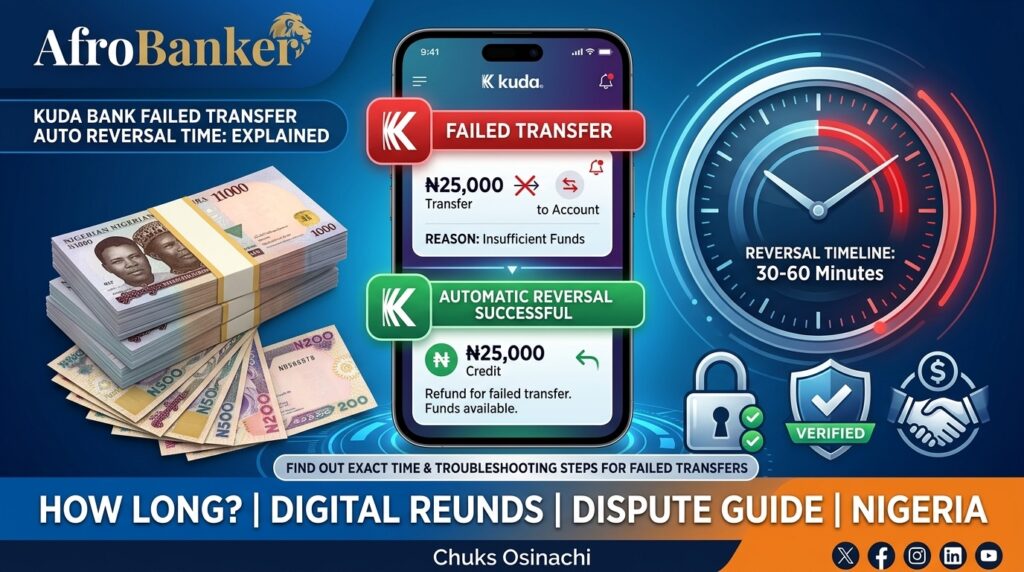
How Long Does It Take to Reverse a Failed Transaction?
| Transaction Channel | CBN Mandatory Reversal Deadline | Penalty for Bank Non-Compliance |
|---|---|---|
| Instant Inter-Bank Transfer | Within 24 Hours of complaint | ₦10,000 fine per day |
| Own Bank’s ATM (On-Us) | Instantly (or 24 hours if system glitches) | Regulatory infraction review |
| Other Bank’s ATM (Not-On-Us) | Within 48 Hours | Regulatory infraction review |
| POS & Web Checkout Payments | Within 48 to 72 Hours | Regulatory infraction review |
How Much Time Will It Take for a Refund of a Failed Transaction?
What to Do If Money Is Debited But the Transaction Failed?
- Take a Screenshot: Capture the error message, debit alert, or failed status layout immediately.
- Extract the Session ID: Copy the 30-digit NIP Session ID or reference string from your app.
- Notify the Merchant/Receiver: Let them know the payment failed on your end so they don’t provide goods or services on credit, saving you from a messy recovery dispute later if the money never arrives.
- Log the Complaint Digitally: Do not wait in line at a physical bank branch. Use the bank’s inside-the-app chat feature or official support email to open a ticket immediately.
Can a Bank Recover Money Paid by Mistake?
- Bank Error: If the bank processed a duplicate transfer or misdirected your money due to a glitch, the bank can recover it immediately. The receiving bank can reverse the funds within 1 business day without needing permission from the account holder who received it.
- Your Error (Sent to Wrong Account): If you typed the wrong account number, your bank cannot forcefully pull the money back. They will contact the receiving bank to place a temporary administrative hold on the funds, but the receiver must give explicit consent before a reversal happens.
- Legal Consequences for the Receiver: If someone receives a mistaken transfer and spends it, they are committing a crime. Under Nigerian law, individuals have been prosecuted and jailed for refusing to return funds paid into their accounts by mistake.
How Do I Fix a Transaction That Failed?
- Clear the Session Cache: Force-close your banking or fintech app, check for updates in the app store, and reopen it to ensure you aren’t seeing cached error states.
- Switch Channels: If a USSD string fails, switch to the mobile app or internet banking portal.
- Wait for the Reversal First: Never re-attempt the exact same transfer immediately using the same app if you suspect you were debited, as this often triggers a double debit.
How Do I Get My Bank to Refund a Transaction?
- Request a Tracking Number: When you report via phone or chat, demand an official dispute ticket number.
- Submit a Dispute Form: For card, POS, or web transaction failures, request a “Cardholder Chargeback Dispute Form” from your bank’s website or portal.
- Escalate to Regulatory Channels: If your bank ignores your complaint past the legal timeline, forward the details directly to the Central Bank of Nigeria Consumer Protection Department via
cpd@cbn.gov.ngto activate the ₦10,000 daily non-reversal fine against them.
How to Write a Letter to Refund Money from a Bank?
The Branch Manager,
[Name of your Bank],
[Branch Address / City],
[State].
Date: DD / MM / YYYY
Subject: Dispute for Failed Electronic Transaction and Request for Immediate Refund
Dear Sir/Madam,
I am writing to lodge a formal complaint regarding a failed electronic transaction executed from my account held with your bank.
Below are my account and transaction details for your immediate investigation:
• Account Name: [Your Full Account Name]
• Account Number: [Your 10-Digit Account Number]
• Transaction Date & Time: [Date and approximate time of debit]
• Transaction Amount: ₦[Amount debited]
• Beneficiary Bank & Account: [Receiver’s Bank and Account Number]
• NIP Session ID / Reference Number: [Insert the unique 30-digit number here]
On the date mentioned above, I attempted to make a transfer for the stated amount. While my account was successfully debited and the transaction was logged as “Failed,” the beneficiary has verified that no value was ever credited to their end.
In line with the Central Bank of Nigeria (CBN) regulations on instant electronic funds transfers, I request that you investigate this failed delivery and reverse the sum of ₦[Amount] back into my account immediately.
I have attached a copy of my account statement/electronic debit receipt highlighting this transaction for your reference.
Thank you for your prompt action.
Yours faithfully,
[Your Signature]
[Your Full Name]
[Your Phone Number]
[Your Email Address]
How Do I Get My Money Back If a Transaction Failed?
[Phase 1: 0 - 24 Hours] ──> Watch for Automated Reversal (System checks ledgers)
                                    │
                                    ▼ (No refund?)
[Phase 2: 24 - 72 Hours] ─> Log Formal Dispute with Bank (Submit Session ID & Letter)
                                    │
                                    ▼ (Still unresolved?)
[Phase 3: After 72 Hours] ─> Escalate to CBN Consumer Protection (Trigger daily bank fines)
Frequently Asked Question (FAQs) /People Also Ask?
How long does it take to reverse a failed transaction?
It depends on the type, but typically 24 hours to 10 working days.
Can a failed transaction reverse automatically?
Yes. Many transactions are reversed automatically during system reconciliation.
What if my bank delays my refund?
You can escalate to regulatory authorities or complaint units.
Is a reversal guaranteed?
If the transaction genuinely failed, yes, your money is not lost, just temporarily held.
My Final Thoughts & Conclusion
Failed transactions are stressful, but they are not permanent losses. Having a failed transaction may feel like money is gone, but in reality your money is traceable within the banking system ecosystem. What separates quick recovery from endless delays is acting fast, providing correct information and following the proper escalation path.
From an operational standpoint, banks are required to account for every debit that does not successfully complete a transaction. That means your money cannot disappear, it can only be delayed.