
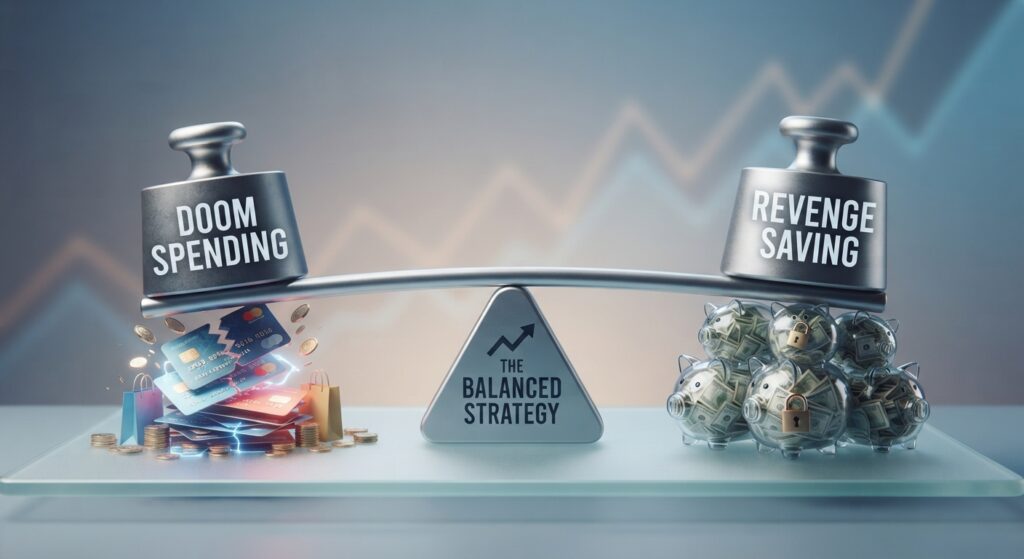
Doom spending is the habit of spending money impulsively to cope with stress, uncertainty, or anxiety about the future. Revenge saving is the opposite behaviour, where people aggressively cut spending and save excessively after experiencing financial hardship or economic uncertainty. While both behaviours are understandable responses to financial stress, they can become extreme and unhealthy. The healthiest approach is finding a balanced money mindset that allows you to enjoy life today while preparing for tomorrow.
Money is emotional. Most people like to think they make financial decisions logically, but the reality is different. Fear, uncertainty, stress, social pressure, inflation, and economic headlines often influence financial decisions more than spreadsheets and budgets do.
In 2026, two extreme money mindsets have become increasingly common: doom spending vs revenge saving. On one end are people who think: “Life is unpredictable. Prices keep rising. The future looks uncertain. I might as well enjoy my money now.” On the other end are people who think: “The economy is unstable. Jobs aren’t guaranteed. I need to save every naira, dollar, or pound I can.” Neither of these approaches is entirely right or wrong.
The problem begins when fear starts controlling financial decisions. Doom spending can leave people trapped in debt and financial insecurity. Revenge saving can create anxiety, guilt, and a life where every purchase feels like a mistake. The good news is that you don’t have to choose between enjoying today and protecting tomorrow.
This guide explains what doom spending and revenge saving really are, why so many people are falling into these patterns, and how to build a healthier money mindset without feeling deprived.
On one side of the digital aisle, millions of young professionals are looking at soaring housing costs, global instability, and a volatile job market and concluding: “I will never afford a house anyway, so I might as well buy these designer shoes, book this flight, and enjoy my life today”. This is doom spending, stress-shopping as a form of nihilistic protest against a future that feels permanently cancelled.
On the other side, an equally large group is reacting to the exact same economic anxieties by hoarding every dollar they earn with almost panicked intensity. They are skipping basic comforts, cancelling subscriptions, and working multiple side gigs to accumulate massive mounds of uninvested cash. This is revenge saving, an aggressive, hyper-defensive accumulation of liquidity driven by the persistent fear that the other shoe is always about to drop.
This guide explains what doom spending and revenge saving really are, why so many people are falling into these patterns, and how to build a healthier money mindset without feeling deprived.
What Is Doom Spending?
Doom spending occurs when people spend money to cope with negative emotions, uncertainty, or fears about the future. Instead of saving for long-term goals, they prioritize immediate enjoyment and gratification.
Many doom spenders are not irresponsible people. In fact, many understand the importance of budgeting and saving. The issue is psychological.
When people feel overwhelmed by rising living costs, economic uncertainty, political instability, or personal stress, the future may seem difficult to control. As a result, spending money today can feel more rewarding than planning for an uncertain tomorrow.
Examples of doom spending include:
- Frequent online shopping without a real need
- Buying luxury items despite financial challenges
- Overspending on entertainment
- Taking expensive vacations without adequate savings
- Using credit cards excessively to fund lifestyle purchases
- Treating every stressful day as a reason to spend
For some people, doom spending provides temporary emotional relief. Unfortunately, that relief often comes with financial consequences.
Why People Are Doom Spending in 2026
Rising Cost of Living
Many people feel financially squeezed. Housing costs, transportation expenses, food prices, utility bills, and healthcare costs have increased across many countries. When long-term financial goals appear harder to achieve, some individuals abandon those goals and focus on short-term satisfaction instead. They begin thinking: “If I may never afford that dream home, I might as well enjoy myself today.”
This mindset can become dangerous over time.
Economic Uncertainty
Economic uncertainty can create feelings of helplessness. Concerns about job security, automation, global conflicts, inflation, and market volatility can lead people to question whether saving aggressively is worth the sacrifice. Rather than preparing for uncertainty, some people respond by prioritizing immediate enjoyment.
Social Media Pressure
Social media has transformed how people compare their lives to others. Every day, users see influencers showcasing luxury vacations, expensive gadgets, designer fashion, and seemingly perfect lifestyles. Constant exposure can create pressure to spend money just to keep up socially. Many doom spending habits begin with comparison.
Emotional Escape
Shopping can provide a temporary mood boost. People feeling stressed, anxious, lonely, burned out, or frustrated may use spending as a coping mechanism. The purchase itself becomes less important than the emotional distraction it provides.
What Is Revenge Saving?
Revenge saving is a financial behaviour where people become intensely focused on saving money after experiencing economic uncertainty, financial hardship, or a period of excessive spending.
The term became popular as people reacted to financial instability by aggressively building savings and reducing discretionary spending. Unlike healthy saving, revenge saving often involves extreme restrictions.
Examples include:
- Cancelling nearly all entertainment expenses
- Avoiding social activities to save money
- Feeling guilty after any non-essential purchase
- Hoarding cash without clear goals
- Refusing reasonable spending opportunities
- Obsessively monitoring account balances
While saving is generally beneficial, revenge saving can become unhealthy when fear drives every financial decision.
Why More People Are Revenge Saving in 2026
Recent Economic Challenges
Many households have experienced periods of financial hardship over the last few years. People who struggled with debt, reduced income, inflation, or financial uncertainty may feel determined not to repeat those experiences. This often leads to aggressive saving behaviour.
Fear of Future Crises
Financial emergencies can be traumatic. Someone who survived a job loss or income reduction may become hyper-focused on preventing future hardship. The result can be excessive saving motivated by fear rather than financial planning.
Financial Content Influence
Personal finance content has exploded online. While much of this advice is valuable, some messaging unintentionally promotes extreme frugality. People can start believing that every coffee purchase, restaurant meal, or vacation is financially irresponsible.
Over time, saving becomes less about goals and more about avoiding guilt.
Desire for Financial Control
Saving provides a sense of security. For individuals feeling uncertain about the world, increasing their savings account balance creates a feeling of control. The danger arises when control becomes obsession.
Doom Spending vs Revenge Saving: Which Is More Dangerous?
The truth is that both can be harmful.
The Risks of Doom Spending
Doom spending can lead to:
- Credit card debt
- Delayed financial goals
- Poor savings habits
- Reduced emergency funds
- Financial stress
- Dependence on spending for emotional relief
Over time, financial problems can increase the very stress that triggered the spending behaviour.
The Risks of Revenge Saving
Revenge saving can lead to:
- Constant anxiety about money
- Social isolation
- Missed life experiences
- Decision fatigue
- Reduced quality of life
- Unhealthy relationship with spending
People may achieve strong savings balances while feeling financially trapped.
How Do You Know If You’re Doom Spending?
You may be doom spending if:
You Regularly Buy Things to Improve Your Mood
If shopping has become your preferred response to stress, boredom, frustration, or anxiety, emotions may be driving your spending decisions.
You Feel Regret Shortly After Purchases
Many doom spenders experience excitement during the purchase followed by regret later.
This cycle often repeats itself.
Your Savings Goals Keep Getting Delayed
If planned savings never seem to happen because money gets redirected toward discretionary purchases, doom spending may be involved.
You Use Credit to Maintain a Lifestyle
Relying on debt to support non-essential spending can be a significant warning sign.
How Do You Know If You’re Revenge Saving?
You may be revenge saving if:
Spending Money Makes You Feel Guilty
Healthy spending should not create immediate feelings of guilt when it fits within a budget.
You Avoid Enjoyable Experiences Solely to Save More
Saving is important, but constantly sacrificing meaningful experiences can create long-term dissatisfaction.
You Obsess Over Your Savings Balance
Reviewing your finances regularly is healthy.
Checking balances multiple times daily out of fear is not.
You Struggle to Spend Even When You Can Afford To
If your finances are stable but you still feel unable to spend reasonably on yourself, revenge saving may be influencing your decisions.
Why Both Mindsets Come from the Same Place
At first glance, doom spending and revenge saving appear to be complete opposites. In reality, they share the same root cause. Both are often responses to financial anxiety.
Doom spenders respond by saying: “Tomorrow is uncertain, so I will enjoy today.” Revenge savers respond by saying: “Tomorrow is uncertain, so I must prepare for every possibility.”
The behaviour differs, but the fear is often similar. Understanding this connection is important because it shifts the focus away from the spending or saving itself and toward the underlying emotions.
How to Build a Balanced Money Mindset
The goal is not to become an extreme saver or spender. The goal is balance.
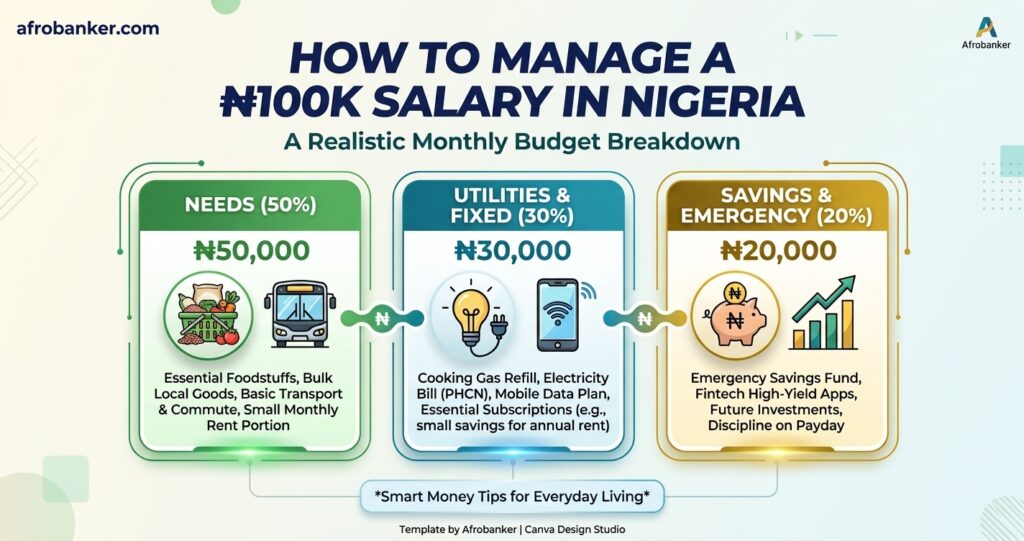
Create a Purpose for Every Naira You Earn
A balanced financial plan gives each income category a purpose.
For example:
- 50% for essentials
- 20% for savings and investments
- 20% for lifestyle spending
- 10% for giving or personal priorities
The exact percentages can vary, but intentional allocation reduces financial extremes.
Build an Emergency Fund
An emergency fund provides confidence. Knowing you have money available for unexpected events reduces the anxiety that often fuels both doom spending and revenge saving. Aim for three to six months of essential expenses where possible.
Budget for Enjoyment
Many people treat fun spending as a financial mistake. That approach often backfires. A sustainable budget includes room for enjoyment. Dining out occasionally, traveling, pursuing hobbies, or buying something you genuinely value can all be healthy financial choices when planned responsibly.
Focus on Long-Term Goals
People are less likely to engage in extreme behaviors when they have clear goals.
Examples include:
- Home ownership
- Retirement planning
- Starting a business
- Education funding
- Debt freedom
- Building investment portfolios
Goals provide motivation and direction.
Limit Emotional Financial Decisions
Major financial decisions should rarely be made during periods of intense emotion. Before making a significant purchase or major financial change, consider waiting 24 to 48 hours.
This simple pause can prevent many impulsive decisions.
Stop Comparing Yourself to Others
Financial success is highly personal. The lifestyle displayed on social media rarely tells the full story. Some people showcasing wealth may be carrying significant debt, while others quietly build financial security behind the scenes. Comparison often creates both doom spending and revenge saving behaviours.
Can You Enjoy Life and Still Be Financially Responsible?
Absolutely. This is where many people get stuck. They believe there are only two options:
- Spend freely and enjoy life
- Save aggressively and sacrifice enjoyment
In reality, financial success comes from balancing both priorities. You can save consistently while still taking vacations. You can invest while occasionally treating yourself. You can prepare for the future without fearing every purchase. The healthiest financial plans recognize that money is a tool meant to support both present and future well-being.
What Is the Best Money Mindset for 2026?
The best money mindset for 2026 is neither doom spending nor revenge saving. It is intentional spending. Intentional spenders ask:
- Does this purchase align with my values?
- Does it fit within my budget?
- Will it improve my life?
- Am I saving enough for future goals?
- Am I enjoying my life today?
These questions create balance. Rather than reacting emotionally to economic conditions, intentional spenders make decisions based on priorities and long-term objectives. This approach reduces stress while increasing financial confidence.
Why Modern Finance Feels So Extreme
To understand why consumer behaviour has fragmented so radically, we have to look past standard inflation metrics and examine the psychological environment of the mid-2020s.
For decades, the standard “American Dream” or Western middle-class blueprint was straightforward: graduate, secure a stable corporate job, save 10% to 20% of your income, buy a home, and retire comfortably at age 65.
Today, that blueprint has broken down. Decoupled wages, soaring interest rates, and a historic housing affordability crisis have fundamentally altered how we perceive the utility of a dollar. When the price-to-income ratio in major cities doubles, the traditional incentive structure of saving money collapses.
This environment has created two distinct psychological profiles:
[ Economic Uncertainty & Anxiety]
┌───────────────────┴───────────────────────┐
▼ ▼
[ THE DOOM SPENDER] [ THE REVENGE SAVER ]
- Philosophy: “The future is cancelled. • Philosophy: “I am never safe enough.
- Action: Splurging on short-term treats • Action: Over-hoarding low-yield cash
- Trap: Long-term asset poverty • Trap: Inflation drag & lifestyle paralysis
1. The Doom Spender: “The Future is Cancelled”
An Intuit Credit Karma study found that 39% of Millennials and 35% of Gen Z admit to actively doom spending. According to data tracked by the Federal Reserve, overall credit card balances have climbed back to a staggering $1.26 trillion, hovering dangerously near historic records.
Doom spending isn’t standard retail therapy. It is an emotional shield. When macroeconomic headlines are filled with warnings about AI white-collar layoffs, climate change, and geopolitical conflicts, the brain’s natural “present bias” takes over.
The psychological logic is simple: if saving money for the next 15 years still won’t grant me a down payment for a median-priced home, then saving that money is functionally useless. Therefore, converting that volatile, abstract currency into a concrete, immediate experience like a concert ticket or a high-end dinner feels like a logical reclamation of agency.
2. The Revenge Saver: “I Am Never Safe Enough”
Directly across from the doom spender is the revenge saver. Sparked initially as a defensive posture during periods of sudden corporate restructuring and high inflation, revenge saving has mutated into a long-term lifestyle.
According to data from the Bureau of Economic Analysis (BEA), the personal saving rate historically fluctuates, but social media movements like “No-Buy Years” and “Loud Budgeting” have pushed millions to hoard cash with a near-religious fervour.
Revenge savers aren’t just budgeting; they are reacting to economic trauma with hyper-vigilance. They keep six, twelve, or even twenty-four months of living expenses entirely in cash or low-yield checking accounts. They suffer from deep financial anxiety, experiencing intense guilt whenever they spend money on anything outside of absolute survival necessities.
Why Both Extremes Are Financial Traps
While one behaviour looks reckless on a spreadsheet and the other looks responsible, both profiles are ultimately trading long-term wealth for short-term emotional regulation.
To see how these habits play out mathematically and psychologically over time, let’s contrast the core vulnerabilities of both approaches:
| Feature / Risk | Unchecked Doom Spending | Unchecked Revenge Saving |
| Core Psychological Driver | Nihilistic hopelessness; seeking immediate agency. | Hyper-vigilant fear; seeking absolute control. |
| Primary Financial Weapon | Credit cards, Micro-BNPL loans, and instant checkout. | High-Yield Savings Accounts (HYSAs), cash hoarding, and extreme restriction. |
| The Long-Term Trap | Asset Poverty: Lingering high-interest debt and zero equity growth. | Inflation Drag: Cash losing purchasing power against real-world assets. |
| Immediate Cost | Interest payments that dwarf the original price of the item. | Lifestyle paralysis, chronic anxiety, and social isolation. |
The Compounding Danger of Doom Spending
The true danger of doom spending isn’t the primary cost of the luxury item; it is the structural debt drag. When you purchase an item to escape a bad mood, that emotional relief lasts for about an hour.
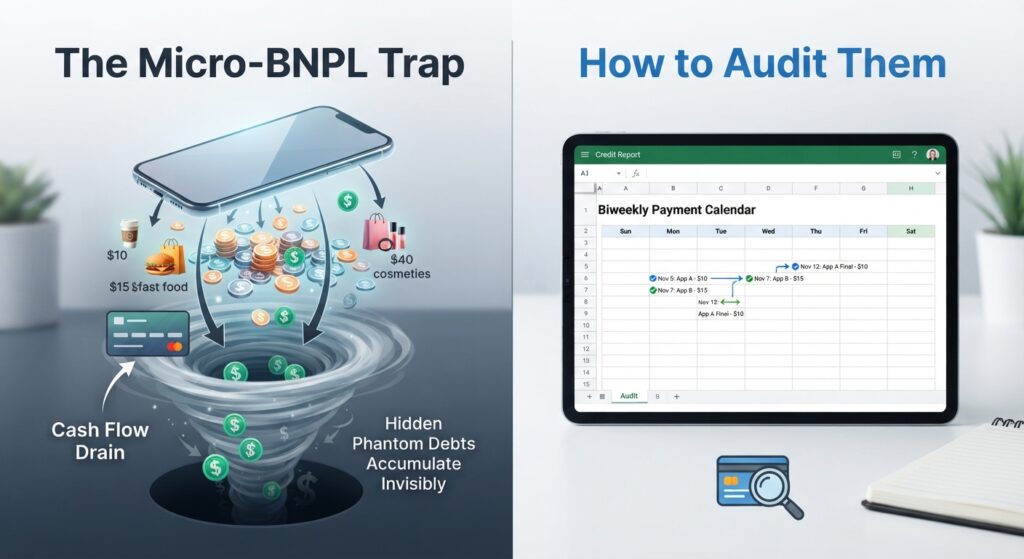
However, when that balance rolls over onto a credit card with an average APR hovering above 21% or gets split into four seemingly harmless micro-Buy Now, Pay Later (BNPL) loans, you create what economists call “phantom debt”.
This micro-debt chips away at your monthly disposable income. When your baseline cash flow is choked by past emotional purchases, your financial stress increases, which in turn triggers more doom spending. It is a closed, destructive psychological feedback loop.
The Hidden Tax on Revenge Saving
It is easy to look at a revenge saver with a massive bank balance and think they are winning. But from a wealth-building perspective, keeping excessive sums of money in cash is a silent form of financial self-sabotage.
An emergency fund is designed to act as a safety net, not an investment vehicle. Once a cash cushion passes a sensible ceiling (typically 3 to 6 months of living expenses), every extra dollar held in cash is actively losing value to real-world inflation.
Over a 20- or 30-year horizon, an investor who funnels their excess cash into productive assets like equities or real estate will exponentially outperform someone who leaves their money sitting in a savings account out of fear.
Furthermore, revenge saving carries a heavy psychological toll. When you view every non-essential purchase as a threat to your survival, you stop using money as a tool to improve your life, becoming a servant to the number in your banking app.
Step-by-Step Framework to Reclaim the Middle Ground
If you recognize yourself in either of these profiles, you do not need to radically overhaul your personality. You simply need to build structural guardrails that decouple your emotional state from your financial execution.
Here is how to transition from financial extremes into a position of sustainable, intentional power.
If You Are a Doom Spender
1. Implement the 30-Day List Rule
Doom spending thrives on friction-free, instantaneous digital checkouts. To break this impulse, you must deliberately reintroduce friction into your shopping habits.
Create a digital document or a physical notebook called your “30-Day List”. Whenever you feel an overwhelming urge to buy a non-essential item, whether it’s a designer jacket, a tech gadget, or an unplanned weekend trip, you must write the item, the price, and the current date on the list.
You are not allowed to purchase that item until exactly 30 days have passed. During those 30 days, the acute emotional spike that triggered the urge will inevitably fade. If, after 30 days, you still genuinely want and can afford the item, you can buy it completely guilt-free. You will find that more than 70% of the items on your list lose their appeal within the first week.
2. Conduct a “Phantom Debt” Audit
Micro-BNPL services have normalized splitting tiny, everyday purchases into installments, masking the true velocity of our spending. If you use these services, take 30 minutes this weekend to look at your bank accounts and list every active payment plan you have open.
Calculate the total monthly sum of these small commitments. Seeing that five separate “$15 bi-weekly payments” are actually eating $150 of your monthly cash flow is often the exact wake-up call your brain needs to break the present bias loop.
3. Shift from “Material Upgrades” to “Micro-Agency”
Acknowledge that your urge to spend is often just a craving for control or comfort in a chaotic world. Instead of billing your future self with high-interest debt, look for zero- or low-cost ways to reclaim that feeling of agency. Disconnect from retail apps and redirect that emotional energy into building a tangible skill, organizing your living space, or establishing a strict “news-diet” to minimize the macroeconomic triggers that prompt you to shop in the first place.
If You Are a Revenge Saver
1. Define Your Cash Ceiling
The primary issue with revenge saving is that it has no logical finish line; fear will always tell you that you need more cash. You must counter this emotional fear with cold, hard math.
Calculate your absolute bare-minimum monthly survival cost (rent/mortgage, basic groceries, utilities, insurance, and minimum debt payments). Multiply that number by six. This is your absolute cash ceiling.
[ Monthly Bare-Minimum Survival Cost] x 6 = [ YOUR ABSOLUTE CASH CEILING ]
Once your high-yield savings account hits this exact number, your emergency fund is structurally complete. Any further cash accumulation is no longer protecting you; it is actively costing you future wealth due to opportunity cost and inflation.
2. Automate the “Fear Out of Over-Saving”
To overcome the intense guilt of investing or spending, take the decision-making process entirely out of your hands. Set up an automated transfer on the day you get paid that directs any money above your cash ceiling straight into a brokerage account, a retirement fund, or an automated investment platform. Because the money moves before you can consciously over-analyze it, you bypass the psychological paralysis that keeps you over-hedged in cash.
3. Establish a Dedicated “Guilt-Free Joy Fund”
Force yourself to practice the skill of spending money on your present self. Allocate a small, fixed percentage of your paycheck (even just 5%) into a separate bank account specifically designated for pure enjoyment.
The catch? The balance of this account must be spent every single month. It cannot be rolled over into savings, and it cannot be used for bills. Use it for a massage, a high-quality meal with friends, or a hobby. This systematically retrains your brain to view money as a resource to be lived in, not just an armour to hide behind.
The Universal Strategy – The “Barbell Portfolio” Life
The ultimate goal for the modern consumer is to build a lifestyle that respects both the realities of the present and the requirements of the future. In professional finance, this is known as a Barbell Strategy, balancing two distinct extremes while avoiding the vulnerable middle ground.
Applied to personal finance, a barbell approach looks like this:
- The Ultra-Safe Base: You maintain a fully funded, automated emergency fund capped at your cash ceiling, alongside consistent, boring contributions to diversified, long-term retirement accounts. This satisfies the psychological need of the revenge saver, ensuring you are genuinely protected against job loss or market downturns.
- The Intentional Present: You eliminate mindless, ambient micro-spending on everyday fluff, but you fiercely protect your ability to splurge on high-value, deeply meaningful current experiences. This satisfies the psychological need of the doom spender, ensuring you are still enjoying your life today without sabotaging your future self.
By implementing this framework, you stop letting macroeconomic anxiety dictate your daily behaviour. The economy will always move through cycles of instability, inflation, and growth. You cannot control the headlines, the housing market index, or corporate restructuring trends. But you can control the structural boundary between your emotions and your wallet.
Stop doom spending on a future you assume is lost and stop revenge saving for a catastrophe that may never arrive. Build your safety base, automate your growth, and then give yourself full, conscious permission to live beautifully in the present.
The Financial Reset Checklist
- Identify Your Bias: Look at your bank statements from the last 60 days. Are you consistently carrying high-interest retail balances (Doom Spender) or accumulating massive cash sums well beyond a 6-month buffer (Revenge Saver)?
- Delete Frictionless Triggers: If you are a Doom Spender, remove your saved credit card information from online retail sites and delete food delivery and BNPL apps from your phone.
- Calculate Your Number: Sit down with a calculator and establish your precise 6-month cash ceiling. If you are above it, move the excess into long-term investments; if you are below it, prioritize building it up safely.
- Draft Your 30-Day List: Create a note on your phone right now. The very next time you feel an intense urge to buy an unbudgeted item, it goes on the list with today’s date no exceptions.
Frequently Asked Questions
Is doom spending bad?
Doom spending becomes harmful when emotional spending regularly interferes with savings goals, increases debt, or creates financial instability. Occasional purchases are not necessarily a problem, but consistent spending driven by anxiety can be damaging.
Is revenge saving a good thing?
Saving money is beneficial, but revenge saving can become unhealthy if it creates guilt, fear, or an inability to enjoy life despite having adequate financial resources.
Why are people doom spending in 2026?
Many people are responding to economic uncertainty, inflation concerns, social media pressure, mental stress, and fears about the future by prioritizing short-term enjoyment over long-term financial planning.
Can someone be both a doom spender and a revenge saver?
Yes. Some people alternate between the two behaviors, overspending during stressful periods and then attempting to compensate through extreme saving afterward.
How do I stop doom spending?
Start by identifying emotional spending triggers, creating a realistic budget, building an emergency fund, and introducing waiting periods before making non-essential purchases.
What is the healthiest money mindset?
The healthiest money mindset combines responsible saving, intentional spending, long-term planning, and the ability to enjoy life without financial guilt.
Conclusion
Doom spending and revenge saving may seem like opposite financial behaviours, but both are often driven by the same emotion: uncertainty. One person responds to uncertainty by spending excessively, others respond by saving excessively. Neither approach offers lasting financial peace.
The real solution is balance. Building an intentional money mindset allows you to prepare for the future without forgetting to live in the present. It helps you enjoy your income without sabotaging your goals and save consistently without feeling deprived.
As economic conditions continue to evolve in 2026, the people who thrive financially will not be those who spend the most or save the most. They will be those who learn to make thoughtful decisions, stay focused on their goals, and maintain a healthy relationship with money.

Contrasting doom spending with revenge saving shows how emotional money habits can swing between two extremes.