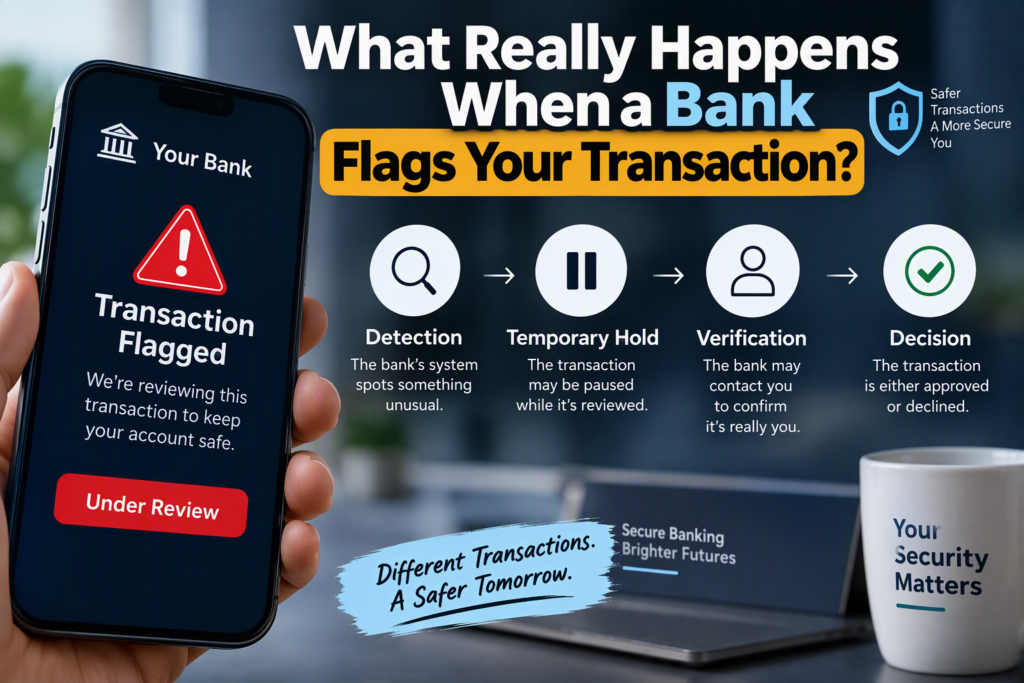
When a bank flags your transaction, it means the payment or transfer has been identified as potentially unusual, risky, suspicious, or inconsistent with normal account activity. The transaction may be reviewed automatically or manually before it is approved, delayed, declined, reversed, or escalated for further investigation.
You send money, pay a bill, or receive funds, and suddenly the transaction is delayed, reversed, put under review, or your account becomes restricted. For many bank customers, this situation can be confusing and frustrating.
The immediate assumption is often that the bank has made a mistake or is deliberately withholding access to funds. In reality, most flagged transactions are the result of automated security controls, fraud monitoring systems, regulatory requirements, or compliance checks designed to protect customers and the financial system.
Banks today process millions of transactions daily. To identify fraud, scams, money laundering, account takeovers, and other financial crimes, sophisticated monitoring systems constantly analyze customer activity. When something appears unusual, the transaction may be flagged for further review.
So, what actually happens behind the scenes when a bank flags your transaction? Let’s take a detailed look.

Why Do Bank Flags Your Transaction?
Banks are required to protect customers, prevent fraud, and comply with financial regulations. A transaction may be flagged when it differs significantly from your normal banking behavior or matches known risk indicators.
Some common reasons include:
- Large transfers
- Unusual spending patterns
- Multiple transactions within a short period
- Transfers to high-risk destinations
- Suspected fraud
- Identity theft concerns
- Regulatory compliance checks
- Anti-money laundering monitoring
Flagging a transaction does not automatically mean you have done something wrong. In many cases, the bank simply wants to confirm that the transaction is legitimate.
How Banks Detect Suspicious Transactions
Most banks no longer rely solely on human review. Instead, advanced monitoring systems analyze customer activity in real time.
These systems examine:
- Transaction amounts
- Transaction frequency
- Recipient information
- Geographic locations
- Device information
- Login patterns
- Historical customer behavior
- Payment channels used
For example, if you regularly transfer ₦20,000 to ₦50,000 and suddenly initiate a ₦5 million transfer to a first-time beneficiary, the system may consider that unusual and trigger a review.
Similarly, if your account is accessed from a different country shortly before a large transfer occurs, the transaction may be flagged as a potential account takeover attempt.
What Happens Immediately After a Transaction Is Flagged?
The exact process depends on the bank’s internal policies and the level of risk detected. Typically, one of several actions occurs.
1. The Transaction Proceeds Normally
Sometimes a monitoring system flags a transaction but determines within seconds that the risk is low. In these situations, customers may never even realize the transaction was reviewed. The payment proceeds normally without interruption.
2. The Transaction Is Delayed
If the system requires additional verification, the transfer may be placed on hold. The bank may need to perform extra checks before releasing the funds. This can lead to delays ranging from a few minutes to several business days, depending on the circumstances.
3. The Bank Contacts the Customer
Many banks will contact customers directly when suspicious activity is detected. You may receive:
- A phone call
- An SMS
- An email
- An in-app notification
The bank may ask questions such as:
- Did you authorize this transaction?
- Do you know the recipient?
- Are you currently making this transfer?
- Have you recently shared your banking information with anyone?
The goal is to verify that the transaction is genuine.
4. The Transaction Is Declined
If the bank cannot verify the legitimacy of a payment, it may reject the transaction entirely. This often happens when:
- Fraud is suspected
- Account credentials may be compromised
- The transaction violates bank policies
- The transfer exceeds permitted limits
- Regulatory concerns exist
In such cases, the funds generally remain in the customer’s account.
5. The Account May Be Temporarily Restricted
For higher-risk situations, banks may place restrictions on the account while investigations are conducted. Customers may experience:
- Transfer restrictions
- Debit restrictions
- Limited account functionality
- Temporary account freezes
Although inconvenient, these measures are often designed to prevent further losses.
Can a Legitimate Transaction Be Flagged?
Absolutely. Many legitimate transactions get flagged every day.
Examples include:
Receiving a Large Salary Payment
If your account historically receives small deposits and suddenly receives a significantly larger amount, the system may trigger a review.
Selling Property
Receiving proceeds from a house or land sale can appear unusual if such transactions are uncommon on the account.
International Transfers
Cross-border transfers often receive additional scrutiny because they present higher compliance risks.
Business Growth
Small business owners who suddenly experience rapid increases in transaction volume may also trigger monitoring alerts.
Being flagged does not mean wrongdoing occurred.
It simply means the transaction requires additional review.
Customers are often surprised when perfectly legitimate transactions trigger reviews. This can happen for many of the same reasons banks restrict or close accounts, including compliance concerns and unusual account activity. Read: Reasons Why Your Bank Account Can Be Closed and How to Avoid It.
Can a Bank Flag Incoming Money?
Yes. Many people assume banks only review outgoing transactions. However, incoming credits can also be flagged.
Examples include:
- Unexpected large deposits
- Multiple transfers from different individuals
- International remittances
- Funds from high-risk regions
- Transactions linked to fraud investigations
In some cases, a receiving bank may hold or investigate incoming funds before releasing them to the beneficiary.
What Happens During a Manual Review?
When automated systems cannot confidently determine whether a transaction is legitimate, human investigators become involved.
The review may include:
Transaction Analysis
Analysts examine the size, timing, source, destination, and purpose of the payment.
Customer Profile Review
The bank evaluates whether the transaction matches the customer’s expected activity.
Verification Calls
Investigators may contact the account holder directly.
Document Requests
The bank may ask for supporting documents such as:
- Invoices
- Contracts
- Proof of income
- Business registration documents
- Source-of-funds evidence
The speed of resolution often depends on how quickly customers provide requested information.
What Happens If Fraud Is Suspected?
Fraud remains one of the biggest reasons banks monitor transactions closely. Understanding how criminals target bank accounts can help customers protect themselves from suspicious activities and financial losses. If you’re concerned about account security, read our guide on how banks safeguard sensitive documents in OneDrive.
Fraud investigations are handled more aggressively.
The bank may:
- Block the transaction
- Restrict the account
- Reset online banking access
- Issue new cards
- Contact law enforcement agencies
- Escalate the case to specialized fraud teams
If an account compromise is suspected, banks will typically prioritize customer protection over transaction convenience. This means temporary access restrictions may remain in place until the investigation is completed.
Can a Bank Reverse a Flagged Transaction?
In some situations, yes. A transaction may be reversed if:
- The transfer was sent in error
- Fraud is confirmed
- The recipient account is invalid
- Regulatory concerns arise
- The receiving institution rejects the payment
However, not every flagged transaction is reversed. Once funds have been successfully received and withdrawn by a beneficiary, additional recovery steps may be required.
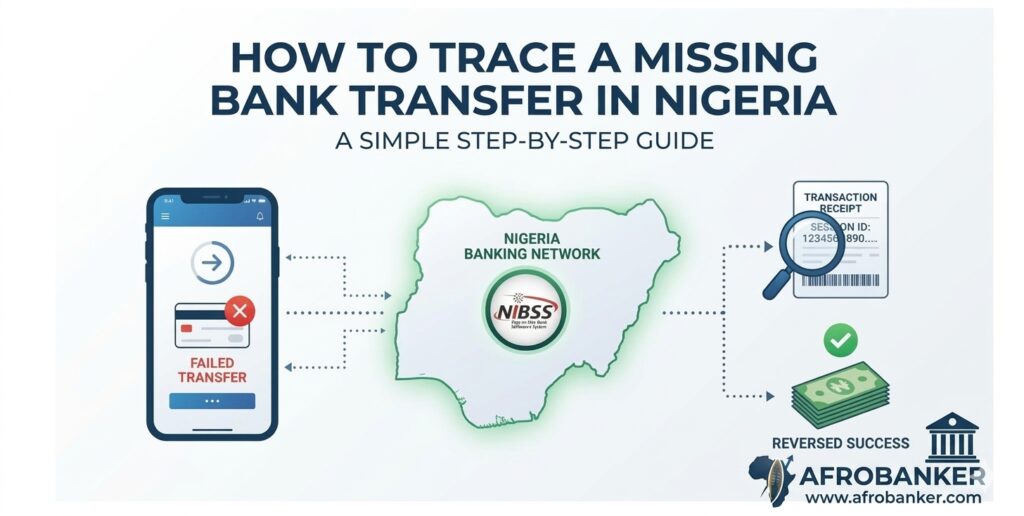
In some situations, banks may attempt to recover or reverse funds, especially when fraud or mistaken payments are involved. However, the outcome depends on several factors, including the status of the funds and the receiving account. You may also find our article on what happens when you send money to a closed bank account helpful for understanding how banks handle problematic transfers.
How Long Does a Transaction Investigation Take?
The timeline varies significantly.
Simple Reviews
A few minutes to several hours.
Enhanced Verification
One to three business days.
Fraud Investigations
Several days or weeks.
Regulatory or Legal Cases
Weeks or even months in complex situations.
The duration often depends on:
- Risk level
- Transaction complexity
- Cooperation from customers
- Availability of documentation
- Regulatory obligations
What Should You Do If Your Transaction Is Flagged?
Contact Your Bank Immediately
Do not rely on assumptions. Reach out through official channels and seek clarification.
Be Honest and Cooperative
Provide accurate information regarding the purpose of the transaction. False or misleading information may worsen the situation.
Supply Requested Documentation Quickly
Delays often occur when customers fail to submit required documents.
Providing evidence promptly can significantly speed up investigations.
Monitor Your Account
Keep track of account activity and report any unauthorized transactions immediately.
Avoid Multiple Repeat Attempts
Repeatedly initiating the same blocked transaction may trigger additional monitoring alerts.
In some cases, account restrictions may accompany transaction reviews. If your account has been limited, suspended, or temporarily frozen, understanding the causes can help you resolve the issue faster. See our guide on Why Banks Freeze Accounts and How to Avoid It.
How to Reduce the Chances of Getting Flagged
Although some reviews are unavoidable, you can reduce unnecessary scrutiny.
Keep Your KYC Information Updated
Ensure your:
- Phone number
- Address
- Identification documents
- Employment information
are current.
Notify Your Bank About Major Transactions
If you are expecting a large transfer, informing the bank in advance may help prevent delays.
Avoid Using Your Account for Third Parties
Allowing other people to route funds through your account can create compliance concerns.
Maintain Consistent Transaction Patterns
While business growth is positive, sudden unusual activity is more likely to attract review.
Respond Promptly to Bank Communications
Ignoring verification requests often leads to longer delays and restrictions.
Can a Bank Flag Transactions Without Telling You?
Yes. Not all monitoring activities are disclosed to customers. In some situations, regulations or ongoing investigations may limit what information banks can provide.
A transaction may be reviewed internally before any customer notification occurs. However, if action is required from the customer, banks will typically make contact through official communication channels.
Does a Flagged Transaction Mean Your Account Will Be Closed?
No. A flagged transaction does not automatically lead to account closure. Most flagged transactions are resolved without major consequences.
However, repeated suspicious activity, policy violations, fraudulent behavior, or failure to provide requested information could lead to:
- Account restrictions
- Relationship reviews
- Account termination
Each case is assessed individually.
Can banks stop transactions if they flag them as suspicious?
Yes. Banks can immediately halt, decline, or put a temporary hold on transactions they deem high-risk, unusual, or potentially fraudulent while they verify the details.
What does it mean when a transaction is flagged?
It means the bank’s automated security algorithms or compliance teams have noticed an anomaly in the transaction that deviates from your normal patterns, triggers fraud filters, or mimics financial crime.
What causes a bank account to be flagged?
Flags are caused by sudden changes in account behaviour. This includes unusual international activity, logging in from a strange IP address, rapid fund movement, a sudden spike in high-value transfers, or transactions tied to high-risk industries.
What are some examples of suspicious transactions?
- Structuring: Breaking up a large cash sum into multiple small deposits to avoid reporting rules.
- Rapid pass-through: Money enters the account and is immediately wired out within minutes.
- Velocity spikes: A sleepy account suddenly processing dozens of transactions in a single day.
- How do you know if your bank account is being monitored?
Legally, you usually cannot know for sure. Under anti-money laundering “tipping-off” laws, banks are forbidden from telling you if you are under active surveillance or if they have filed a Suspicious Activity Report (SAR).
How long does it take to unflag a bank account?
If it is a simple identity or fraud check, it can be resolved in minutes to a few hours by contacting your bank. If it involves a complex regulatory or legal investigation, it can take days, weeks, or even months.
How long can a bank suspend your account or hold funds for suspicious activity?
For standard fraud alerts, banks typically hold funds for 1 to 5 business days while investigating. However, if federal law enforcement or state regulators are involved, they can legally freeze the account indefinitely while a case is built.
Can a bank freeze your account and keep your money?
The bank cannot simply take your money for its own profit. However, they can freeze your access to it permanently if ordered by a court, or if the funds are seized by the government as proceeds of illegal activity.
Can I still receive money into my bank account if it is blocked?
Generally, no. When an account is fully blocked or frozen, both outgoing transfers and incoming deposits are usually rejected and returned to the sender. In some rare cases of partial restriction, incoming funds are accepted but locked immediately upon arrival.
How do I unflag my bank account?
- Call verified support: Contact the number on the back of your card or the official app.
- Verify identity: Complete multi-factor authentication and security questions.
- Provide context: Explain the purpose of the transaction and submit documents (receipts, contracts, invoices) if requested.
How much money/cash can I put in my bank account without getting flagged?
There is no official “safe” number. Legally, cash deposits of $10,000 or more (or local currency equivalent) trigger an automatic, mandatory Currency Transaction Report (CTR). However, any amount, even $500, can be flagged if it is completely uncharacteristic of your usual account history.
What happens if you put a large amount of money in your bank account?
For electronic transfers, the money usually arrives safely, but you or the sender may be asked to provide proof of the source of funds (like a house sale or inheritance contract). For cash, the bank must report transactions over regulatory limits to financial intelligence units.
What happens if you have more than 250k in a bank account?
From a security standpoint, nothing changes. However, in regions like the US, $250,000 is the limit for Federal Deposit Insurance (FDIC) per account holder, per bank. Any amount over $250,000 would not be protected if the bank itself went out of business.
Frequently Asked Questions
Can a bank hold my money if a transaction is flagged?
Yes. A bank may temporarily hold funds while reviewing the transaction for security, fraud, or compliance reasons.
How will I know if my transaction has been flagged?
You may notice delays, receive notifications, be contacted by the bank, or see transaction restrictions on your account.
Can I cancel a flagged transaction?
It depends on the transaction status, the payment channel used, and your bank’s policies.
Are large transactions always flagged?
No. Large transactions can proceed normally if they are consistent with your banking profile and supported by appropriate documentation.
Can receiving money trigger a compliance review?
Yes. Incoming funds can be assessed just as thoroughly as outgoing payments.
My Final Thoughts
When a bank flags a transaction, it is rarely a random action. Behind the scenes, automated systems, fraud analysts, compliance officers, and risk professionals are working to ensure that customer funds remain safe and that financial regulations are followed.
While the process can be frustrating when it affects legitimate transactions, it serves an important purpose. A temporary delay is often preferable to becoming a victim of fraud, identity theft, or an unauthorized transfer.
The best approach is to maintain accurate account information, respond promptly to your bank’s requests, keep documentation for major transactions, and communicate with your bank whenever unusual activity is expected.
In most cases, once the necessary checks are completed, legitimate transactions are processed and normal account operations resume.
Banking security systems are designed to balance customer convenience with fraud prevention and regulatory compliance. The more you understand how banks monitor transactions, account restrictions, fraud investigations, and transfer reversals, the better prepared you’ll be when an unexpected issue arises. For more practical banking insights, explore our guides on account closures, frozen accounts, failed transfers, and digital banking security here on AfroBanker.