
How to Manage a 100k Monthly Salary in Nigeria
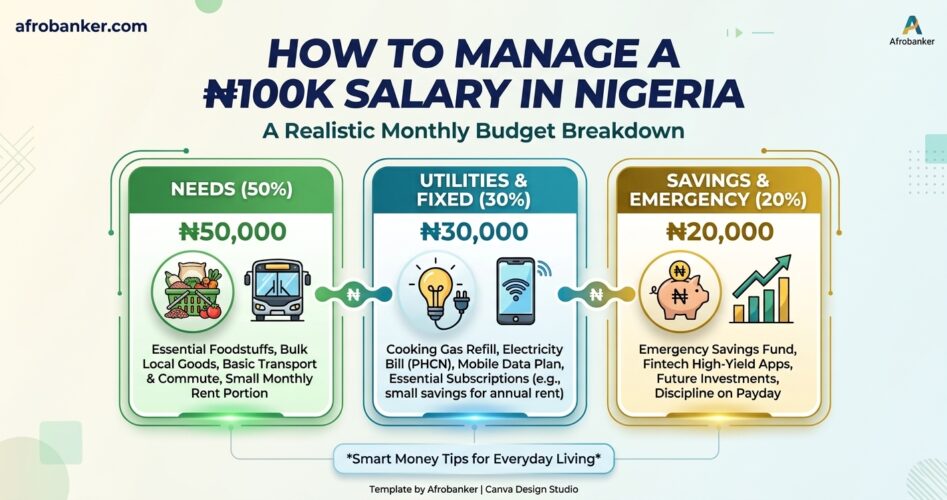
Managing a ₦100,000 monthly salary in Nigeria requires strict discipline and a strategic budget framework like the 50/30/20 rule:
-
50% (₦50,000) for Needs: Cover essentials such as bulk local foodstuffs (garri, rice, beans) and basic transport/commute costs.
-
30% (₦30,000) for Fixed Expenses & Utilities: Pay small monthly bills like electricity (PHCN), mobile data, cooking gas, or a proportion toward monthly room rent/savings.
-
20% (₦20,000) for Emergency Savings & Investments: Set aside ₦10,000 to ₦20,000 immediately on payday into high-yield fintech savings apps (like PiggyVest or FairMoney) before making non-essential purchases.
How to Manage a ₦100k Monthly Salary in Nigeria
Living on a ₦100k salary in Nigeria can feel overwhelming, especially with rising costs of food, transport, and rent. If you often wonder “where did my money go?”, you’re not alone. “While earning ₦100k a month in today’s economy requires tight financial discipline, learning how to stretch every Naira is the first step toward building long-term wealth. Beyond just budgeting, making smart financial decisions that can transform your life will set the foundation for financial freedom regardless of your current income level.”
“As a bank teller over the years, I see staff and customers withdraw their full salary within days, with nothing left to save. ”The good news? With the right plan, you can control your money, save, and still meet your needs.
In this guide, I’ll show you a simple and realistic budgeting method that actually works in Nigeria.
Let’s be honest, ₦100k salary in Nigeria is not easy to live on with the current inflation rate in the country. I see it every day. As someone working in the banking system, I’ve watched people withdraw their entire salary within a few days and before mid-month, they’re already broke. This is incredible
I’ve been there too and asking myself, “Where did all my money go?” If that sounds like you, don’t worry. You’re not the problem, the lack of a plan is.

Always Track Your Spending/Know Where Your Money Goes
- How much do I spend on food (Random snacks)?
This question is really important as this is one of the most underrated money leaks, considering the current state of the economy and rate of inflation in the nation. An average Nigerian spends roughly 30k to 40k on food alone and this is worrisome. Now you have to curtail how much you spend on unnecessary for snacks which takes up to 7-8% of food. Taking snacks isn’t the issue, but lack of control is.
- Extra transport?
Having an extra transport is another silent money leak, just like snacks/food. This happens when there is an unplanned or unnecessary transport spending, like taking bike instead of walking short distance, using Bolt/Uber when there is an availability of public transport, frequent changing of routes, etc.
- Airtime and data?
Always track/monitor your airtime and data usage. Set a weekly or monthly limit of your bundle subscription as this helps you control spending and avoid waste.
- Family support?
This is another low hanging fruits that drains your income. Many people plan their finances around both personal needs and family obligations. Some of the realistic examples are sending to your parents, buying food and provisions, paying medical bills/school fees and assisting your siblings with upkeeps.
- Small but frequent spending
These little things are what drain your salary. Just try this for one week, write down everything you spend money on. Track your expenses for 7 days, you’ll be shocked.
Use the 50-30-20 Rule -A Simple Budget Plan
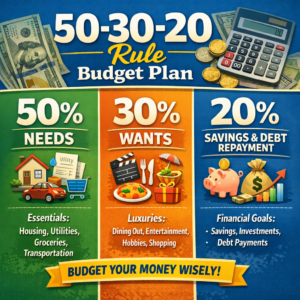
- ₦60,000 —– Needs (food, transport, bills etc.)—–60%
- ₦20,000 —– Flexible spending (Wants)——-20%
- ₦20,000 —– Savings————————–20%
|
Category
|
Amount
|
|---|---|
|
Rent (shared)
|
₦20,000
|
|
Food
|
₦25,000
|
|
Transport
|
₦10,000
|
|
Airtime/Data
|
₦5,000
|
|
Savings
|
₦20,000
|
|
Miscellaneous
|
₦20,000
|
Cut Unnecessary Spending/ Be Honest About Your Lifestyle

- Too much eating out – You have to reduce or stop too many eating out.
- Unused subscriptions – Never subscribe unnecessarily
- Quit impulse buying
Now ask yourself these questions below:
- Do I really need this?
- Am I spending to impress people?
Save Immediately You Get Paid (Save First, Not Last)

- Remove your savings first
- Transfer it to another account (entirely new account)
- Move ₦10k–₦20k to savings
- Remember to use a separate account like I stated above.
Avoid Lifestyle Pressure/Avoid Silent Money Killers

- Expensive clothes
- Frequent outings
- Financial competition
- Too many ATM/POS withdrawals
- Subscription services you don’t use
- Frequent eating outside
Look for Extra Income/Increase Your Income (Very Important)
- Selling items online
- Weekend hustle
- Freelance work
- A small side hustle
- Offer a service
What Can ₦100K Buy in Nigeria?
One of the biggest challenges of earning ₦100,000 monthly is understanding what that amount can realistically cover. Depending on your location and lifestyle, ₦100K may be enough for rent contributions, transportation, food, utilities, and communication expenses. However, it may not support a luxury lifestyle.
The key is to focus on necessities first before allocating money to entertainment and non-essential spending. Knowing what ₦100K can buy in Nigeria helps you create a realistic budget that reflects current economic realities.
What Can I Do With ₦100K to Make More Money?
Managing a ₦100K salary becomes easier when part of your income is used to generate more income. Instead of spending every naira you earn, consider investing a portion in a small side business, digital skills, online services, or low-capital trading opportunities.
Examples include:
- Mini importation
- Selling thrift items
- Phone accessories business
- Freelancing services
- Printing and branding services
- Food reselling
- Social media management
The goal is not just to save money but also to make your money work for you.
What Is the Most Profitable Business to Start With ₦100K?
The most profitable business depends on your skills, location, and demand in your area. However, many Nigerians have successfully started businesses with less than ₦100,000.
Some examples include:
- POS agency business
- Phone accessories sales
- Perfume business
- Foodstuff retailing
- Baking supplies
- Laundry pickup services
- Online digital services
Profitability depends more on proper management and consistent customer demand than on the amount of capital invested.
Which Business Brings Money Faster in Nigeria?
Businesses that solve everyday problems often generate revenue faster because they have consistent demand. Examples include:
- Food sales
- POS services
- Transportation services
- Recharge card and data sales
- Water supply services
- Cleaning services
- Fast-moving consumer goods retail
While no business guarantees immediate success, choosing a service people need daily can improve your chances of earning faster.
How to Make ₦10,000 Daily in Nigeria
Making an additional ₦10,000 daily can significantly improve your financial situation. While results vary, many Nigerians earn extra income through:
- Freelancing
- Graphics design
- Content writing
- POS services
- Food delivery
- Hairdressing
- Online tutoring
- Digital marketing
Even if you earn only half of that amount initially, the additional income can reduce financial pressure and boost your savings.
How to Make ₦50,000 Naira Daily
Earning ₦50,000 daily generally requires a scalable business or high-demand skill. People who achieve this level of income often combine multiple revenue streams such as business operations, consulting, digital services, product sales, and investments.
While it may not happen immediately, consistent skill development and business growth can gradually increase your earning potential beyond your monthly salary.
What Is a Good Monthly Salary in Nigeria?
A good salary is relative to location, family size, lifestyle, and personal financial obligations. For a single individual living modestly, ₦100,000 may be manageable with careful planning. However, larger households often require significantly higher income to maintain financial stability.
Rather than comparing yourself with others, focus on increasing your earning capacity and improving your financial habits.
What Is a Middle-Class Salary in Nigeria?
Although there is no universally accepted figure for Nigeria’s middle class because living costs vary considerably across the country. However, middle-class earns approximately 300k to 600k depending on the institutionthe individual works. This generally allow individuals to meet essential needs, save money, handle emergencies, and enjoy a reasonable quality of life without constantly struggling financially.
The real indicator of financial well-being is not only income but also the ability to save, invest, and avoid excessive debt.
Can ₦1 Million Naira Buy a House in Nigeria?
In most urban areas, ₦1 million is generally insufficient to purchase a completed house. However, depending on the location, it may contribute toward land acquisition, building materials, or the early stages of a construction project.
This highlights why savings, investments, and long-term financial planning are important for anyone hoping to achieve major financial goals such as homeownership.
Conclusion
- Tracking your expenses
- Sticking to a plan
- Saving consistently.
- No budget
- No discipline
- No savings plan. If you can fix these anomalies, your money will start working for you and over time, you’ll gain control and peace of mind. Therefore, start small, stay consistent, your future self will thank you.

Leave a Reply