
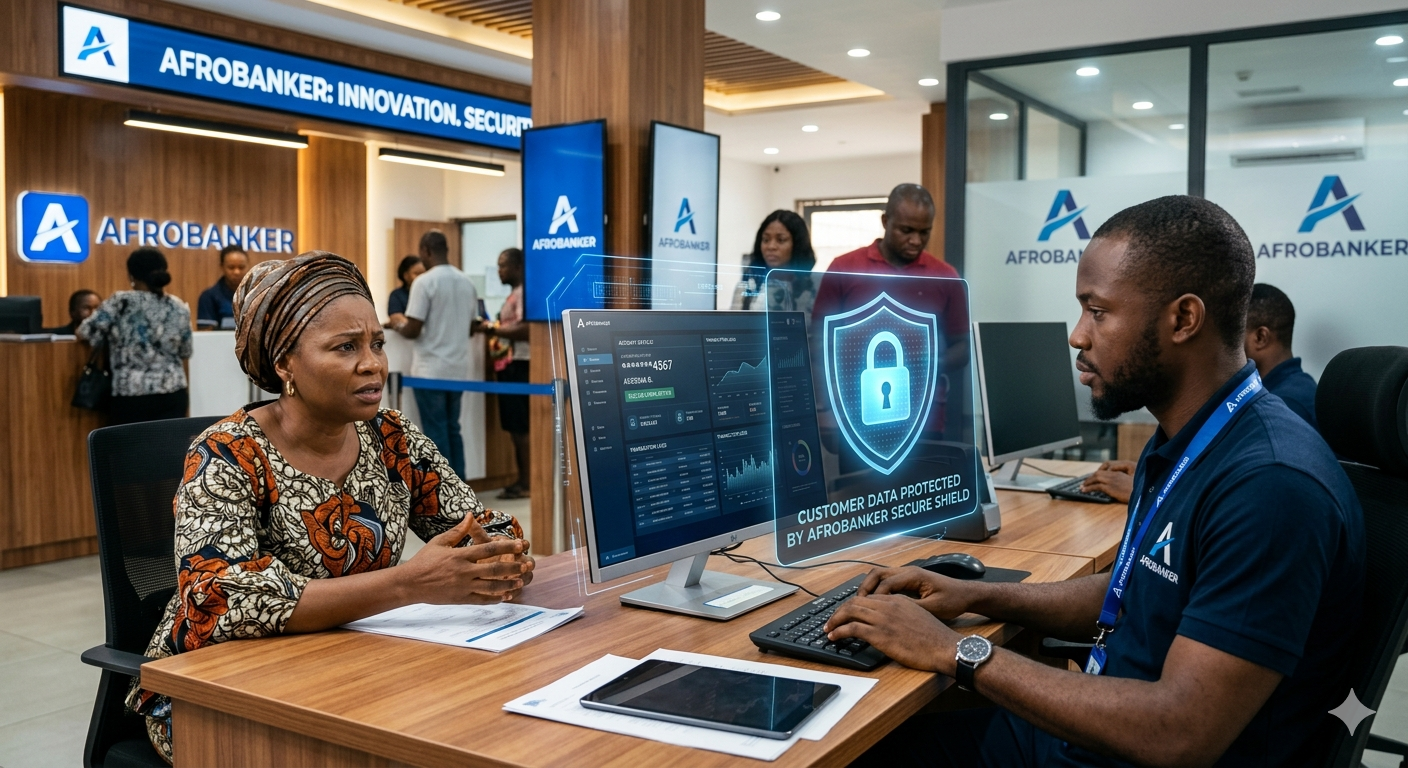
In today’s digital banking ecosystem, customer data is one of the most valuable assets a bank holds. From account details and BVN records to transaction histories and personal identification, the integrity and security of this data define the trust relationship between banks and customers.
In Nigeria’s fast-evolving financial sector, driven by mobile banking, fintech innovation, and regulatory pressure, the twin pillars of data accuracy and confidentiality have become more critical than ever. Yet, many Nigerian banks still face data errors, privacy breaches, insider risks, and system vulnerabilities that threaten customer confidence and expose institutions to regulatory sanctions.
In this post, I will be discussing:
-
The meaning of data accuracy and confidentiality
This section breaks down what these two concepts actually mean in the context of day-to-day banking operations. It goes beyond definitions to explain how they affect transactions, customer access, and internal processes.
-
Real risks in Nigerian banking
Here, we look at the actual dangers banks and customers face when data is either incorrect or exposed, ranging from fraud to customer frustration and reputational damage.
-
The challenges banks face
This part explains why these problems still exist, including system limitations, human factors, and operational pressures unique to Nigerian banking.
-
Practical solutions to strengthen customer data protection
Finally, we focus on what banks can realistically do to improve, using a mix of technology, policy, and behavioral changes.
Understanding Data Accuracy and Confidentiality in Banking
What is Customer Data Accuracy?
Customer data accuracy refers to the correctness of customer information, which means that every piece of data entered into the system must reflect the customer’s true details. Even a single wrong digit in an account number or phone number can create serious problems. It is the completeness of records where a customer’s profile must not have missing critical information. Incomplete data can interrupt service delivery, delay transactions, or trigger compliance issues. Then the reliability over time where data must remain accurate even after updates. Banks must ensure that changes such as phone number or address updates are properly verified and recorded without introducing new errors.
This includes:
-
Names and addressesIf a customer’s name is misspelled or differs across systems, it can lead to verification failures or issues with regulatory documentation.
-
Account numbersAccuracy here is critical because errors can result in funds being sent to the wrong account.
-
BVN/NIN linkageIncorrect linkage can prevent identity verification and may even lead to account restrictions or compliance flags.
-
Transaction recordsThese must reflect actual activities. Incorrect entries could mislead audits, affect dispute resolution, or trigger fraud alerts.
-
Contact informationPhone numbers and emails must be correct to ensure customers receive alerts, OTPs, and important updates.
Let’s look at this scenario where a simple error like a wrong phone number or misaligned BVN can create a chain reaction. The customer might not receive OTPs, may be unable to complete transactions, and could even be locked out of their account. What started as a “small mistake” becomes a serious operational problem.
What is Customer Data Confidentiality?
Confidentiality refers to protecting customer information from unauthorized access where only approved individuals within the bank should be able to view or use sensitive customer data. Preventing unauthorized disclosure which entails that customer data should never be shared with external parties without proper consent or legal justification. Finally, avoiding misuse of information even authorized staff must not use customer data for personal or non-official purposes.
This means that:
-
Only authorized staff can access sensitive data
Access must be restricted based on job roles. For example, a teller should not have the same level of data access as a customer service officer. -
Customer details must not be shared without consent
Sharing account balances, phone numbers, or transaction history without permission is a serious breach. A third party should not have access to any customer’s bank information.I have seen a scenario where a husband wants to know the account balance of his wife’s bank account which he is not a signatory to. It is the duty of a bank staff to keep customer’s bank information secret and not disclose to whomever it is without legal/law backing/motion. -
Systems must be secured against hackers
Strong cybersecurity measures must be in place to prevent external attacks that target customer databases.
Risks of Poor Data Accuracy and Confidentiality in Nigerian Banks
1. Financial Loss and Fraud
Inaccurate or exposed data can lead to:
-
Unauthorized withdrawals
Fraudsters can exploit wrong or exposed information to initiate transactions without the customer’s knowledge. -
Identity theft
With access to personal details like BVN, phone number, or ID, criminals can impersonate customers. -
Account takeover
If OTPs or login data are compromised, fraudsters can gain full control of accounts.
Let me share this little example:
A staff mistakenly updates a wrong phone number. That number falls into the hands of someone who begins receiving OTPs and uses them to authorize withdrawals. The customer only realizes after funds are gone.
2. Customer Dissatisfaction and Loss of Trust
Nigerian customers are already sensitive to, failed transactions where repeated errors frustrate customers and damage their banking experience., delayed reversals when issues take too long to resolve, customers lose confidence and finally poor complaint resolution where there is lack of timely response makes customers feel ignored.
Imagine when your personal data is being leaked; this creates fear and emotional distress. Also, when your account is wrongly debited due to incorrect records, this leads to anger and distrust. Trust collapses instantly because customers expect banks to protect both their money and their information.
3. Regulatory Sanctions and Legal Exposure
Banks operating in Nigeria must comply with the NDPA (Nigeria Data Protection Act). This law mandates how personal data should be handled and protected and the CBN consumer protection guidelines. These ensure that customers are treated fairly, and their data is safeguarded.
Failure can result in heavy fines where regulators can impose significant financial penalties, Litigation where customers can take legal action if their data is mishandled and Reputational damage where public trust once lost is difficult to regain.
4. Insider Abuse and Data Leakage
One of the most overlooked risks is internal staff behavior. These common issues include:
-
Staff accessing customer data without valid reasons. This is when a curious or careless employees may look up information they don’t need.
-
Sharing account details with third parties. This can happen intentionally for fraud or unintentionally through negligence.
-
Negligence in handling sensitive information. Leaving systems open, sharing passwords, or mishandling documents can expose data.
5. Cybersecurity Breaches
With increased digitalization, Banks face phishing attacks. This is when fraudsters trick users or staff into revealing login details. Also, there is Malware threats increase where malicious software can infiltrate systems and steal data. Finally, database breaches become more common when hackers target large volumes of stored customer information.
Weak systems combined with poor governance create the perfect environment for attacks.
Key Challenges Facing Nigerian Banks
1. Legacy Systems and Data Fragmentation
Many banks still operate on outdated core banking systems. These systems were not built for today’s digital demands. Multiple unintegrated platforms, where different departments may use separate systems that don’t communicate properly. This will now lead to :
-
Duplicate customer records
One customer may exist in multiple versions across systems. -
Inconsistent data updates
Changes in one system may not reflect in another. -
Processing errors
Transactions may fail due to conflicting data.
2. Human Error and Staff Negligence
Frontline staff often rush customer onboarding because there is pressure from long queues which leads to shortcuts. Customer Service Units mostly enter incorrect details, thereby making mistakes by now carefully reviewing entry data. Also, they skip verification steps by not confirming updates. This will now lead to long-term issues.
Theses errors remain in the system and continue to affect customers over time.
3. Weak Data Governance Frameworks
Some banks and financial institutions lack clear data handling policies because staff may not fully understand how data should be managed. Also, too many people may have excessive permissions where there is no role-based access controls. There is also an audit systems that lacks track knowledge, therefore misuse of data can go unnoticed.
4. Rapid Digital Adoption Without Adequate Controls
Nigeria is experiencing a boom in mobile banking and more customers rely on apps and online platforms. There is also an increased fintech integrations, hence, Banks connect with multiple third-party services. Notwithstanding, many banks expand faster than they secure systems. Hence, growth without security creates vulnerabilities.
5. Low Customer Awareness
Customers sometimes share OTPs unknowingly, thinking they are talking to bank representatives. They also lack the awareness of using a strong password combination. They resort in using weak passwords, thereby making their accounts easy to access. Finally, they fall victim to phishing scams by clicking fake links or messages.
Even the strongest systems cannot protect users who unknowingly expose themselves.
Practical Solutions for Nigerian Banks
Amid customer data accuracy and confidentiality facing banks in Africa and worldwide, Banks and other financial institutions should follow these laid down procedures.
1. Strengthen Data Governance Policies
Banks must implement structured data frameworks to guide how information is handled, they should clearly define access levels so employees only see what they need finally they should regularly audit usage to detect misuse early.
2. Deploy Advanced Technology Solutions
Banks and other institutions should deploy advanced technology solutions. Modern tools improves data validation by reducing entry errors automatically, Encryption by protecting data even if intercepted and AI fraud detection by identifying suspicious behavior instantly
For instance, unusual login patterns or strange transaction spikes can be flagged immediately.
3. Enhance Staff Training and Accountability
Regular training of staff should not be overlooked. Therefore, financial institutions like banks should train staff continuously on data protection, enforce discipline for violations and promote professionalism in handling customer information
4. Implement Strong Access Controls
Implementing strong access controls has to deal restricting system access based on job roles, using a multi-factor authentication for internal systems and monitoring activity logs to track who accessed what.
5. Improve Customer Verification Processes
Banks needs to double-check customer details during onboarding, ensure periodic KYC updates and use automated validation systems to catch errors early
6. Promote Customer Awareness
Banks must always educate customers and create awareness never share OTP or PIN under any circumstance, always verify communications before acting and also report suspicious activity immediately.
7. Regular System Upgrades and Security Testing
Banks and financial institutions have to Fix system vulnerabilities promptly, Conduct penetration testing regularly and Monitor threats continuously.
Here is A Real-Life Scenario
A customer visited one of the Banks in Lagos to update her number, due to negligence, the staff entered the wrong number without verification. Weeks later, the customer stops receiving OTPs, which made a fraudster to use the number to authorize transactions. The bank later discovers that:
- Verification procedures were skipped
-
No follow-up confirmation was done/lack of audit trail
-
System logs were not reviewed or staff bypassed procedures. This simple mistake escalates into fraud, loss, and regulatory consequences which hugely affected the bank.
Now, Why This Topic Matters More Than Ever?
I have noticed over the years as a Bank Staff that in today’s banking environment, data is currency as it drives operations, decision-making, and service delivery. Also, trust is everything. Without trust, customers will move to competitors. Finally, compliance is mandatory because regulatory bodies expect strict adherence to data protection rules.
Conclusion
Customer data accuracy and confidentiality are not just operational requirements, they are the foundation of trust, security, and regulatory compliance in Nigerian banking.
Banks that ignore these areas risk financial loss, customer dissatisfaction, and regulatory penalties. But those that invest in strong systems, trained staff, and structured governance will build lasting customer relationships and stand out in an increasingly competitive financial landscape.

Leave a Reply