ATM card-swap fraud remains one of the most common and damaging forms of banking fraud. Although digital banking fraud often dominates headlines, criminals continue to exploit customers at ATM galleries by using deception, distraction, and social engineering techniques to steal debit cards and gain unauthorized access to bank accounts.
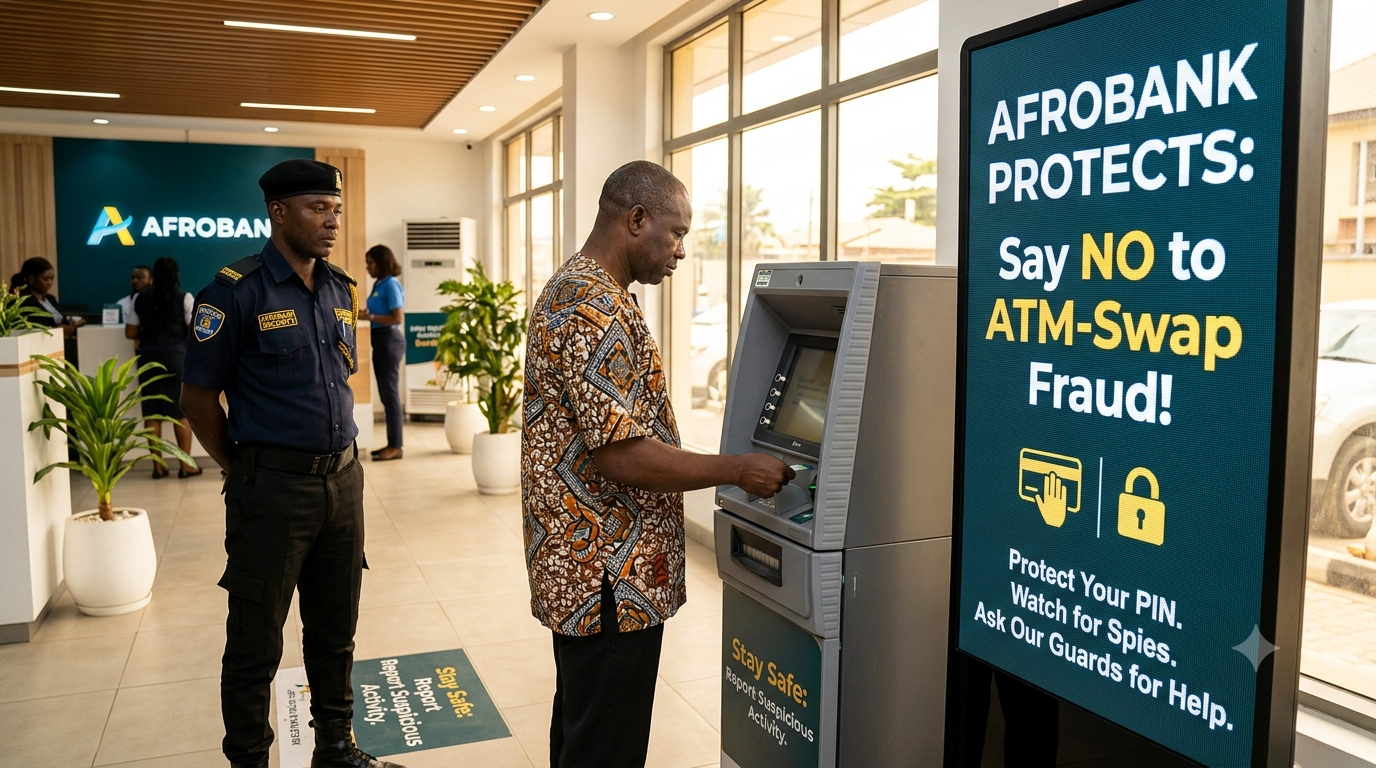
The image below highlights a critical concern facing banks today: fraudsters targeting customers at ATM locations, offering unsolicited assistance, and secretly swapping genuine cards with counterfeit ones. Many victims only discover the fraud after unauthorized withdrawals have already been made from their accounts.
As card-swap incidents continue to affect customers and expose banks to financial losses, regulatory scrutiny, complaints, and reputational damage, financial institutions must adopt proactive measures to protect customers before fraud occurs.
Quick Summary: How Banks Stop ATM Card Swaps
-
Active Guard Monitoring: Station physical security at high-risk & off-site ATM galleries.
-
100% CCTV Coverage: Maintain operational, continuous recording with secure video storage.
-
Instant Self-Service Blocking: Enable rapid card locks via USSD, mobile apps, and hotlines.
-
Prominent On-Machine Signs: Display clear emergency contact numbers directly on ATMs.
-
Awareness Campaigns: Frequently remind customers to shield PINs and refuse unsolicited assistance.
-
AI Behavioral Monitoring: Use automated systems to flag rapid sequential withdrawals.

Understanding ATM Card-Swap Fraud
ATM card-swap fraud typically occurs when a criminal approaches a customer experiencing difficulty at an ATM. The fraudster pretends to be helpful and offers assistance.
During the interaction, the fraudster may:
- Observe the customer’s PIN.
- Distract the customer.
- Collect the customer’s card.
- Quickly exchange the card for a similar-looking card.
- Return the counterfeit card while keeping the genuine one.
Because most ATM cards look similar, customers often fail to notice the switch immediately. Armed with the stolen card and observed PIN, criminals can withdraw funds or carry out fraudulent transactions before the customer realizes what has happened.
This type of fraud relies more on manipulation and deception than on sophisticated technology, making customer awareness and strong security controls essential.
Why Banks Must Take ATM Card-Swap Fraud Seriously
ATM card-swap fraud affects more than just the victim’s account balance. As a banking professional, I have witnessed firsthand how card-swap fraud creates severe operational stress and erodes customer trust.
For banks, every successful fraud case can lead to:
- Customer complaints.
- Regulatory investigations.
- Financial reimbursements.
- Litigation risks.
- Loss of customer confidence.
- Negative publicity.
When customers believe a bank failed to provide adequate security at its ATM locations, trust in the institution can quickly erode.
Therefore, preventing ATM card-swap fraud is not merely a security responsibility, it is also a customer service and reputation management priority.
1. Ensure Active Security Presence at ATM Locations
One of the most effective deterrents against card-swapping fraud is the visible presence of security personnel. The image emphasizes the importance of maintaining active security monitoring around ATM galleries and booths. Security officers can:
- Identify suspicious individuals loitering near ATMs.
- Prevent unauthorized persons from assisting customers.
- Intervene when customers appear vulnerable.
- Report suspicious behavior promptly.
Fraudsters generally prefer locations where there is little or no supervision. In our branch operations, we instruct security officers to strictly monitor ATM galleries and permit only one customer at the machine at a time. A visible security presence creates an environment that discourages criminals from operating.
Banks should particularly focus on:
- High-traffic ATM locations.
- Off-site ATM terminals.
- Weekend periods.
- After-business hours.
The mere presence of trained security personnel can significantly reduce fraud opportunities.
2. Maintain Functional CCTV Coverage
Modern surveillance systems play a crucial role in fraud prevention and investigation.
According to the measures I highlighted in the image, CCTV cameras should remain operational and record continuously to support investigations and regulatory compliance. Well-monitored CCTV systems can:
- Deter criminal activity.
- Capture evidence for investigations.
- Help identify fraud suspects.
- Support law enforcement efforts.
- Resolve customer disputes.
However, installing cameras alone is not enough. Banks should ensure:
- Cameras cover all customer interaction areas.
- Video quality is clear and usable.
- Recordings are stored securely.
- Systems are inspected regularly.
- Faulty cameras are repaired immediately.
A non-functional CCTV camera can create a security gap that criminals may exploit.
3. Block Compromised Cards Immediately
Speed is critical when dealing with suspected card-swap incidents. We as bank staff have sensitized our customers to report to us immediately they discover:
- Their ATM card was swallowed.
- Their ATM card was stolen.
- They suspect their card has been swapped.
- Any card compromise may have occurred.
Many fraudulent withdrawals happen within minutes of a successful card swap, therefore, we as bank staff empower customer service teams to block cards instantly, suspend suspicious transactions, verify customer reports promptly and trigger fraud investigation processes.
Banks should also provide customers with self-service card-blocking options through:
- Mobile banking apps.
- Internet banking platforms.
- USSD banking channels.
- Dedicated fraud hotlines.
Giving customers immediate control can significantly reduce losses.
4. Display Fraud Reporting Channels Prominently
When fraud occurs, many customers panic and do not know whom to contact. Banks should clearly display important contact information at every ATM location, including:
- Customer care numbers.
- Fraud reporting hotlines.
- Email addresses.
- WhatsApp support channels.
- Emergency card-blocking instructions.
Visible reporting channels help customers act quickly. The faster a customer can reach the bank, the higher the chances of stopping fraudulent transactions before significant losses occur. ATM stickers, digital screens, posters, and transaction receipts can all be used to promote fraud reporting channels.
5. Intensify Customer Awareness Campaigns
Many card-swap victims simply do not know such schemes exist. An informed customer is far more difficult to deceive. Therefore banks should continuously educate customers through:
- SMS alerts.
- Email newsletters.
- Social media campaigns.
- ATM screen messages.
- In-branch awareness programs.
I, as bank staff have always advised customers even at the point of changing their ATM PIN to:
- Never accept assistance from strangers.
- Shield their PIN when entering it.
- Verify that the returned card is theirs.
- Report suspicious activities immediately.
- Keep emergency contact numbers handy.
6. Deploy Fraud Detection Systems
Technology can help detect suspicious ATM behavior before losses escalate. Advanced fraud monitoring systems can identify:
- Unusual withdrawal patterns.
- Multiple withdrawals within a short period.
- Transactions at unfamiliar locations.
- High-risk behavioral patterns.
When suspicious activities are detected, the system can automatically trigger alerts, request additional authentication, temporarily block transactions and escalate the case for review. Early detection often means preventing further fraud.
7. Improve ATM Gallery Design and Layout
The physical environment of an ATM can influence fraud risk. Banks should design ATM galleries to prevent crowding, maintain customer privacy, restrict unauthorized access and improve visibility. Protective measures may include:
- Single-user access controls.
- Adequate lighting.
- Security mirrors.
- Anti-loitering policies.
- Security signage.
A well-designed ATM area makes it harder for criminals to observe PINs or approach customers unnoticed.
8. Train Staff on ATM Fraud Response
Frontline employees are often the first point of contact when a customer reports card-swapping fraud. As a bank staff, we have several training on:
- Common fraud tactics.
- Emergency response procedures.
- Customer communication.
- Card-blocking processes.
- Fraud escalation protocols.
Employees should know how to respond quickly and professionally when customers report suspicious incidents. Fast action can be the difference between stopping fraud and allowing losses to continue.
9. Encourage Instant Transaction Alerts
Transaction alerts remain one of the most effective fraud detection tools available to customers. Banks should encourage customers to activate:
- SMS transaction alerts.
- Push notifications.
- Email alerts.
Real-time alerts enable customers to detect unauthorized transactions immediately and report them before further losses occur. When a customer receives an unexpected withdrawal notification, prompt reporting can trigger rapid intervention.
10. Promote Cardless ATM Services
Many banks now offer cardless withdrawal options through mobile banking applications. By reducing dependence on physical cards, banks can lower the risk of card-swapping fraud altogether.
Cardless transactions typically use:
- One-time PINs.
- QR codes.
- Mobile app authentication.
- Biometric verification.
As digital technology evolves, cardless banking may become one of the most effective long-term defenses against card-related fraud.
Frequently Asked Questions (FAQs)
What is ATM card-swap fraud?
ATM card-swap fraud occurs when a fraudster secretly exchanges a customer’s ATM card with another card, usually after observing the customer’s PIN, and then uses the stolen card to withdraw funds.
How can banks prevent ATM card-swapping?
Banks can prevent card-swapping by deploying security personnel, installing functional CCTV systems, educating customers, and providing quick card-blocking services.
What should a customer do if their ATM card is swapped?
The customer should immediately contact the bank, block the card, report the incident, and monitor account activity for unauthorized transactions.
Why is CCTV important in ATM fraud prevention?
CCTV helps deter criminals, records evidence, supports investigations, and assists in resolving customer complaints and regulatory inquiries.
Can cardless ATM withdrawals reduce fraud?
Yes. Cardless ATM transactions eliminate the need for a physical card, reducing the risk of card-swapping and card theft.
Conclusion
ATM card-swap fraud may appear simple, but its impact on customers and banks can be severe. Fraudsters exploit trust, distraction, and customer vulnerability to steal cards and empty bank accounts within minutes.
The controls highlighted in the image—active security presence, functional CCTV coverage, immediate card blocking, and visible complaint channels—provide a strong foundation for prevention. However, banks should go further by investing in customer education, fraud detection technology, staff training, ATM security enhancements, and cardless banking solutions.
Every ATM card-swap incident prevented protects customer funds, strengthens public confidence, and preserves the bank’s reputation. In today’s banking environment, proactive prevention is far more effective than reacting after fraud has already occurred.
Featured Snippet Answer
Banks can protect customers from ATM card-swap fraud by maintaining security personnel at ATM locations, ensuring CCTV coverage, blocking compromised cards immediately, displaying fraud reporting channels, educating customers, deploying fraud detection systems, and promoting cardless banking services. These measures help prevent unauthorized access to customer accounts and reduce fraud losses.
Looking for More Security Insights?
Card swapping is just one tactic fraudsters use. To explore more operational guides, prevention strategies, and insider analysis, visit the AfroBanker Fraud & Security Hub.

Leave a Reply