

How Scammers Get Your Bank Details
Scammers typically steal your bank details using five main tactics:
-
- Phishing and Smishing: Sending fake emails or text messages with links to fraudulent login pages.
- Phone Spoofing (Vishing): Impersonating bank fraud departments over the phone using cloned caller IDs.
- ATM Skimming: Installing hidden recording devices on public ATMs to capture card data and PINs.
- Public Wi-Fi Sniffing: Intercepting unsecured internet traffic to log login credentials.
- Data Breaches: Buying compromised personal information directly from the dark web.
How to Avoid Bank Scams
To protect your accounts, never click links in unsolicited messages, always call the number on the back of your card directly, and enable multi-factor authentication (MFA) on all banking apps.
Financial fraud is evolving daily, and your bank details are a prime target. Scammers don’t just guess your information; they use sophisticated psychological and technical tricks to get you to hand it over.
In today’s digital banking environment, convenience has come with a dangerous trade-off, which is an increased exposure to fraud. Across Nigeria & Africa, thousands of bank customers fall victim to scams every year, often without even realizing how their personal banking details were compromised.
The truth is, scammers are no longer relying on crude tricks. They now use psychology, technology, and insider-level deception to gain access to sensitive information such as account numbers, ATM card details, PINs, and even one-time passwords (OTPs).
Understanding how these fraudsters operate is your first line of defense. In this guide, we will break down exactly how scammers get your bank details in Nigeria, the common methods they use, and most importantly, how you can protect yourself.
How Scammers Get Your Bank Details?
1. Social Engineering (Manipulation and Deception)
One of the most powerful tools scammers use is human psychology. Instead of hacking systems, they trick people into voluntarily giving away their details. This often involves impersonating bank officials, telecom agents, or even government representatives.
Some common tactics include:
- Calling customers and claiming their account has been compromised
- Sending urgent messages that require “verification”
- Pretending to help resolve failed transactions
Because the conversation sounds convincing and urgent, victims often panic and reveal sensitive details like ATM PIN, OTP codes & Internet banking passwords. In many cases, the scammer already knows basic details such as your name or phone number, making the interaction feel legitimate.
2. Phishing Messages and Fake Links
Phishing and smishing rely heavily on manufactured urgency. You receive an email or text message that appears to be from your actual financial institution. The message typically warns that your account has been compromised, suspended, or flagged for a suspicious transaction.
To resolve the crisis, you are urged to click a link. This link redirects you to a cloned, fraudulent website designed to mirror your bank’s official login portal. The moment you input your username, password, or security answers, the scammers capture your bank details in real time.
Phishing remains one of the most widespread fraud methods in Nigeria and across Africa. This involves sending fake SMS messages, emails, or WhatsApp links that appear to come from a bank. These messages usually include:
- A warning about account suspension
- A fake bonus or refund claim
- A request to “update your account details”
Once you click the link, you are taken to a fake banking website that looks almost identical to the real one. Any information you enter on that page goes directly to the scammers. Read our complete guide on how to avoid Phishing attack.
3. Fake Customer Care Numbers (Vishing)
Voice phishing, or vishing, combines technical trickery with psychological manipulation. Fraudsters use advanced software to clone caller ID data, making your phone display the exact name and phone number of your bank’s official fraud department.
The caller pretends to be a helpful bank agent investigating an unauthorized charge on your account. To “verify your identity” or “reverse the charge,” they ask you to read back your account number, debit card PIN, or the one-time verification passcode that was just sent to your phone.
Fraudsters now exploit search engines and social media by posting fake bank customer care numbers.
Here’s how it works:
- You search online for your bank’s contact number
- You unknowingly call a scammer
- They ask for your account details under the guise of assisting you
Because you initiated the call, you naturally trust the interaction. This makes the scam even more effective.
4. SIM Swap Fraud
SIM swap fraud is one of the most dangerous methods currently used. In this scheme, scammers:
- Gain access to your phone number (sometimes with insider help)
- Transfer your number to a new SIM card
- Take control of your calls and SMS
Once they control your phone line, they can:
- Receive your OTPs
- Reset your banking passwords
- Authorize transactions
This type of fraud is particularly devastating because it bypasses standard security layers. Click here to read more on SIM swap fraud
5. Malware and Spy Apps
Logging into your mobile banking application while connected to an unencrypted, public Wi-Fi network at a coffee shop, airport, or hotel introduces severe vulnerabilities.
Hackers use network sniffing software to monitor data packets traveling across the public airwaves. If the connection lacks proper encryption, they can intercept your keystrokes and capture your login credentials. Similarly, downloading compromised apps or clicking malicious links can infect your device with spyware, giving hackers full visibility into your screen.
Sometimes, scammers don’t need to trick you directly, they rely on malicious software. This can happen when you download apps from untrusted sources, click suspicious links and install modified banking apps. The malware can:
- Track your keystrokes
- Capture login credentials
- Monitor SMS alerts
In some cases, your banking session is compromised without your knowledge.
6. ATM and POS Skimming
Skimming is a physical method used to harvest card data. Criminals attach thin, hard-to-detect electronic overlays over the card slots of public ATMs, gas station pumps, or point-of-sale terminals.
As you insert your card, the skimmer reads and copies the information stored on the magnetic strip. Simultaneously, a hidden pinhole camera or a fake keypad overlay records your hand movements as you type in your PIN. The scammers then clone your physical card to make unauthorized withdrawals.
Physical fraud still exists, especially around ATMs and POS terminals. Devices known as “skimmers” can be used to:
- Capture your ATM card details
- Record your PIN using hidden cameras
Once this information is collected, fraudsters clone your card and withdraw funds.
7. Insider Leaks and Data Exposure
Unfortunately, not all threats come from outside, some data is being leaked or exposed by some bank staff. Therefore, some scams originate from:
- Leaked customer databases
- Dishonest agents
- Unsecured business transactions
If your personal details are exposed through any channel, scammers can piece together enough information to target you effectively.
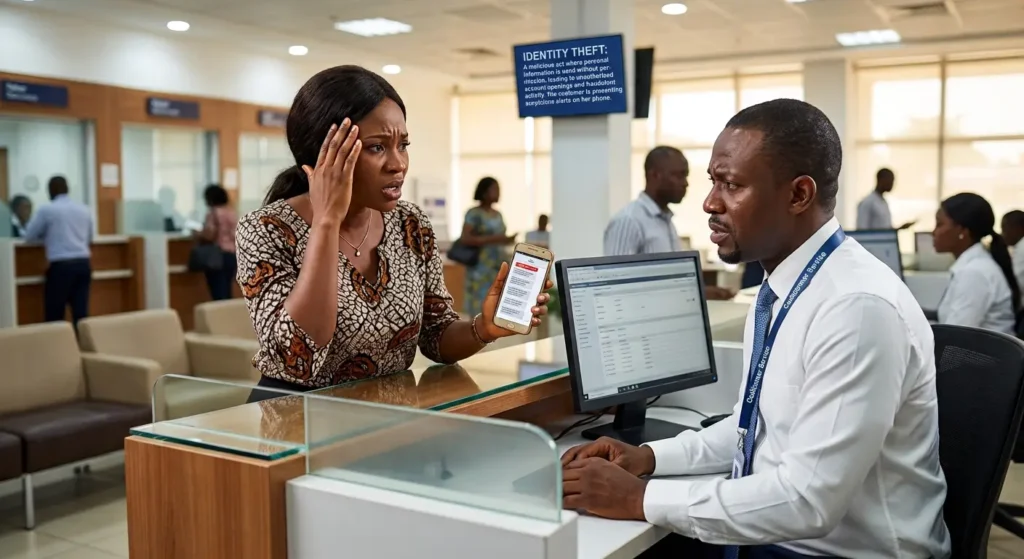
8.Identity Theft and Data Breaches
Scammers do not always target you directly; sometimes, they target the companies you do business with. Massive corporate data breaches frequently expose millions of consumer records.
Criminals purchase these leaked data packages on the dark web, gaining access to your full name, date of birth, address, and National Identity Number. Armed with this background information, a scammer can call your bank, successfully answer the security screening questions, reset your credentials, and hijack your account.
How to Avoid Bank Scams in Nigeria
1. Never Share Sensitive Information
Your bank will never ask for:
- PIN
- OTP
- Password
No matter how urgent the situation sounds, never share these details.
2. Always Verify Before Acting
If you receive a suspicious call or message:
- Contact your bank using the official number
- Visit a branch if necessary
Do not rely on information from random websites or forwarded messages.
3. Avoid Clicking Unknown Links
Never click links from:
- Unknown numbers
- Suspicious SMS alerts
- Unverified emails
Always type your bank’s website URL directly into your browser.
4. Secure Your SIM Card
- Register your SIM properly
- Activate SIM lock (PIN protection)
- Report network issues immediately
If you suddenly lose signal, act fast—it could be a SIM swap attempt.
5. Use Official Banking Apps Only
- Download apps from Google Play Store or Apple App Store
- Avoid “modded” or unofficial apps
- Keep your apps updated
6. Monitor Your Account Regularly
Check your account frequently for:
- Unauthorized debits
- Strange login alerts
- Unknown transactions
Early detection can prevent bigger losses.
7. Report Suspicious Activity Immediately
Time is critical when dealing with fraud.
- Contact your bank instantly
- Block your account if necessary
- Report to CBN or relevant authorities
How do scammers get your bank account number?
Scammers obtain bank account numbers through various means such as leaked databases, phishing attacks, fake forms, or even careless sharing of receipts and documents. In some cases, they combine publicly available information with stolen data to build a complete profile of their victims.
What are the top 3 contact methods used by scammers?
The most common contact methods used by scammers in Nigeria are:
- Phone calls (impersonation of bank staff)
- SMS messages (phishing links)
- Social media platforms like WhatsApp and Facebook
These methods are effective because they create urgency and appear familiar to the victim.
How do fraudsters get access to your bank account?
Fraudsters access bank accounts by obtaining critical authentication details such as PINs, passwords, and OTPs. They may also use SIM swap fraud, malware, or fake banking platforms to bypass security measures and gain control of accounts.
How do scammers find out what bank you use?
Scammers identify your bank through:
- Debit alerts or SMS notifications seen on your phone
- Information shared during transactions
- Data leaks from businesses or platforms
- Social engineering (asking indirect questions)
Once they know your bank, they tailor their scam approach accordingly.
How did scammers get my bank details?
Your details may have been obtained through phishing, malware, insider leaks, or even past transactions where your information was exposed. In many cases, victims unknowingly provide these details during fake verification processes.
Which banks do scammers use?
Scammers do not rely on a specific bank. They often use:
- Accounts opened with fake identities
- Dormant or compromised accounts
- Digital wallets and fintech platforms
Their goal is to move funds quickly before detection, not to stay tied to a particular bank.
Warning Signs Your Bank Details Are Compromised
Staying safe requires spotting the indicators of a security breach early. Watch for these red flags:
-
-
- Micro-Charges: Small, unfamiliar transactions on your bank statement, often worth only pennies. Scammers use these “test charges” to verify if a account is active before attempting a massive drain.
- Sudden Loss of Cellular Service: If your phone unexpectedly loses network connection entirely, you may be the victim of a SIM-swapping attack. Scammers trick your mobile carrier into porting your phone number to their device to intercept your bank’s security codes.
- Unsolicited Authentication Codes: Receiving a text or email containing a two-factor authentication (2FA) code when you are not actively trying to access your account means a scammer already has your password and is trying to bypass the final security wall.
-
How to Avoid Bank Scams and Protect Your Account
- Never Click and Never Call Back Directly
Always navigate to your bank’s app independently or call the number printed directly on the back of your physical debit/credit card.If you receive an urgent alert regarding your funds, do not interact with the message. Disconnect the call or close the text. Open your bank’s official mobile app independently or manually type the bank’s known web address into your browser. If you need to make a phone call, use only the customer service phone number printed directly on the back of your physical debit or credit card.
- Enforce Multi-Factor Authentication (MFA)
Use app-based authenticators (like Google Authenticator) rather than SMS text codes, which can be intercepted.
Basic SMS text message verification is highly vulnerable to interception via SIM-swapping and network sniffing. Upgrade your account security by switching your multi-factor authentication method to an app-based authenticator (such as Google Authenticator or Microsoft Authenticator). These apps generate local, rotating codes that cannot be easily intercepted remotely.
- Freeze Your Credit and Set Up Transaction Alerts
Enable instant push notifications for every single transaction, no matter how small.
Log into your online banking portal and customize your notification settings. Enable instant push notifications or text alerts for every single transaction, deposit, and withdrawal, no matter how small the monetary value. Immediate visibility allows you to detect unauthorized access the exact second it occurs, giving you the best chance to freeze your funds before major damage is done.
- Avoid Public Wi-Fi for Financial Tasks
Use cellular data or a trusted Virtual Private Network (VPN) when checking your balances on the go. Never check account balances, transfer money, or make purchases while connected to public Wi-Fi networks. If you must manage your finances on the move, temporarily disable your Wi-Fi and rely entirely on your cellular data network. Alternatively, run a trusted Virtual Private Network (VPN) to securely encrypt your internet traffic.
My Final Thoughts (As a Bank Staff)
Your biggest advantage is not technology, it’s awareness. Most scams succeed not because systems are weak, but because customers are unprepared. Stay informed, stay cautious, and always question urgency. Banking fraud is evolving rapidly, but so is awareness. The difference between becoming a victim and staying safe often comes down to knowledge and vigilance.
As a bank customer, you must understand this simple rule: “If anyone is asking for sensitive banking details, it is most likely a scam.” By staying alert, verifying every request, and protecting your personal information, you can avoid falling into the traps set by fraudsters.
Frequently Asked Questions (FAQs)
Can a scammer do anything with just my bank account number and name?
In most cases, a scammer cannot directly drain your funds with just your account number and name. These basic details are routinely exposed on paper checks and invoices. However, possessive scammers will use this baseline information to build credibility. They may target you with hyper-personalized phishing calls or texts to trick you into revealing more sensitive credentials like your PIN, online banking password, or one-time passcodes (OTPs).
If my phone displays my bank’s actual name on the caller ID, is the call safe?
No, a matching caller ID is no longer proof of identity. Cybercriminals use sophisticated caller ID spoofing software to mirror your financial institution’s exact customer service or fraud department phone number. If an unexpected caller asks you to verify sensitive information, hang up immediately. Manually dial the number printed directly on the back of your physical payment card to reach a verified employee.
Will my bank ever ask me to transfer money to a “safe account” during an active fraud investigation?
Absolutely not. The request to transfer funds to a “secure” or “safe” account to protect them from hackers is a major red flag and is always a scam. Legitimate banks possess internal security protocols to freeze and secure your funds instantly. They will never require you to execute a wire transfer, cash withdrawal, or third-party payment app transaction to preserve your money.
Can scammers send fake text alerts that appear inside my bank’s actual text message thread?
Yes. Fraudsters exploit text messaging vulnerabilities to spoof sender IDs. This allows their fraudulent alerts to drop seamlessly into the exact same SMS or WhatsApp message stream containing your legitimate transaction history. Never assume a text message is safe simply because it appears alongside older, authentic banking notifications.
What should I do immediately if I accidentally share my bank details with a suspicious person?
Every minute counts, so you must act instantly:
-
- Call your bank immediately using the verified phone number on your card so their fraud team can lock down your accounts and halt pending transactions.
- Deactivate mobile apps or USSD banking functions tied to that account to prevent ongoing digital access.
- Change your online banking passwords and update your multi-factor authentication (MFA) settings.
What a nice piece of advice.
Pingback: นักศึกษารับงานเอง
Good to hear from you and that you love our article. Keep reading our article as we have many more for you.