

Living on a ₦100k salary in Nigeria can feel overwhelming, especially with rising costs of food, transport, and rent. If you often wonder “where did my money go?”, you’re not alone.
“As a bank teller over the years, I see staff and customers withdraw their full salary within days, with nothing left to save. ”The good news? With the right plan, you can control your money, save, and still meet your needs.
In this guide, I’ll show you a simple and realistic budgeting method that actually works in Nigeria.
Let’s be honest, ₦100k salary in Nigeria is not easy to live on with the current inflation rate in the country. I see it every day. As someone working in the banking system, I’ve watched people withdraw their entire salary within a few days and before mid-month, they’re already broke. This is incredible
I’ve been there too and asking myself, “Where did all my money go?” If that sounds like you, don’t worry. You’re not the problem, the lack of a plan is.

Always Track Your Spending/Know Where Your Money Goes
- How much do I spend on food (Random snacks)?
This question is really important as this is one of the most underrated money leaks, considering the current state of the economy and rate of inflation in the nation. An average Nigerian spends roughly 30k to 40k on food alone and this is worrisome. Now you have to curtail how much you spend on unnecessary for snacks which takes up to 7-8% of food. Taking snacks isn’t the issue, but lack of control is.
- Extra transport?
Having an extra transport is another silent money leak, just like snacks/food. This happens when there is an unplanned or unnecessary transport spending, like taking bike instead of walking short distance, using Bolt/Uber when there is an availability of public transport, frequent changing of routes, etc.
- Airtime and data?
Always track/monitor your airtime and data usage. Set a weekly or monthly limit of your bundle subscription as this helps you control spending and avoid waste.
- Family support?
This is another low hanging fruits that drains your income. Many people plan their finances around both personal needs and family obligations. Some of the realistic examples are sending to your parents, buying food and provisions, paying medical bills/school fees and assisting your siblings with upkeeps.
- Small but frequent spending
These little things are what drain your salary. Just try this for one week, write down everything you spend money on. Track your expenses for 7 days, you’ll be shocked.
Use the 50-30-20 Rule -A Simple Budget Plan

- ₦60,000 —– Needs (food, transport, bills etc.)—–60%
- ₦20,000 —– Flexible spending (Wants)——-20%
- ₦20,000 —– Savings————————–20%
|
Category
|
Amount
|
|---|---|
|
Rent (shared)
|
₦20,000
|
|
Food
|
₦25,000
|
|
Transport
|
₦10,000
|
|
Airtime/Data
|
₦5,000
|
|
Savings
|
₦20,000
|
|
Miscellaneous
|
₦20,000
|
Cut Unnecessary Spending/ Be Honest About Your Lifestyle
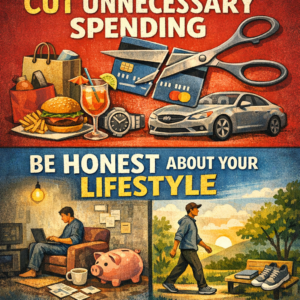
- Too much eating out – You have to reduce or stop too many eating out.
- Unused subscriptions – Never subscribe unnecessarily
- Quit impulse buying
Now ask yourself these questions below:
- Do I really need this?
- Am I spending to impress people?
Save Immediately You Get Paid (Save First, Not Last)

- Remove your savings first
- Transfer it to another account (entirely new account)
- Move ₦10k–₦20k to savings
- Remember to use a separate account like I stated above.
Avoid Lifestyle Pressure/Avoid Silent Money Killers

- Expensive clothes
- Frequent outings
- Financial competition
- Too many ATM/POS withdrawals
- Subscription services you don’t use
- Frequent eating outside
Look for Extra Income/Increase Your Income (Very Important)
- Selling items online
- Weekend hustle
- Freelance work
- A small side hustle
- Offer a service
Conclusion
- Tracking your expenses
- Sticking to a plan
- Saving consistently.
- No budget
- No discipline
- No savings plan. If you can fix these anomalies, your money will start working for you and over time, you’ll gain control and peace of mind. Therefore, start small, stay consistent, your future self will thank you.
Leave a Reply