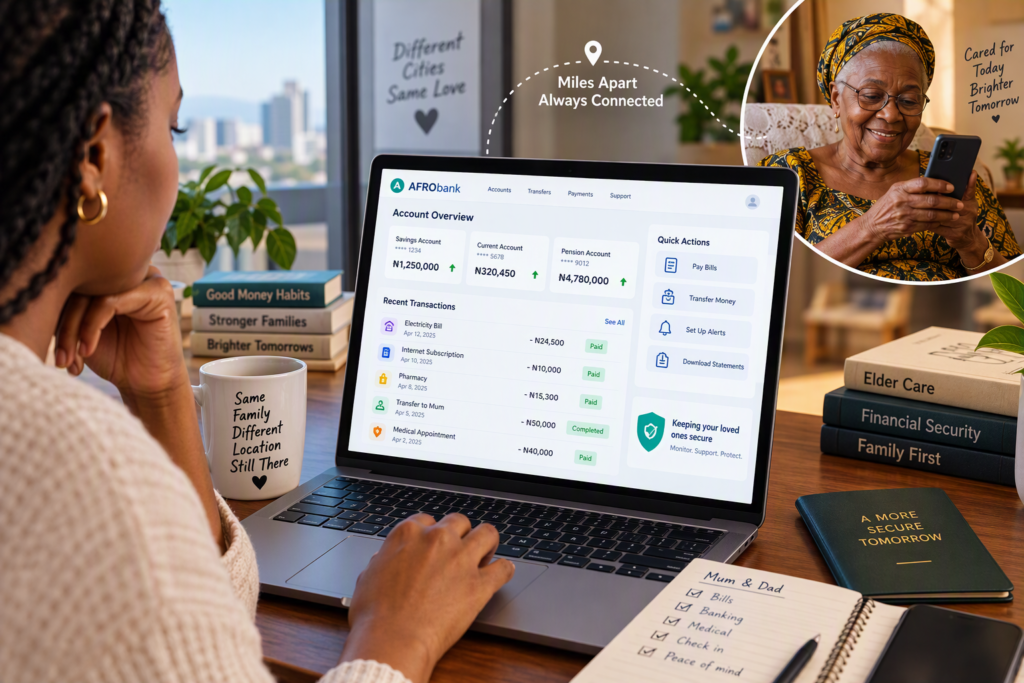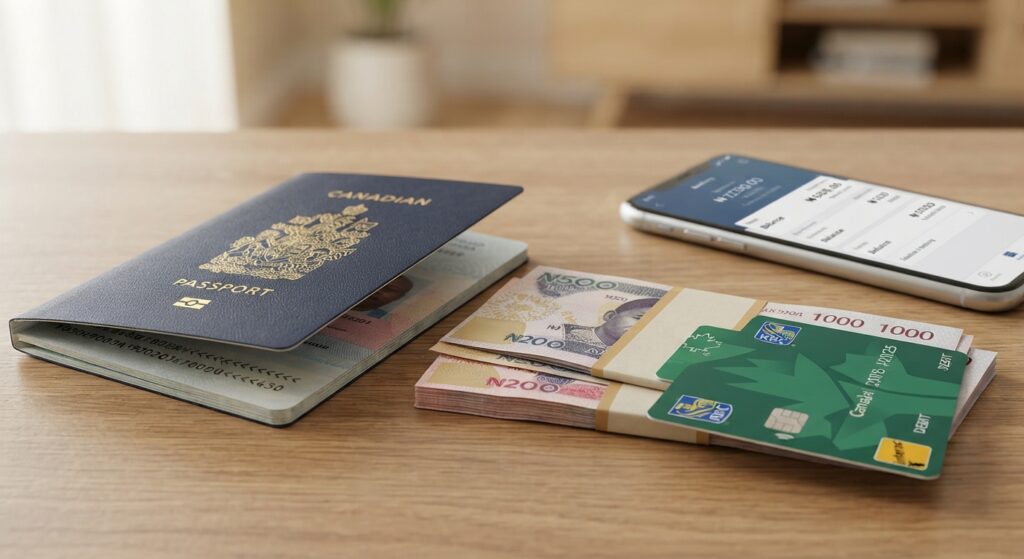
To move from Nigeria to Canada while keeping your Nigerian bank account requires two main steps: completing the legal immigration process and setting up your bank account for international use.
You can use your Nigerian bank account while living in Canada. To do so successfully, ensure your KYC information is updated, maintain access to your registered phone number and email address, activate internet and mobile banking, keep your debit card valid, and comply with any verification requests from your bank.
Here is how you can manage both:
- The Immigration Track: Complete the legal paperwork, visas, and requirements needed to move to Canada.
- The Banking Track: Update your Nigerian banking setup so you can easily access and use your funds while living abroad.
You can absolutely keep your Nigerian bank account active after moving to Canada. To manage your finances smoothly, you will need to balance Canada’s immigration laws with a few quick updates to your banking setup.
Migrating to Canada? How to Keep and Use Your Nigerian Bank Account
You can absolutely keep your Nigerian bank account active after moving to Canada. To manage your finances smoothly, you will need to balance Canada’s immigration laws with a few quick updates to your banking setup.
1. Choose Your Immigration Path
To relocate legally, you must apply through one of the official pathways managed by Immigration, Refugees and Citizenship Canada (IRCC):
- Express Entry: The fastest route for skilled professionals. It scores you on factors like age, education, work experience, and your IELTS language exam.
- Provincial Nominee Program (PNP): A pathway where specific Canadian provinces nominate you if your skills match their local job shortages.
- Study Permit: Enrolling in a Canadian school. Graduating often opens a direct door to a Post-Graduation Work Permit and permanent residency.
2. Set Up Your Proof of Funds (PoF)
If you apply through Express Entry, Canada requires proof that you have enough money to settle your family.
- Official Bank Letter: Request a formal letter from your Nigerian bank on their official letterhead.
- Required Details: The letter must state your name, account numbers, account opening dates, current balances, and your average balance over the past 6 months. It must also show any loans or credit card debts.
- Liquidity: The money must be fully available and cash based. You cannot use land, buildings, or borrowed money as proof.
3. Prepare Your Nigerian Account for Use Abroad
Take these steps before you board your flight to keep your local account from getting blocked:
- Switch to a Diaspora Account: Tell your bank (GTBank, Access, Zenith, UBA, etc.) that you are moving. Upgrading to a Non-Resident / Diaspora Account stops their security systems from freezing your app when you log in from a Canadian IP address.
- Activate International Roaming: Your bank app will still send One-Time Passwords (OTPs) to your phone to verify transfers. Ensure your Nigerian SIM card is set up to roam internationally before you leave and keep it active by recharging it regularly.
- Keep Your BVN Safe: Your Bank Verification Number stays tied to your Nigerian accounts. It does not transfer to Canada and will not help you build Canadian credit.
4. Move Money Between Both Countries
Because of strict spending limits on Nigerian debit cards abroad, you cannot easily swipe your Naira card in Canada. Use these multi-currency fintech corridors instead:
- Fintech Apps (LemFi & Pesa): These apps are built specifically for the Nigeria-to-Canada corridor. You send Naira from your regular Nigerian bank app into your app wallet, convert it to Canadian Dollars (CAD), and instantly send it to your Canadian account via Interac e-Transfer.
- Traditional Services: Platforms like Wise or WorldRemit are highly reliable options once your Canadian bank account is fully set up.
5. Set Up Your New Canadian Bank Account
You will need a local Canadian account immediately to receive your salary, pay rent, and build a brand-new credit record.
Most major Canadian banks offer Newcomer Packages with no monthly fees for the first 12 months and an introductory credit card requiring no prior Canadian credit history:
| Canadian Bank | Program Name | Key Benefits |
| Scotiabank | StartRight Program | Zero fees for 1-year, free international transfers and easy credit card access. |
| TD Bank | TD Newcomer Package | 1 year of free chequing, unlimited e-Transfers, bonus savings rates. |
| RBC | RBC Newcomer Advantage | Free banking for 12 months, auto loan help, credit card eligibility. |
| CIBC | CIBC Welcome to Canada | 1 year of free transactions, cash-back credit card options. |
What to bring: To open your account on arrival, walk into a branch with your passport, your IRCC immigration documents (like your COPR or permits), and your Canadian Social Insurance Number (SIN).
How to Move from Nigeria to Canada and Still Use Your Nigerian Bank Account
One of the questions many Nigerians ask before relocating to Canada is “Can I still use my Nigerian bank account after moving abroad?”
The direct answer is yes. Relocating to Canada does not automatically mean you must close your Nigerian bank account. In fact, many Nigerians living in Canada continue to maintain active accounts in Nigeria for family support, local investments, business transactions, rental income, pensions, and savings.
Having worked in the banking industry for over a decade, I have met customers who relocated to Canada and continued operating their Nigerian accounts without problems. I have also seen customers face restrictions because they failed to update their banking information or ignored simple compliance requirements. The good news is that most of these problems are avoidable.
In this guide, I will explain how to relocate from Nigeria to Canada and still use your Nigerian bank account legally, safely, and efficiently.
Why Many Nigerians Keep Their Nigerian Bank Accounts After Moving to Canada
Many people assume they must close their accounts once they migrate. That is usually not necessary. There are several reasons Nigerians abroad keep their accounts active. Some receive rental income from properties located in Nigeria while others support family members and need a local account for payments.
Business owners often continue collecting payments from Nigerian customers, and some maintain investments such as treasury bills, fixed deposits, shares, and mutual funds. For many families, keeping a Nigerian account active simply makes financial management easier. Instead of repeatedly opening new accounts whenever they visit Nigeria, they continue using accounts they already know and trust.
Inform Your Bank Before Relocating
One of the smartest things you can do before leaving Nigeria is informing your bank about your relocation. This may sound simple, but it can save you from unnecessary issues and headaches later. Banks monitor customer accounts for unusual activities because if an account that was consistently accessed from Nigeria suddenly begins logging in from Canada without any prior notice, security systems may flag some activities for review. To understand why bank monitor and flags your account, read my full guide on What Really Happens When a Bank Flags Your Transaction?
Informing the bank helps create a record that you have relocated. This is especially important if you expect to:
- Access internet banking from Canada
- Use your ATM card internationally
- Receive large transfers
- Update contact details after relocation
You don’t necessarily need a special account simply because you relocated. However, you should ensure your bank has accurate information about your current circumstances.
Update Your KYC Information
This is one of the most important steps. KYC stands for “Know Your Customer” and banks are required to maintain accurate customer records. When you move to Canada, certain details may change, including:
- Residential address
- Phone number
- Email address
- Employment status
- Tax residency information
If your bank requests updated information and does not receive it, your account may be restricted until the information is provided. Many customers mistakenly believe that updating KYC is only required when opening an account, this is not true because as a bank staff and with my experience over the years, this is a continuous process.
Banks may request updated information periodically. Keeping your records current reduces the likelihood of experiencing account limitations.
Can You Use Your Nigerian Banking App in Canada?
Yes, most Nigerian banking apps can be used internationally provided you have an internet connection. You can typically perform activities such as:
- Checking account balances
- Transferring funds
- Downloading statements
- Paying bills
- Monitoring transactions
- Receiving account alerts
Before travelling, confirm that:
- Your mobile banking app is fully activated
- Your device is registered
- Your login credentials are secure
- Your registered email address is accessible
I always advise customers to test their banking applications thoroughly before departing Nigeria. Do not wait until you arrive in Canada to discover that your application requires a verification code sent to a number you can no longer access.
Should You Keep Your Nigerian Phone Number?
In many cases, yes. Your registered Nigerian phone number plays an important role in account security. Many banks use registered phone numbers for:
- OTP delivery
- Transaction verification
- Security notifications
- Profile updates
Some customers who relocate immediately abandon their Nigerian mobile lines. A few months later, they struggle to receive critical authentication codes. If possible, retain your Nigerian number for some time after relocation. This can make account management significantly easier.
Can You Use Your Nigerian ATM Card in Canada?
The answer depends on your bank and your card type. Many Nigerian debit cards support international transactions, while others may have restrictions. Before leaving Nigeria, contact your bank and ask:
- Is my card enabled for international use?
- Does it work in Canada?
- Are there transaction limits?
- Are there foreign transaction fees?
- What happens if the card expires while I am abroad?
These questions can prevent unpleasant surprises. Remember that some cards may not function internationally even if they work perfectly within Nigeria. Always verify with your bank before travelling.
How to Receive Money into Your Nigerian Account While in Canada
Receiving money into your Nigerian account is generally straightforward. Your account can usually continue receiving:
- Local transfers
- Family support payments
- Rental income
- Business payments
- Investment proceeds
As long as your account remains active and compliant, you should be able to receive transfers from Nigeria. You can monitor incoming funds through internet banking and transaction alerts. This is one reason many migrants maintain their Nigerian accounts even after becoming settled in Canada.
How to Send Money Between Canada and Nigeria
Many Nigerians in Canada regularly send money home. Common uses include:
- Family support
- School fees
- Medical expenses
- Business operations
- Property maintenance
Multiple regulated remittance and international transfer services facilitate transfers between Canada and Nigeria. When selecting a service, pay attention to exchange rates, transfer fees, delivery speed, security standards and regulatory compliance. The cheapest option is not always the best option, but reliability and security are equally important.
Will Your Nigerian Account Be Closed Because You Relocated?
No, banks generally do not close accounts simply because a customer moved abroad. However, accounts can face restrictions for reasons such as:
- Incomplete KYC records
- Unresolved verification requests
- Compliance issues
- Dormancy
- Suspicious transaction patterns
Relocation itself is usually not the problem but failure to maintain the account properly is often what creates difficulties.
What Happens If Your Account Becomes Dormant?
An account may become dormant after prolonged inactivity of about 6 months, depending on bank policies and applicable regulations. Dormancy can affect your ability to conduct transactions. To avoid this:
- Monitor your account regularly
- Maintain activity when appropriate
- Respond to bank communications
- Keep your contact information updated
Dormancy issues are generally easier to prevent than to resolve from another country.
Can Your Account Be Restricted While You Are in Canada?
Yes. Being abroad does not exempt an account from banking regulations. Your account could be restricted if:
- Required documents are outstanding
- Identity verification is incomplete
- Suspicious activity is detected
- Regulatory requirements are not satisfied
If restrictions occur, contact your bank immediately and do not ignore emails, calls, or compliance requests. Prompt responses often help resolve issues faster.
Can I keep using my Nigerian bank account in Canada?
Yes, you can absolutely keep it open and active. Many Nigerian expats maintain their accounts back home to manage local properties, support family, or handle businesses. However, as someone who works in banking, you already know how strict internal security triggers can be.
To keep it functioning smoothly from Canada, you must take specific steps before boarding your flight:
- Roam Your Linked Phone Number: Your mobile app and internet banking rely entirely on OTPs. You must keep your registered Nigerian SIM card active on international roaming or formally request your bank to route all OTPs to your verified email address or a secure hardware/soft token.
- Log a Travel Notification: You know the drill sudden logins from a Canadian IP address will instantly trigger the fraud detection system and flag your account. Submit a formal travel notification to your compliance or customer care team before you leave.
- Accept CBN Realities: While the account stays open, you won’t be able to rely on it for daily Canadian expenses due to strict Central Bank of Nigeria (CBN) FX limits and heavy conversion spreads on naira cards. Keep it strictly for local naira obligations.
How can I leverage my Nigerian banking experience in Canada?
Your background in banking is a major asset, but you must strategically position it for the Canadian market. The Canadian financial sector is heavily regulated, stable, and highly competitive.
To transition your career smoothly, focus on these three elements:
- Target the Corporate/Commercial Side or Wealth Management: Don’t just look at retail branch roles. Your understanding of financial products, KYC (Know Your Customer), and AML (Anti-Money Laundering) compliance transfers beautifully into Canadian corporate banking, risk management, and operations.
- Get Certified Immediately: Canada loves local credentials. While your experience is great, pairing it with Canadian certifications will make your resume unignorable. Look into the Canadian Securities Course (CSC) if you want to go into investments/advising, or certifications from the Canadian Securities Institute (CSI).
- Master the “Soft Skills” Narrative: In your interviews, emphasize your experience handling high-volume transactions, managing intense customer relationships, and navigating complex regulatory frameworks. These are universal banking languages.
How do I present my Proof of Funds (POF) perfectly?
As a bank staff, you have a massive advantage here because you know exactly how clean documentation needs to look. Immigration, Refugees and Citizenship Canada (IRCC) is incredibly strict about the audit trail for settlement funds.
- The 6-Month Average Rule: You know that a sudden, massive deposit into an account right before printing a statement looks like “borrowed funds” to an auditor. Ensure your required settlement funds have sat comfortably in your account for at least six months, showing a steady, authentic average balance.
- The Perfect Bank Letter: IRCC doesn’t just want a standard statement; they require an official letter on the bank’s letterhead. Since you know the system, ensure your branch includes all the mandatory fields: account opening dates, current balances, a list of all outstanding debts/loans, and the 6-month average balance.
- Liquidity is King: Ensure your funds are held in highly liquid accounts (like standard savings or short-term fixed deposits). IRCC will reject illiquid assets like real estate equity, shares, or physical business inventory.
What are the best Canadian banking options for a newcomer?
When you land, you will try to move your money into a Canadian account immediately to start building your Canadian Credit History which is separate from your Nigerian credit record
The major Canadian banks (known as the “Big Five”) offer exceptional Newcomer Packages that you can even apply for before you arrive:
- Scotiabank (StartRight Program): Excellent for newcomers. They offer a fee-free chequing account for your first year and make it relatively simple to get your first Canadian credit card without local credit history.
- RBC (Newcomer Advantage): Offers a full 12 months of no monthly fees, free international money transfers, and great starter credit lines if you need to finance a car early on.
- BMO (NewStart Program): Another fantastic option offering a year of zero monthly fees, a free safety deposit box, and a structured path to get your first credit card.
How do I move my money between Nigeria and Canada efficiently?
Because you understand treasury and exchange rates, you’ll want to avoid traditional international wire transfers, which can swallow a massive percentage of your funds in hidden fees and terrible retail spreads.
- For Remittance & Moving Capital: Platforms like Pesa have built incredibly efficient corridors specifically for Nigerians in Canada, allowing you to move money from a naira wallet directly into CAD seamlessly. Wise and WorldRemit are also excellent for securing mid-market exchange rates when sending money back and forth.
What is the best way for a Nigerian citizen to migrate to Canada?
The Express Entry system remains the fastest and most structured route for skilled professionals like you. Given your banking background, you likely have a university degree and solid corporate experience. You would enter the pool under the Federal Skilled Worker Program (FSWP). Alternatively, the Provincial Nominee Program (PNP) allows specific Canadian provinces to headhunt you if your compliance or operational skills match their local labour shortages. For those with the capital, the Study Route via a post-graduate program is an incredibly reliable secondary backdoor that transitions into an open work permit.
Is Canada still accepting immigrants from Nigeria?
Yes, Canada is actively welcoming and processing applications from Nigerian citizens. In fact, recent data shows Nigeria remains one of the top source countries for both permanent residents and temporary workers entering Canada. Canada’s immigration levels target hundreds of thousands of newcomers annually, with massive allocations for foreign workers and skilled professionals.
How much will it cost to migrate from Nigeria to Canada?
For a single applicant through Express Entry, you should budget roughly ₦15,000,000 to ₦20,000,000+ total. This is broken down into two components:
- Sunk Costs (Processing Fees): Around $2,500–$3,500 CAD (covering your language tests, Educational Credential Assessment (ECA), IRCC visa application fees, biometrics, and medical exams).
- Settlement Funds (Proof of Funds): The mandatory cash reserve you must show to prove you can support yourself. You must hold this money, but it remains yours.
How much bank balance is required for Canada PR?
The official Proof of Funds (POF) threshold required by Immigration, Refugees and Citizenship Canada (IRCC) depends entirely on your family size. The minimum required liquid amounts are updated periodically:
- 1 person (Single applicant): $15,263 CAD
- 2 family members: $19,001 CAD
- 3 family members: $23,360 CAD
- 4 family members: $28,362 CAD
Compliance Note: As an operations person, you know you cannot just dump this money into your account overnight. IRCC explicitly requires a 6-month average balance statement and an official bank letter stating you have zero unencumbered debts. Sudden large deposits will trigger a rejection unless backed by robust source-of-funds documentation (like a property sale deed or asset liquidation).
Can I keep my bank account if I move abroad?
Yes, you can physically keep your Nigerian bank account active. However, you cannot rely on it for daily life in Canada due to strict Central Bank of Nigeria (CBN) foreign exchange limits. It is useful strictly for managing lingering local commitments (family support, property, or existing investments).
Do I need to tell my bank I’m moving abroad?
Absolutely, this is a fundamental KYC and fraud prevention requirement. From an operations perspective, if your bank sees sudden mobile app logins or transactional attempts originating from a Canadian IP address without a travel notice on file, the system will flag it as a compromised profile and place a “Post No Debit” (PND) or restriction on the account. You will need to formally update your profile and confirm how you will receive OTPs abroad (via international roaming or email routing).
What is the $3,000 bank rule?
Depending on context, this refers to two specific compliance thresholds:
- The Anti-Money Laundering (AML) Log Rule: Globally derived from international standards, financial institutions are legally mandated to log, verify, and verify the identity of anyone conducting cash purchases of monetary instruments (like money orders or drafts) between $3,000 and $10,000. It is a step right below a formal Currency Transaction Report (CTR).
- Canadian Fraud Prevention Limits: In daily Canadian retail banking operations, many institutions place a hard, automated $3,000 limit on daily debit card spending or Interac e-Transfers to mitigate fraud losses. If you need to move more than $3,000 digitally in a single day, you often must physically call the bank to temporarily lift your profile threshold.
What happens if I have more than $10,000 in a foreign bank account?
Once you become a Canadian tax resident, you face strict international reporting standards. If the total aggregate value of your foreign assets (including your Nigerian bank accounts, stocks, or properties) exceeds $100,000 CAD at any point in the year, you are legally required to declare it to the Canada Revenue Agency (CRA) using the Form T1135.
Note on the $10,000 mark: When physically entering Canada, you must legally declare if you are carrying cash or monetary instruments worth $10,000 CAD or more across the border to Canada Border Services Agency (CBSA) officers. Failing to declare it can lead to heavy fines or total seizure, even if the money is completely legitimate.
Canadian Banking & Newcomer Benefits
Which bank account is good in Canada? / Which bank account is best for newcomers?
Canada’s banking ecosystem is dominated by the “Big Five.” Because you understand product design, you will appreciate that they all offer competitive Newcomer Packages that completely waive monthly account maintenance fees for your first 12 months:
- Scotiabank (StartRight Program): Excellent overall choice. It gives you a fee-free chequing account for a year, unlimited free e-transfers, and an easier path to getting an unsecured credit card without any prior Canadian credit history.
- RBC (Newcomer Advantage): Offers an excellent, highly rated mobile app interface, 12 months of zero fees, and simplifies credit lines if you need an auto loan quickly upon arrival.
- BMO (NewStart Program): Provides 12 months of free banking and throws in perks like a free safety deposit box.
What is the easiest bank account to open online in Canada?
If you want a secondary digital account or a highly agile online setup, Tangerine (owned by Scotiabank) or EQ Bank are the easiest online-only “neo-banks” to navigate. However, as an immigrant needing a formal onboarding structure, opening a digital newcomer profile directly with a major tier-1 bank like Scotiabank or RBC before you land is the most seamless way to wire your settlement funds directly into Canada securely.
What benefits are available to newcomers to Canada?
Canada offers a robust social infrastructure designed to help immigrants integrate seamlessly into the economy:
- Canada Child Benefit (CCB): A tax-free monthly payment from the government to help eligible families support children under 18.
- Free Settlement Services: Government-funded agencies (like ACCES Employment or COSTI) provide completely free resume restructuring, interview preparation, and job placement networks tailored to your specific field.
- Subsidized Healthcare: Universal healthcare covers basic medical checkups, hospital visits, and emergency services completely free of charge (eligibility timelines vary slightly by province).
Security Tips for Nigerians Managing Bank Accounts from Canada
Cybersecurity becomes even more important when managing accounts from another country.
Follow these precautions:
Use Strong Passwords
Avoid predictable passwords and update them periodically.
Enable Transaction Alerts
Real-time alerts help you identify unauthorized activity quickly.
Protect Your Mobile Device
Use device passwords, biometric security, and screen locks.
Ignore Suspicious Messages
Banks rarely ask customers to disclose passwords, PINs, or OTPs through email or text messages.
Verify Requests Carefully
Fraudsters often target people living abroad because they assume distance makes verification more difficult. Always verify unusual requests directly through official bank channels.
Should You Open a Canadian Bank Account as Well?
Yes, even if you plan to keep your Nigerian account, a Canadian account will likely be necessary for daily life. You may need a Canadian account for:
- Salary payments
- Utility bills
- Rent
- Tax matters
- Local financial services
Most migrants operate both accounts simultaneously. The Nigerian account serves Nigerian financial needs, while the Canadian account supports day-to-day living in Canada. This approach provides flexibility and financial convenience.
Common Mistakes Nigerians Make After Relocating
Throughout my years in banking, I have observed several recurring mistakes.
Ignoring KYC Updates
This remains one of the most common causes of account restrictions.
Abandoning Registered Phone Numbers
Customers often discover too late that many banking processes depend on verified contact information.
Forgetting ATM Card Expiry Dates
An expired card can create problems if replacement arrangements were not made in advance.
Ignoring Bank Emails
Compliance requests should never be ignored.
Sharing Banking Information
Some customers entrust account access to friends or relatives unnecessarily, increasing fraud risks.
Frequently Asked Questions
Can I use my Nigerian bank account while living in Canada?
Yes. Most Nigerian bank accounts can continue operating while you live in Canada, provided your account remains compliant and your banking information is updated.
Do I need to close my Nigerian account before relocating?
No. Relocating does not automatically require closing your Nigerian account.
Can I access internet banking from Canada?
Yes. Most internet and mobile banking platforms can be accessed from Canada if your account and device are properly configured.
Can I receive money in Nigeria while living in Canada?
Yes. Your Nigerian account can generally continue receiving transfers and payments.
Will my account be frozen because I moved abroad?
Not simply because you moved abroad. Restrictions are more likely to result from compliance issues, outdated records, or unresolved verification requirements.
Should I keep my Nigerian phone number?
Keeping your registered Nigerian phone number, especially during the transition period, can make account management easier.
Final Thoughts
Moving from Nigeria to Canada does not mean losing access to your Nigerian bank account. From my experience in banking, customers who maintain updated records, keep their contact details active, use secure banking practices, and respond promptly to compliance requests rarely experience major problems operating their accounts from abroad.
The key is preparation. Before relocating, ensure your banking profile is complete, your digital banking channels are working properly, and your security settings are up to date. Doing these simple things can save you significant stress and allow you to manage your finances smoothly from Canada while keeping your connection to Nigeria intact.